Unleavened Bread and the Gospel
Did you know that God gives us physical things to do in order to teach us spiritual principles? Indeed, He didn’t give us a bunch of random commandments just to watch us jump through religious hoops. He is a loving Father, and His Torah (instructions) is designed to teach us His character and His truth. Every “jot and tittle” in God’s Word has a profound Spiritual purpose—whether or not we recognize it from our limited perspectives.

With that in mind, as we approach this season of Unleavened Bread, the Bible tells us to do a couple of things that might sound strange. However, after you consider the spiritual lessons they teach, you’ll be amazed at how creative and practical our God is! His feast days are designed to help us grow spirituality. They’re “wedding rehearsals” to help us prepare to meet our Bridegroom. Let’s take a look:
In the first month, from the fourteenth day of the month at evening, you shall eat unleavened bread until the twenty-first day of the month at evening. For seven days no leaven is to be found in your houses. (Exodus 12:18-19)
There are two commandments given in the passage above:
1) Eat unleavened bread
2) Remove the leaven from your home
The first commandment states that we are to eat unleavened bread for seven days. Why? The Bible actually gives us one of the reasons in Deuteronomy:
Seven days you shall eat it with unleavened bread, the bread of affliction—for you came out of the land of Egypt in haste—that all the days of your life you may remember the day when you came out of the land of Egypt. (Deuteronomy 16:3)
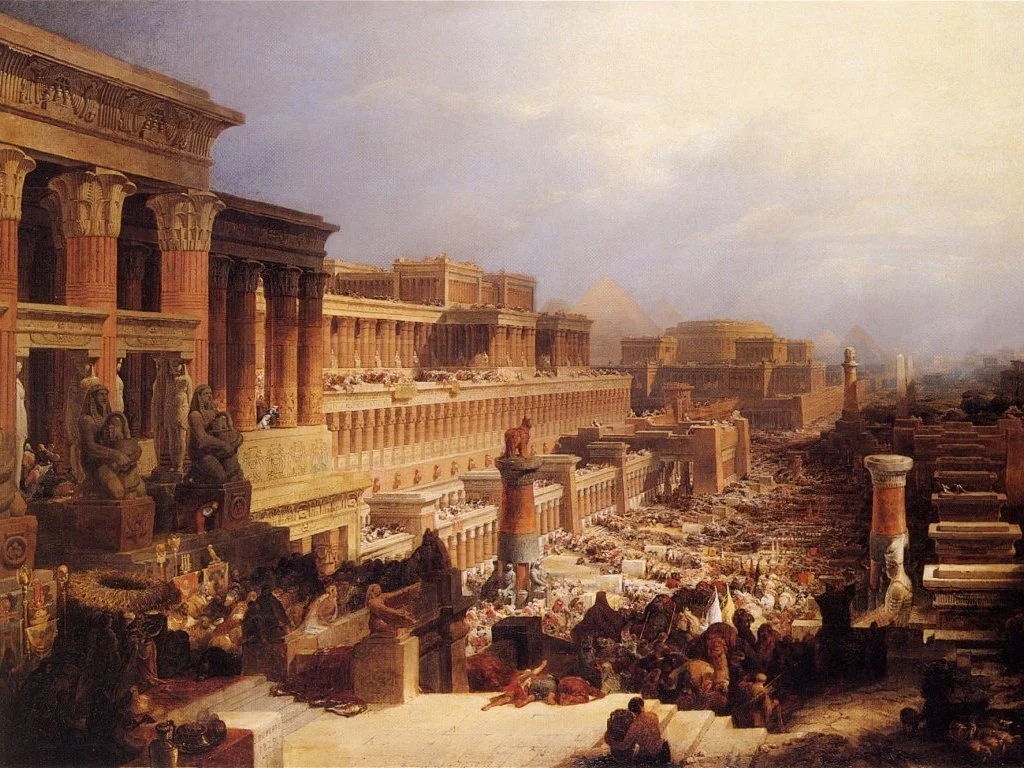
The Israelites didn’t have time for their bread to rise when they left Egypt, so we see here that the purpose of eating unleavened bread is to help them recall their deliverance. God wants us to remember that the basis for our relationship with Him is that He delivers us (see Exodus 6:2-8). There is nothing we have done to earn His love. He “heard the groaning of His people” and acted simply on the basis of His great love. For believers in Messiah Yeshua (Jesus), this commandment has an additional layer of depth. Yeshua, our Passover lamb, has delivered us from the slavery of our sin—our own “Egypt,” if you will. Therefore, celebrating the feast by eating unleavened bread every year is an affirmation of the Gospel and a celebration of our redemption through the blood of Messiah.
Concerning the second commandment, this can be seen as the process of sanctification that God wants His people to go through. After the exodus from Egyptian slavery, The Lord allowed the Israelites to wander the desert for 40 years. Why? Because although they had left Egypt, Egypt had not yet left them. God was using the desert experience to purify His people and remove everything from them that was not of Him.
With that in mind, leaven in the Bible is often symbolic of sin. Thus, the command to remove leaven from our homes is designed to teach us to examine our hearts. It is a time of introspection. It is our own desert experience. As we explore every corner of every room in our homes for literal leaven, we are to ask God to search every corner of our hearts to reveal the spiritual “leaven.”
Cleanse out the old leaven that you may be a new lump, as you really are unleavened. For Christ, our Passover lamb, has been sacrificed.Let us therefore celebrate the festival, not with the old leaven, the leaven of malice and evil, but with the unleavened bread of sincerity and truth. (1 Corinthians 5:7-8)
In addition to removing the literal leaven, some people might remove anything that could potentially cause spiritual corruption in their homes. Do you have old movies, music, or books that cause you to stumble in your pursuit of holiness? If so, this is the season to finally throw those things away. Unleavened Bread is a time to be intentional about getting rid of any baggage that might be holding you back.
Friends, let this upcoming season of Unleavened Bread be a time of pursuing God on a deeper level like never before. Let this be the season to let go of that particular secret sin, addiction, or selfish agenda that you’ve been holding onto. According to Scripture, our sins—no matter how small—will eventually consume us: A little leaven leavens the whole lump (Galatians 5:9). It’s no wonder, then, why God gave us this wonderful feast day! He loves us and desires for us to be healthy and spiritually pure, not only for the sake of His great name, but for our sake as well! Sin is grievous and destructive. Let us therefore remove the leaven from our homes and our lives.
In 2 Peter 3:15–17, Peter warns his readers against those who twist Paul’s letters, and he associates their misinterpretations with “the error of lawless people.” In this article, I examine both the immediate and broader context of this passage as well as the specific language Peter uses to characterize those who twist Paul’s letters. I argue that 2 Peter 3:15–17 constitutes a warning against antinomians who misinterpret Paul’s letters to justify and encourage transgression of the Law of Moses.
Origen’s Commentary on Romans offers a fascinating perspective on the Apostolic Decree in Acts 15. Rather than seeing the Council as setting aside the Torah for Gentile believers, Origen argues that the apostles looked to the Torah itself to determine what God required of Gentiles. This article explores his reasoning concerning blood, strangled meat, and circumcision, and what it might contribute to the larger question of Gentile Torah observance.
Can Gentile Torah observance be a bridge rather than a barrier between Jewish people and Yeshua? In this article, I consider concerns about supersessionism and Gentile Torah observance while arguing that, properly understood and practiced, it can affirm the continuing significance of Israel and offer a foretaste of the prophetic vision of the nations embracing Israel’s God and his ways.
Mary’s perpetual virginity was taught very early and remained the mainstream Christian position for well over a thousand years. Yet most Protestants today reject it because they believe Scripture clearly shows that Mary did not remain a virgin after giving birth to Jesus. I think this history offers an instructive parallel to the question of Sabbath observance. How much weight should longstanding Christian tradition carry when it seems to conflict with a straightforward reading of Scripture?
Did the apostle Paul reject the Torah (the Law of Moses) as an authoritative standard of conduct for followers of the Messiah? While many interpreters believe that he did, several passages in Romans point in a different direction. This article offers a pronomian reading of some of Paul’s statements about the Torah in Romans. In contrast to the antinomian view, a pronomian view holds that the Torah continues to function as divine instruction for believers.
I am a follower of Yeshua (Jesus) the Messiah, and I believe the Torah (the Law of Moses) remains relevant for God’s people today and should still be obeyed. So does that make me part of the Hebrew Roots Movement? There are two reasons why it does not.
The Bible mentions several books that have been lost to history. One of these is the Book of Jasher, meaning “one who is upright.” Over the centuries, this book has sparked much curiosity. Some today even argue that it has been rediscovered and ought to be included in the Bible. This article explores what we know about the Book of Jasher and evaluates claims that it has been rediscovered.
Did Paul reject the ongoing relevance of the Sabbath and festivals prescribed in the Torah? Many cite Colossians 2:16–17 as proof that he did. However, a growing body of scholarship calls that interpretation into question. Scholars point out that the illegitimate judgment directed toward Colossian believers came from ascetics who did not observe the biblical calendar. Drawing on this scholarship, I argue that Colossians 2:16–17 does not invalidate the Sabbath and festivals but instead affirms their value.
Have you ever asked God, “What is your will for my life?” If you have, you might be encouraged to know that Scripture already offers a direct (though often overlooked) answer to that question.
The Epistle to the Hebrews offers biblical evidence that the Holy Spirit is both fully divine and a distinct person. Within the epistle, the author identifies the Spirit as “eternal,” presents the Spirit as speaking God’s words as recorded in Old Testament quotations, and yet also distinguishes the Spirit as a separate agent from the Father and the Son. This article examines several references to the Spirit in Hebrews and shows how the author’s depiction is consistent with the Trinitarian understanding of the Holy Spirit as fully God and personally distinct from both the Father and the Son.
This study demonstrates that Luke presents the earliest followers of Jesus as steadfast Sabbath observers, challenging the common assumption that they abandoned or disregarded this practice. By closely examining the references to the Sabbath in Luke’s Gospel and Acts, it is observed that Luke consistently depicts Sabbath worship as a standard practice among Jewish and Gentile believers. This portrayal suggests that the earliest followers of Jesus did not believe the Sabbath had been abrogated but saw it as integral to their faith and community life. These findings invite modern Christians to reconsider the relevance of Sabbath observance in their own spiritual lives. By highlighting the continuity between Judaism and the emerging Christian movement, this study contributes to scholarship on early Christian identity and practice, portraying the earliest followers of Jesus as a movement within Judaism.
Is marital intimacy on the Sabbath a violation of the commandment to keep the seventh day holy? That depends on who you ask.
The expression “law of Christ” appears only two times in the New Testament. In Galatians 6:2, Paul urges his readers to fulfill “the law of Christ” (τὸν νόμον τοῦ Χριστοῦ). Similarly, in 1 Corinthians 9:21, Paul states that he is “under/in the law of Christ” (ἔννομος Χριστοῦ). Traditionally, interpreters have frequently understood this expression to refer to a new “law” or ethic that supersedes the law of Moses. However, as Todd Wilson notes, there is a “growing scholarly consensus” that “law of Christ” directly refers to the law of Moses in some sense. This article makes a case for interpreting the phrase “law of Christ” in Galatians 6:2 and 1 Corinthians 9:21 as a reference to the law of Moses as it is taught and exemplified by Christ.
Is the Messiah God? The first chapter of Hebrews presents compelling evidence that he is. In this chapter, the author highlights the Son’s role as the creator and sustainer of the universe, emphasizes the Son’s divine essence, proclaims that the Son is worthy of the worship that belongs only to God, and explicitly identifies the Son as “God” and “Lord/YHWH.” In order to demonstrate each of these points, this article conducts a detailed exegesis of Hebrews 1 and answers objections from unitarians.
Jubilees is a fascinating book that provides a window into the world of Second Temple Judaism. However, instead of appreciating it for what it is, a few teachers on the Internet exaggerate its significance and consider it to be inspired Scripture. This article provides an overview of the Book of Jubilees and explains why it is not Scripture.
Does the Bible teach that Yeshua the Messiah is divine? Philippians 2:5-11 is a central text that speaks to this question. In this passage, Paul teaches that the Messiah existed as a divine figure prior to his human conception, bears the name YHWH, and is rightfully given the reverence and allegiance that belongs to YHWH alone.
In Ephesians 2:15, Paul wrote that Christ broke down the wall of division between Jew and Gentile “by abolishing the law of commandments expressed in ordinances.” But what does Paul mean by this phrase? Is Paul saying that Christ abolished the Law of Moses, or something else?
In recent days, progressive Christians have claimed that Leviticus 18:22 does not mean what it plainly says. I want to address their objections in this article.
Did Jesus reject the Torah’s dietary laws? Many say that he did, citing Mark 7:1-23 as proof. In this article, I will explain the problems with the traditional interpretation of this passage and offer an alternative view that presents a more consistent and accurate portrayal of Jesus’s teaching.
Solberg complains about Pronomian theology causing "division" in the body. However, mischaracterizations like this are what actually undermine the unity that should be shared among thoughtful Christians on all sides of this debate.
Does Peter call Jesus “God” in 2 Peter 1:1? When we examine this verse from a grammatical standpoint, it is evident that he does.
Is the Torah (Law of Moses) relevant to Christians today? Many modern Christians say no. Jesus says yes.
I’ve been reading some scientific studies on the psychosocial impact of polygamy (in particular, the form of polygamy known as polygyny, that is, a husband having two or more wives). Modern-day advocates for polygamy argue that this practice benefits families and society, but the scientific data tells a different story. The harmful effects of polygamy on the well-being of men, women, and children are striking.
One fundamental theological principle revealed in the Genesis creation accounts is that marriage, as God intended it, is to be monogamous. The rest of the Bible, especially the New Testament, upholds this marital form as the ideal standard.
How do we make sense of the Torah’s polygamy regulations in light of the Bible’s overall condemnation of this practice?
“Wives, submit to your own husbands, as to the Lord” (Ephesians 5:22). If you just read that verse out loud, then you might hear a faint, high-pitched noise. That sound is every feminist worldwide shrieking about how Christianity oppresses women. But is this instruction in Ephesians really oppressive toward women?
Did Jesus exist before he was conceived in Mary’s womb? This article looks at a passage from Jude that may shed some light on that question.
Justin Best of the popular J. Breezy YouTube channel (formerly Christian Truthers) said he is “questioning the authenticity of the NT [New Testament] and the existence of a historical ‘Jesus’ character.” This article will look at and answer some of his claims.
There are a lot of questions that arise from such a scandal. This article is just my attempt to work out my own questions and reflect on what lessons we can and must learn from this tragic situation.
About David Wilber
David is first and foremost a passionate follower of Yeshua the Messiah. He is also a writer, speaker, and teacher.
David’s heart is to minister to God’s people by helping them rediscover the validity and blessing of God’s Torah and help prepare them to give an answer to anyone who asks about the hope within them (1 Peter 3:15)…

David Wilber is an author, Bible teacher, Messianic/Christian apologist, and joint CEO of Pronomian Publishing LLC. He has written several books, including his most recent work, "Remember the Sabbath: What the New Testament Says About Sabbath Observance for Christians." In addition to his books, David has written numerous theological articles for various publications and websites. David lives in Lake Wylie, SC, with his wife and two children. His articles and teachings can be found at DavidWilber.com.
From the very beginning, human beings have been quick to blame others rather than take responsibility for their own wrongdoing. In this week’s Torah portion, Bereshit, we see how Adam and Eve’s response to their sin reveals a tendency that continues to plague humanity today. As followers of Yeshua, we are called to break this cycle of blame-shifting through humility, repentance, and personal responsibility.