What Is Pronomian Theology?
Pronomian theology — or pronomianism — is a way of reading Scripture that affirms the ongoing authority of God's Law given through Moses. Pronomians believe the Torah was not abolished by the Messiah, and that its commandments, including the Sabbath, the biblical feasts, and the food laws, remain relevant for followers of Yeshua (Jesus) today.
Pronomian vs. Antinomian: A Spectrum
The clearest way to understand pronomianism is to set it beside its opposite.
Antinomianism takes a negative posture toward the Law in its reading of Scripture. In its strictest form, it holds that the Law of Moses is no longer binding at all — that it has been replaced wholesale by the commands of the New Testament.
Pronomianism takes a positive posture toward the Law. It reads Scripture as affirming that the commandments God gave through Moses remain in force.
But it would be a mistake to treat these as two boxes with everyone sorted into one or the other. They are better understood as two ends of a spectrum, with most Christians somewhere in between.
Almost everyone agrees the Law still applies to some extent. Pronomian theology simply asks: Where does Scripture itself draw the line?
Go deeper
What Pronomians Actually Believe
Pronomianism is not a creed or a denominational statement. It is a hermeneutic — a way of approaching the text. But those who hold it tend to share a set of convictions.
The Torah was not abolished
Yeshua said plainly that he did not come to abolish the Law or the Prophets (Matthew 5:17), and that not the smallest stroke would pass from the Law until heaven and earth pass away (Matthew 5:18). Pronomians take that statement at face value.
Obedience is a response to salvation, never a means of earning it
Salvation comes by grace through faith in the Messiah. Keeping the commandments is what love and gratitude look like in practice.
The commandments still function as the standard of righteousness
The Law defines sin. It has not been swapped out for a different or lesser ethic.
That includes the commandments many Christians skip
Sabbath, the biblical feasts, and the clean and unclean food laws are understood as commandments to be kept literally.
The apostles were Torah-observant Jews, and Paul was not the exception
Read in context, Paul's letters do not overturn the Law. He declares that faith does not nullify the Torah but establishes it (Rom. 3:31). He called the Torah “holy and righteous and good” and said he “delights” in it (Rom. 7:12, 22). He explained that the flesh resists submitting to the Torah (Rom. 8:7), but those who walk according to the Spirit are empowered to fulfill the Torah’s righteous requirements (Rom. 8:4). These statements are the opposite of what we would expect from someone who believed that the Messiah had rendered the Torah irrelevant to believers.
Go deeper
What Pronomian Theology Is Not
A helpful way to understand pronomianism is to distinguish it from what it is not. Five clarifications.
It is not legalism
Legalism is the belief that obedience earns standing before God. Pronomian theology denies this outright. A person is saved by faith in the Messiah alone. Obedience follows salvation; it does not produce it. Equating Torah observance with “legalism” is a mischaracterization.
It is not the Hebrew Roots Movement
The Hebrew Roots Movement is a loose network associated with a range of distinctive claims — sacred-name doctrines, conspiracy theories about the canon, and in some corners, hostility toward both Judaism and Christianity. Pronomian theology carries none of that baggage. It is a position about how to read the Bible, and it is compatible with historic Christian orthodoxy.
What Is the Hebrew Roots Movement? (And Why I Don't Identify With It)
It is not a denomination
There is no pronomian church body to join. You can hold a pronomian theology while attending a Methodist congregation on Sunday and keeping the Sabbath at home from Friday evening to Saturday evening. Entire non-denominational churches have embraced pronomian convictions — observing the Sabbath, biblical feasts, and food laws — without adopting any broader denominational affiliation.
It is not a package deal with other theological positions
Continuationists and cessationists can both be pronomian. So can premillennialists and postmillennialists. A pronomian reading of Scripture may incline someone toward certain views elsewhere, but it does not require adopting any unrelated theological position.
It is not anti-Jewish, and it is not anti-Paul
Pronomian theology reads Paul as a faithful Jewish apostle rather than as the man who ended the Law. It affirms God's ongoing covenant faithfulness to the Jewish people. Although Torah observance is sometimes associated with sacred-name movements or replacement theology, pronomianism deliberately distinguishes itself from both.
Go deeper
Is Pronomian Theology Biblical? The Passages That Decide It
Pronomianism ultimately stands or falls on careful exegesis. Several biblical texts directly address the issue, and each is examined here in depth.
- Matthew 5:17–20"I did not come to abolish"
- Ephesians 2:15The dividing wall
- Colossians 2:16–17"Let no one judge you"
- GalatiansLaw, promise, Judaizers
- Hebrews 7:12"A change in the law"
- Acts 10 · Mark 7The food laws
- Acts 15 · Acts 21What the apostles decided
- John 14:15 · JamesLove and the law of liberty
"I did not come to abolish"
The foundational passage. Yeshua declares he did not come to abolish the Law and the Prophets but to fulfill them — and immediately warns against relaxing even the least commandment. The key interpretive question concerns the meaning of the Greek word plēroō ("fulfill"), which in this context means to carry it out fully and teach it faithfully.
Study this passage
- ArticleJesus Fulfilled the Torah — What Does That Mean?
- VideoHow Jesus Fulfilled the Law of Moses (Matthew 5:17–20)
- VideoUntil Heaven and Earth Pass Away (Matthew 5:18)
- VideoKeep Torah Better Than the Scribes and Pharisees (Matthew 5:20)
- VideoDr. Paul Sloan on Matthew 5:17
- VideoR. L. Solberg's Flawed Approach to Scripture
"Abolishing the law of commandments"
Paul writes that the Messiah broke down the dividing wall "by abolishing the law of commandments expressed in ordinances." Does that end the Torah, or is Paul describing something narrower?
Study this passage
"Let no one judge you"
Frequently cited in support of the idea that the Sabbath and feasts are no longer valid. A growing body of scholarship argues the opposite: the Colossian believers were keeping the biblical calendar and were being criticized by ascetics who did not.
Study this passage
The Law, the promise, and the Judaizer controversy
Galatians is the letter most often deployed against pronomianism, and the one most dependent on knowing what question Paul was answering.
"A change in the law"
"A change in the priesthood necessitates a change in the law." Does this undermine pronomianism?
Study this passage
The food laws
Peter's vision and Yeshua's dispute over handwashing are the two texts most commonly used to dissolve the distinction between clean and unclean.
What the apostles actually decided
The Jerusalem Council is often read as the moment the Church released Gentiles from the Torah. Read closely, it addresses a narrower question: what is required of Gentiles at the outset of joining the community.
Study these passages
- VideoDEBATE: Did the Apostles Require Gentiles to Keep Torah in Acts 15? (David Wilber vs. R. L. Solberg)
- VideoDid I Win My Debate With R. L. Solberg on Acts 15?
- VideoThe Jerusalem Council: Applying the Torah to Gentiles (Acts 15)
- VideoIt Is Not "Satanic" to Agree with the Apostolic Decree
- VideoSetting the Record Straight: Paul and the Law of Moses (Acts)
- VideoJames, Paul, and the Law of Moses in Acts 21:20–26
Love, works, and the law of liberty
"If you love me, you will keep my commandments." Which commandments?
Pronomianism and Messianic Judaism
These two terms overlap, but they are not synonyms.
Messianic Judaism is a movement and a communal identity — congregations, leadership structures, liturgy, a lived relationship to Jewish practice and peoplehood. Pronomian theology is a hermeneutic. It can be held inside Messianic Judaism, inside a Seventh Day Baptist congregation, inside a non-denominational church, or by someone reading alone at a kitchen table.
Personally, I have found a home in Messianic Judaism, and I believe it offers a strong foundation for cultivating pronomian theology within the body of Messiah. But you do not need to join a Messianic congregation to be pronomian, and not everyone who identifies as Messianic articulates their theology in these terms.
The reason a separate word was needed is precisely this: there was no vocabulary for the reading of Scripture apart from the community that reads it that way. "Pronomian" gives Christians who affirm the Torah's ongoing authority a way to say what they believe without first having to join a particular movement.
Go deeper
What Pronomian Theology Looks Like in Practice
Theology that never reaches the calendar and the kitchen is not doing much. For most pronomians, three areas are where conviction becomes visible.
The Sabbath
Rest from Friday evening to Saturday evening — the seventh day, as commanded. This is usually the first practical change, and often the one that reframes everything else.
Sabbath resources
The biblical feasts
Passover, Unleavened Bread, Firstfruits, Shavuot, Yom Teruah, Yom Kippur, Sukkot. Each one is, in its own way, a rehearsal of the gospel.
Feast resources
The food laws
The distinction between clean and unclean animals, understood as still in effect.
Dietary law resources
For the fuller theological framework underneath all of this, see the Biblical Law topic.
Common Questions About Pronomian Theology
Does pronomian theology teach salvation by works?
No. Salvation is by grace, through faith in Yeshua the Messiah, and nothing else. Keeping the commandments is a believer's response to a salvation already received — an expression of love and obedience, never a means of earning God's favor.
Are pronomians Judaizers?
No. A "Judaizer," in the sense Paul opposed in Galatians, taught that Gentiles must undergo conversion to Judaism in order to be saved. Pronomians deny this. The question of how a person is saved and the question of how a saved person should live are separate questions, and Paul answers them separately.
Is "pronomian" the same as "Torah-observant Christian"?
Close, but not identical. "Torah-observant" describes practice; "pronomian" describes the underlying reading of Scripture that produces the practice. Someone can be pronomian in theology while still working out the practice.
Do I have to leave my church?
No. Many pronomians remain in their existing congregations. Others find Messianic or Sabbath-keeping communities. Some churches have adopted pronomian convictions as a body. Pronomian theology is not tied to any denomination.
Does pronomianism require a particular view of the end times, or of spiritual gifts?
No. Continuationists and cessationists, premillennialists and postmillennialists have all held pronomian views. It is a position about the Law, not a comprehensive system.
Does this mean I have to offer sacrifices?
No. Commandments tied to the temple and the Levitical priesthood cannot be performed in the absence of a temple. Pronomian theology affirms the Torah's ongoing authority; it does not claim that every commandment is currently performable by every person. The Torah itself distinguishes between commandments given to priests, to Israelites, to men, to women, to farmers in the land, and so on.
Who uses the term "pronomian"?
It is used by a growing number of Christians and Messianic Jews, and increasingly in academic settings. An Introduction to Pronomianism (McFarland, 2026), edited by Dr. Benjamin Szumskyj and David Wilber, is the first scholarly volume devoted to the position.
Books on Pronomian Theology
Unless otherwise noted, all works below are published by Pronomian Publishing, a Messiah-centered and Torah-affirming publishing house.
Start here
Edited by Dr. Benjamin Szumskyj and David Wilber (McFarland, 2026). The academic entry point: a collected volume situating pronomianism within contemporary scholarship, including disambiguation from Messianic Judaism and the Hebrew Roots Movement.
 Remember the Sabbath: What the New Testament Says About Sabbath Observance for Christians
David Wilber. The most common practical entry point into pronomian practice.
 I Came to Perform the Law: A Study on the Meaning of Plēroō ("Fulfill") in Matthew 5:17
The word-study behind the passage the whole debate turns on.
The Pronomian Pocket Guide series
Concise studies of the key passages, one book per text — the ideal format for handing to someone with a specific objection.
-
 How Jesus Fulfilled the Law
-
 Love and the Law
-
 Whom God Has Made Clean
-
 Walking Orderly, Keeping the Law
-
 The Law and the Promise
-
 Let No One Judge You
-
 Law, Covenant, and Priesthood
Browse the full Pronomian Pocket Guide series
Also worth reading
Further study
Where to Start
If pronomian theology is new to you, the honest advice is: don't start by changing your practice. Start by testing the claim.
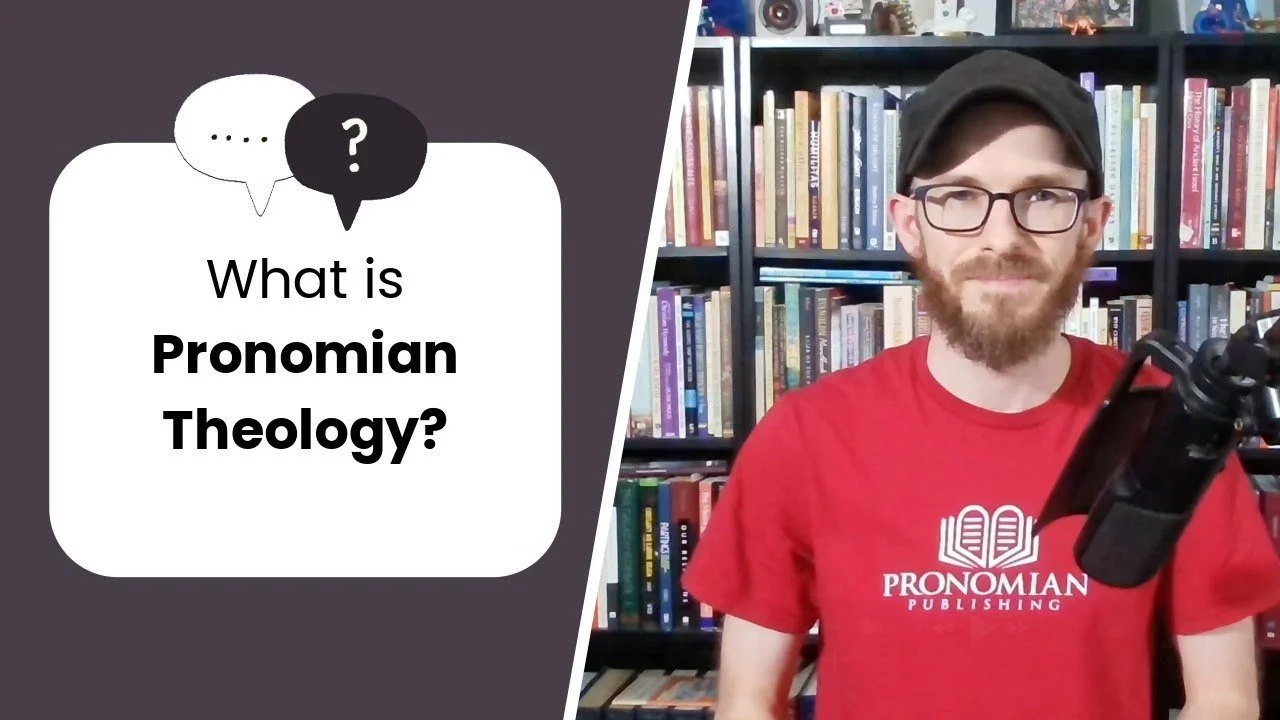
- Watch the introduction. What Is Pronomian Theology? (5 minutes)
- Read Matthew 5:17–20 in context, then read Jesus Fulfilled the Torah — What Does That Mean?
- Work through the objection that bothers you most. Most people have exactly one passage standing in the way. Find it in the passage list above.
- Understand what this isn't. What Is the Hebrew Roots Movement? (And Why I Don't Identify With It)
- Then, if you're convinced, start with the Sabbath. 7 Ways To Keep The Sabbath