
What Is the Hebrew Roots Movement? (And Why I Don’t Identify With It)
I am a follower of Yeshua (Jesus) the Messiah, and I believe the Torah (the Law of Moses) remains relevant for God’s people today and should still be obeyed. This conviction has shaped much of my work over the years. I have written extensively in defense of the Torah’s ongoing authority, including an entire book devoted to critiquing antinomian readings of Matthew 5:17–20. I have also published numerous articles and videos exploring the Torah’s role in the life of the believer.
So does that make me part of the Hebrew Roots Movement?

If the Hebrew Roots Movement is defined simply as a movement of believers who reject the idea that the Torah has been abolished and who seek to obey God’s commandments, then I suppose the label could apply. However, there are at least two problems with reducing the movement to this single distinctive.
First, throughout church history, most Christians have affirmed the ongoing authority of the Law of Moses in one form or another. If that alone is sufficient to make someone “Hebrew Roots,” then the vast majority of Christians are part of the Hebrew Roots movement, and the term therefore loses any meaningful distinctiveness. Second, as most people recognize, the modern Hebrew Roots Movement encompasses much more than the belief that the Torah should be obeyed. The label typically refers to a broader set of distinctives that extend well beyond the question of Torah observance.
Let’s consider these issues in greater detail.
1) The Problem with Defining Hebrew Roots by Torah Observance Alone
The problem with defining the Hebrew Roots Movement simply as the belief that the Law of Moses should be obeyed is that this belief, in one form or another, has been shared by most Christians throughout church history.
To be sure, some modern Christian authors argue that the Torah has no practical role in the life of the believer at all. For instance, megachurch pastor Andy Stanley writes, “The law…has no say in the life of a believer. None.”[1] More recently, R. L. Solberg has expressed a similar view, writing, “We are no longer obligated to keep the Law of Moses…we cannot follow both Moses and Jesus.”[2] However, the antinomian perspective of figures like Stanley and Solberg has never represented the mainstream Christian view. If antinomianism and pronomianism are understood as opposite ends of a theological spectrum, most Christians have historically fallen somewhere between the two rather than embracing a fully antinomian position.
This can be seen, for example, in the seventeenth-century Westminster Confession of Faith. Although the Confession teaches that the so-called “ceremonial” and “civil” aspects of the Law have been abrogated, it affirms that the so-called “moral” law—summarized in the Ten Commandments given at Mount Sinai—“doth forever bind all…to the obedience thereof” and that “Neither doth Christ in the gospel any way dissolve, but much strengthen, this obligation” (WCF XIX.V). The Confession applies this principle even to the Sabbath commandment. Although it teaches that the Sabbath was changed from the seventh day to the first day beginning with the Messiah’s resurrection, it nevertheless describes Sabbath observance as “a positive, moral, and perpetual commandment, binding all men in all ages” (WCF XXI.VII). Accordingly, believers are to observe “holy rest” throughout the day, abstaining from their ordinary “works, words, and thoughts about their worldly employments and recreations” (WCF XXI.VIII).
Earlier Christian writers likewise affirmed that the Law of Moses remained in effect in some sense. Augustine, for example, did not believe that Christians were obligated to observe those aspects of the Law that he understood as “prefiguring” the Messiah, such as literal Sabbath observance and the food laws of Leviticus 11. Nevertheless, he strongly rejected the Manichaean claim that the Messiah abolished the Law of Moses. Appealing to Matthew 5:17, Augustine argues that Christians are required to observe the Torah’s “moral precepts” and explicitly identifies the Ten Commandments as examples of those enduring obligations (Against Faustus 19.18).
Of course, some may object that the Hebrew Roots Movement is distinguished not by a general belief in the Torah’s ongoing authority, but rather by its affirmation of specific commandments that most modern Christians regard as no longer binding, such as the seventh-day Sabbath, the biblical festivals, and the food laws. Yet even this definition is problematic, since there have been Christian communities throughout history that continued to observe such practices.
Consider the Seventh Day Baptists, a Christian denomination whose roots go back to the Reformation. For centuries, Seventh Day Baptists have maintained that Christians ought to keep the seventh-day Sabbath.[3] Whether or not one agrees with the Seventh Day Baptists, nobody considers them part of the Hebrew Roots Movement simply because they affirm the Sabbath.
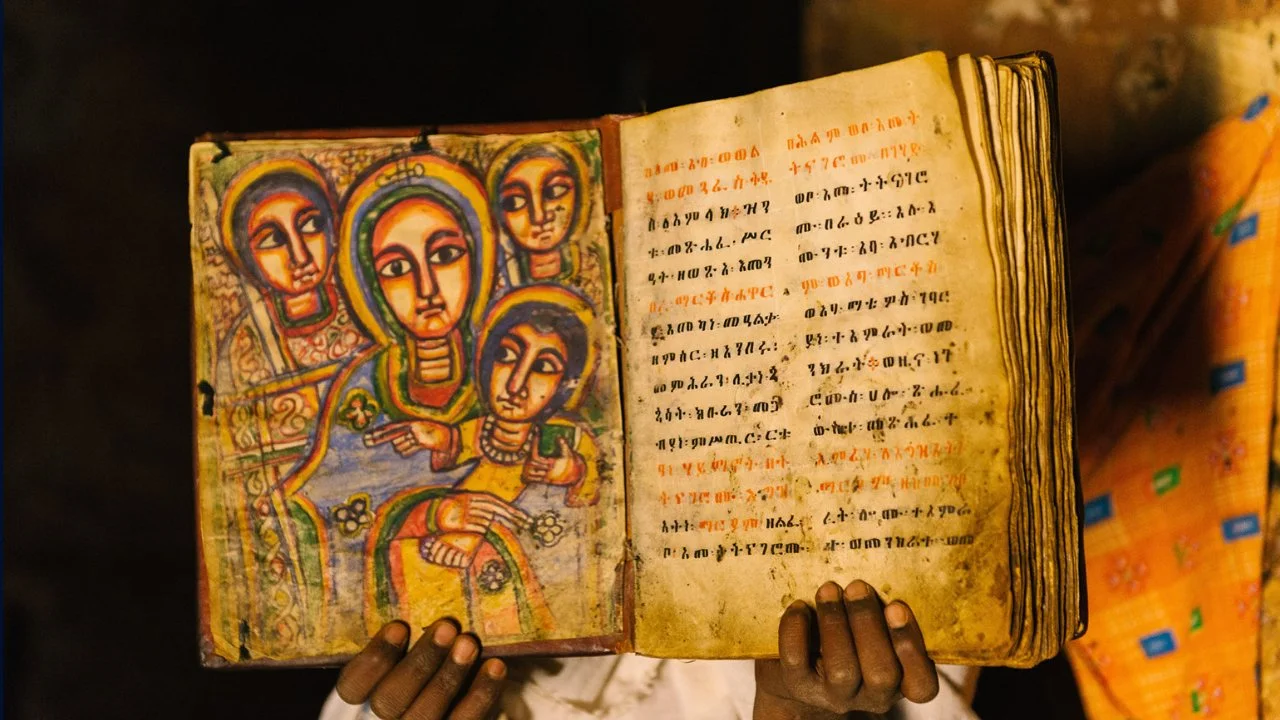
Practices like seventh-day Sabbath observance are not limited to Protestants. The Ethiopian Orthodox Church, whose origins stretch back to late antiquity, has long maintained certain Torah practices, including Sabbath observance and adherence to biblical food laws.[4] Again, nobody considers the Ethiopian Orthodox tradition to be “Hebrew Roots.”
The same point could be made with respect to Messianic Judaism. Like many within the Hebrew Roots Movement, Messianic Judaism promotes the observance of commandments such as the seventh-day Sabbath, biblical festivals, and food laws. Nevertheless, Messianic Judaism is generally recognized as a distinct movement with its own history and theological emphases (more on this below).
Similar examples can be found throughout church history. In the fifth century, Socrates Scholasticus observed that nearly all churches throughout the world held religious services on the Sabbath in addition to Sunday, with Rome and Alexandria serving as notable exceptions (Ecclesiastical History 5.22). Sozomen reports something similar (Ecclesiastical History 7.19). Other sources, such as the Apostolic Constitutions, likewise attest to continued Christian Sabbath observance (Apostolic Constitutions 2.36; 8.33). Some scholars have even argued that the Didache encourages its Gentile Christian readers to observe the Sabbath and food laws (Didache 6.2–3).[5] Likewise, in the second century, a substantial portion of the churches in Asia Minor insisted on celebrating Passover on the fourteenth of Nisan according to the biblical calendar. Defending this practice, Polycrates of Ephesus appealed to the example of figures such as John, Philip, and Polycarp, declaring, “We observe the exact day; neither adding, nor taking away” (Eusebius, Ecclesiastical History 5.24.2). Polycrates considered this practice a matter of obedience: “It is better to obey God rather than man” (Eusebius, Ecclesiastical History 5.24.7; cf. Acts 5:29). Another example is the Jewish-Christian Nazarenes, who confessed Yeshua as the Messiah while continuing to observe commandments such as the Sabbath, the biblical festivals, and the food laws (Epiphanius, Panarion 29.7.5; Augustine, Against Faustus 19.4).
The point here is that nobody classifies the Seventh Day Baptists, Ethiopian Orthodox, Messianic Jews, Quartodecimans, Nazarenes, or these other Christians throughout history as part of the Hebrew Roots Movement. Yet all of them, to one extent or another, have affirmed the continued observance of commandments found in the Torah. Thus, Torah observance among followers of Messiah—including practices such as Sabbath, biblical festivals, and food laws—has never been unique to the modern Hebrew Roots Movement. Consequently, defining the movement solely by reference to such practices is inadequate.
Some Distinctives of the Hebrew Roots Movement
It is true that an emphasis on Torah observance is a prominent feature of the Hebrew Roots Movement. However, as we have seen, neither a belief in the Torah’s ongoing authority nor the observance of specific commandments such as the Sabbath, the biblical festivals, and the food laws is unique to the movement. If we wish to define the Hebrew Roots Movement in a way that meaningfully distinguishes it from other Christian groups, we must look beyond Torah observance alone.
Indeed, a number of additional theological and interpretive distinctives are frequently associated with the Hebrew Roots Movement. These distinctives have been widely recognized.[6] To be sure, not every individual who identifies with the Hebrew Roots Movement embraces all of these positions. Nevertheless, they are commonly associated with the movement and help explain why it is generally regarded as a distinct phenomenon within Christianity.
Before proceeding, I should emphasize that my purpose is not to attack those who hold some of these views. Over the years, I have personally known and even worked alongside many believers who identify with the Hebrew Roots Movement or who hold some of the distinctives commonly associated with it. I count many of these individuals as friends and brothers and sisters in the Messiah even though I consider some of these ideas to be unbiblical. My goal here is simply to explain why, despite my belief in the Torah’s ongoing authority, I do not identify myself with the Hebrew Roots Movement.
Sacred Name Theology: One distinctive commonly associated with the Hebrew Roots Movement is Sacred Name theology (or Sacred Namism). Although people who hold to this theology do not all agree on the correct pronunciations of the divine name or the Messiah’s name, they generally maintain that believers should use specifically Hebrew (or, in many cases, pseudo-Hebrew) forms of those names. Many also contend that names and titles such as “God,” “Lord,” and “Jesus” are pagan in origin and should therefore be avoided. In many Sacred Name circles, pseudo-Hebrew forms such as “Yahuah” and “Yahusha” are promoted in teachings and publications such as the Eth Cepher. Although many within Messianic Judaism prefer to use the name Yeshua and may incorporate Hebrew terminology into their worship and teaching, they do not regard the use of names such as Jesus, God, or Lord as illegitimate. The insistence that believers must use particular Hebrew or pseudo-Hebrew pronunciations of the divine name and the Messiah’s name is a distinctive feature of the Hebrew Roots Movement.
Two-House Theology: Another distinctive commonly associated with the Hebrew Roots Movement is Two-House theology (sometimes called Ephraimite theology). While there are different flavors of this teaching, its central claim is that most Gentile followers of Messiah are actually physical descendants of the lost northern tribes of Israel. According to this view, the growing interest in Torah observance among Christians is evidence that God is restoring the lost tribes in fulfillment of biblical prophecy. Many proponents of Torah observance, however, have criticized this perspective. For example, Messianic Jewish theologian Tim Hegg argues that Two-House theology obscures the New Testament’s celebration of the inclusion of the Gentiles into the believing community as Gentiles.[7]
Rejection of Jewish Tradition: Another characteristic often associated with the Hebrew Roots Movement is the tendency to reject Jewish tradition. One area where this tendency is especially evident is the calendar used to determine the biblical festivals. Whereas Messianic Judaism generally follows the traditional Jewish calendar, many within the Hebrew Roots Movement reject it in favor of alternative calendars derived from their own interpretation of Scripture.[8] Depending on the group, this may involve observation-based calendars, lunar Sabbath calendars, the Zadok calendar, or other proposed reconstructions. As a result, Hebrew Roots believers often celebrate the biblical festivals on dates that differ from those observed by both the Jewish community and Messianic Judaism. These differing approaches to Jewish tradition and the calendar serve as another point of distinction between the Hebrew Roots Movement and other Torah-observant Christian communities such as Messianic Judaism.
Negative Attitudes Toward Christianity: Like Messianic Judaism, the Hebrew Roots Movement challenges a number of traditional Christian assumptions regarding the Torah and the Jewish context of the New Testament. However, the Hebrew Roots Movement often takes this critique much further. Many within the movement view Christianity not merely as mistaken on certain theological points but as having become fundamentally corrupted and lawless. As a result, the movement frequently adopts a sectarian posture toward the broader Christian church and often rejects historic Christian doctrine simply because it is associated with Christianity.
Alternative Views of the Canon: Related to this broader skepticism toward Judaism and Christianity, some within the Hebrew Roots Movement also question the biblical canon itself. While Messianic Judaism generally accepts the traditional Protestant canon—which, with respect to the Old Testament, contains the same books as the Jewish canon—some within the Hebrew Roots Movement question the legitimacy of the sixty-six-book canon and promote the inclusion of additional texts such as 1 Enoch, Jubilees, and even Jasher. Publications such as the Eth Cepher reflect this tendency by incorporating these and other books alongside the Torah, Prophets, and Gospels. Although such views are not held by everyone in the Hebrew Roots Movement, they are common enough to be regarded as one of its more distinctive features.
Again, not everyone within the Hebrew Roots Movement exhibits all of these characteristics. Nevertheless, Sacred Namism, Two-House theology, skepticism toward Jewish tradition, negative attitudes toward Christianity, and alternative views of the canon are among the movement’s most recognizable features and help explain why it is generally regarded as a distinct theological movement.
What About One Law Theology?
Unlike the distinctives discussed above, One Law theology is not uniquely associated with the Hebrew Roots Movement. Broadly speaking, One Law theology is the belief that the Torah applies to Gentile believers as well as to Jewish believers. Because this view is frequently advocated within the Hebrew Roots Movement, it is often treated as one of the movement’s defining characteristics.
However, the relationship between One Law theology and the Hebrew Roots Movement is not nearly as clear-cut as it is with the distinctives discussed above. As we have already seen, the belief that Gentile followers of Messiah should observe at least some aspects of the Torah is not unique to the Hebrew Roots Movement. Throughout church history and continuing into the present day, various Christian groups have affirmed practices such as Sabbath observance, biblical festivals, and food laws without being classified as Hebrew Roots. Similarly, a number of Messianic Jewish theologians have advocated some form of One Law theology while remaining firmly within the Messianic Jewish movement. For instance, Messianic Jewish teacher Ariel Berkowitz devotes an entire section of his book Torah Rediscovered to defending Torah observance for Gentile followers of Yeshua. After presenting several arguments in support of practices such as Sabbath and festival observance, he concludes that “non-Jewish believers in Yeshua have a meaningful and significant relationship to the Torah of Moshe” and that “the Torah is for the entire holy community.”[9]
For this reason, I do not regard One Law theology as a uniquely Hebrew Roots distinctive. Although it is commonly associated with the movement, One Law theology is not limited to Hebrew Roots circles. Instead, it represents one position in an ongoing discussion about the relationship of Gentile believers to the Torah—a discussion that has taken place in various forms throughout church history and continues today in communities such as Messianic Judaism (as we will see below).
If Not Hebrew Roots, Then What?
If I do not identify with the Hebrew Roots Movement, despite affirming the ongoing authority of the Torah, then where do I fit? While labels are always imperfect, I generally identify with the Messianic Jewish movement.
Although Messianic Judaism is itself a diverse movement and encompasses a range of perspectives on how the Torah is to be lived out today—including differing views on the extent to which it applies to Gentile believers such as myself—I find it to be the most accurate description of my beliefs and practice. For one thing, I do not identify with any of the Hebrew Roots distinctives discussed above. More importantly, I resonate with the definition of Messianic Judaism offered by my friend, Messianic Jewish Rabbi Eric Tokajer. He defines Messianic Judaism as “Jewish believers in Yeshua, along with non-Jewish believers in Yeshua, who together form one body doing their best to follow the teachings and tradition of the apostles and Yeshua.” He further explains that Messianic Jewish Torah observance generally corresponds to traditional Jewish practice, falling somewhere along a spectrum between Reform Judaism and Orthodox Judaism. This understanding of Messianic Judaism is consistent with the descriptions and mission statements of numerous Messianic Jewish congregations that I have read over the years.
I find this definition compelling because it reflects what I understand to be the biblical vision for the people of God: Jews and Gentiles united in one body through faith in Israel’s Messiah (Eph. 2:11–22). Rather than replacing the Jewish people or existing independently of them, Gentile believers walk alongside Jewish believers as a community that follows the Messiah and remains rooted in the Hebrew Scriptures and teachings of the apostles. This definition also recognizes the value of Jewish tradition as a guide for living out the commandments in everyday life, another point that generally distinguishes Messianic Judaism from the Hebrew Roots Movement. While Jewish tradition is not infallible and must always be tested against Scripture, it often provides a helpful guide for matters of halakha.
Of course, Messianic Judaism is far from monolithic. As noted above, there is considerable diversity within the movement regarding how to walk out the Torah and how it applies to Gentile believers. For instance, a minority of Messianic Jewish theologians argue that Jewish and Gentile believers should maintain entirely separate forms of paxis, and therefore discourage Gentile believers from practices such as Sabbath observance and participation in the biblical festivals. Obviously, I do not consider this position to be biblical, and it appears that most within Messianic Judaism do not either.[10] In my experience, most Messianic congregations welcome Gentile believers into full participation in congregational life and expect them to embrace the culture and practices of the community, including various forms of Torah observance.
So, for my part, I have found a home within Messianic Judaism and believe it to be a healthy context for cultivating a Torah-observant lifestyle centered on Yeshua. I believe Messianic Judaism offers a good model for Jewish and Gentile believers alike who affirm the ongoing relevance of the Law of Moses and seek to walk in obedience to its commandments. For that reason, it is a path that I think many Torah-observant believers who do not identify with the Hebrew Roots Movement should at least consider.
At the same time, Messianic Judaism is not the only option available to Torah-observant believers. As noted throughout this article, Torah observance is not the exclusive domain of any one movement or denomination. I personally have known several entire nondenominational evangelical churches that have embraced practices such as Sabbath observance and celebration of the biblical festivals while remaining distinctly evangelical Christian. Likewise, figures such as the late Charlie Kirk advocated seventh-day Sabbath observance while continuing to identify as evangelical Christians, and denominations such as the Seventh Day Baptists have upheld the Sabbath for centuries. Christians who embrace a pronomian (pro-Law) theology and seek to live it out in practice can be found across a wide variety of movements, denominations, and congregational settings.
Ultimately, that is the central point. A believer does not become “Hebrew Roots” simply by affirming the ongoing authority of the Torah or by seeking to observe commandments such as the Sabbath, the biblical festivals, or the food laws. Such convictions have been held by Christians throughout history and continue to be found in a variety of contexts today. My purpose is not to criticize those within the Hebrew Roots Movement, many of whom I count as friends and fellow believers. But I do not identify with the movement myself, and I do not believe Torah observance requires that I do so.
[1] Andy Stanley, Irresistible: Reclaiming the New that Jesus Unleashed for the World (Grand Rapids, MI: Zondervan, 2018), 136.
[2] R. L. Solberg, Torahism: Are Christians Required to Keep the Law of Moses? 2nd ed. (Franklin, TN: Williamson College Press, 2022), 262, Kindle.
[3] Justo L. González, A Brief History of Sunday: From the New Testament to the New Creation (Grand Rapids: Eerdmans, 2017), 129–130.
[4] Werner Vyhmeister, “The Sabbath in Egypt and Ethiopia, in The Sabbath in Scripture and History, ed. Kenneth A. Strand (Washington, D.C.: Review and Herald, 1982), 173–185.
[5] Regarding the Sabbath, see Pierluigi Lanfranchi: “[F]or the Didachist the ideal believer submits to the complete observance of the Law: ‘For if you can bear the entire yoke of the Lord, you will be perfect; but if you cannot, do as much as you can’ (6:2). It is very unlikely that ‘the entire yoke of the Lord’ did not include Sabbath, one of the central pillars of life under the covenant” (“Attitudes to the Sabbath in Three Apostolic Fathers: Didache, Ignatius, and Barnabas,” in Jesus, Paul, and Early Christianity: Studies in Honour of Henk Jan de Jonge, ed. Rieuwerd Buitenwerf, Harm W. Hollander, and Johannes Tromp [Leiden: Brill, 2008], 248). Regarding the food laws, see Kurt Niederwimmer: “This [Didache 6:3] refers obviously the commandments and prohibitions regarding food in the Old Testament and Jewish traditions. The Didachist requires that they be kept the extent that it is possible for each individual” (The Didache, Hermeneia [Minneapolis: Fortress Press, 1998], 123).
[6] As one example, the Messianic Jewish ministry First Fruits of Zion distinguishes the Hebrew Roots Movement from Messianic Judaism by highlighting a number of distinctives beyond Torah observance itself. Among other things, it identifies things like Two-House theology, Sacred Name theology, and alternative calendars for observing the biblical festivals. While I generally agree with their overall assessment, I would take issue with the claim that “one law theology”—the belief that the Torah applies to Gentiles as well as Jews—falls outside the bounds of Messianic Judaism. A number of Messianic Jewish theologians have embraced some form of One Law theology. See, e.g., Tim Hegg, There Shall Be One Law: A Biblical Defense of One Law Theology (Tacoma, WA: TorahResource, 2025). See also Ariel Berkowitz, Torah Rediscovered, 5th ed. (Shoreshim Publishing, 2012).
[7] Tim Hegg, “The Two-House Theory: Three Fatal Flaws,” TorahResource, 2002.
[8] For a biblical case for following the traditional Jewish calendar, see Tim Hegg, “Some Thoughts on the Issue of Calendars,” TorahResource, 2013.
[9] Berkowitz, Torah Rediscovered, 76. Notably, the foreword to Berkowitz’s book was written by Dr. David H. Stern, one of the most influential pioneers of the modern Messianic Jewish movement and translator of the Complete Jewish Bible. At the very least, this indicates that Berkowitz’s views on Torah observance are not regarded as outside the mainstream of Messianic Judaism.
[10] Benjamin G. Frostad, “Messianic Jews, Torah Christians, and Hebrew Roots: Disambiguating Pronomianism Within Its Social and Ecclesial Context,” in An Introduction to Pronomianism: Essays on One Torah Theology in Modern Christianity, ed. Benjamin Szumskyj and David Wilber (Jefferson, NC: McFarland, 2026), 7–31.












About David Wilber
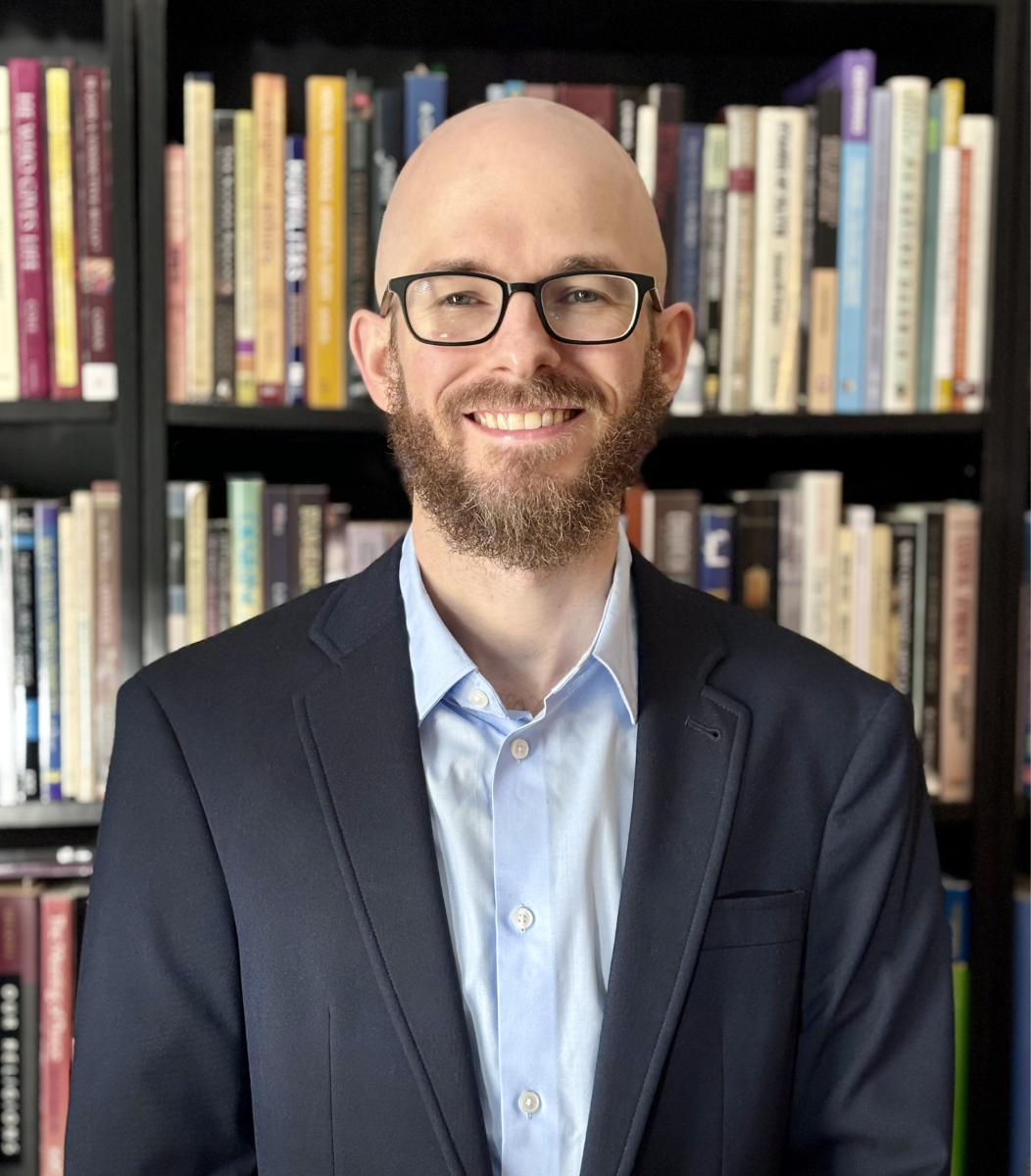
David Wilber is an author, Bible teacher, and CEO of Pronomian Publishing LLC. He has written several books and numerous theological articles, with his work appearing in outlets such as the Christian Post and the Journal of Biblical Theology. David has spoken at churches and conferences across the nation and has served as a researcher and Bible teacher for a number of Messianic and Christian ministries…

From the very beginning, human beings have been quick to blame others rather than take responsibility for their own wrongdoing. In this week’s Torah portion, Bereshit, we see how Adam and Eve’s response to their sin reveals a tendency that continues to plague humanity today. As followers of Yeshua, we are called to break this cycle of blame-shifting through humility, repentance, and personal responsibility.