
Candace Owens is Wrong About Christians and the Sabbath
Candace Owens rejects the premise of Charlie Kirk’s new book on honoring the Sabbath, saying, “I’m not going to do that because I’m Christian.” But are Sabbath observance and following Christ really mutually exclusive? According to the Bible, they are not.
Transcript
Candace Owens: “Again, this is all a part of a PR blitz for Charlie’s upcoming book on honoring the Shabbat, which I’m not going to be doing because I’m Christian. So, I’d like to already just say no, okay?”
Are you implying that Charlie Kirk, who wrote a book on why Christians should honor Shabbat, was not a Christian? Listen, you do what you want. Nobody is forcing you to keep any of God’s commandments against your will. But the notion that honoring the Sabbath is somehow incompatible with being a Christian is incoherent and contrary to Scripture.
Jesus himself kept the Sabbath. Luke records that it was his “custom” to go the synagogue on the Sabbath day (Luke 4:16). The expression κατὰ τὸ εἰωθὸς (“as was his custom”) in Luke 4:16 is significant, since Luke uses similar wording elsewhere to describe habitual practice (e.g., Luke 2:42; Acts 17:2). The use of this expression here shows that Jesus, like other religious Jews of his time, regularly took part in the synagogue services on the Sabbath day. The Gospel writer clearly depicts Jesus as a faithful, Sabbath-observant Jew who upheld this practice consistently throughout his life.[1]
Even when Jesus was challenged over the Sabbath and accused of violating it, he never claimed that the Sabbath had been abolished or that his followers did not have to keep it. Rather, in every such dispute, he offers a legal defense, explaining why his healings and other actions on the Sabbath were permissible and why the charges brought against him were unfounded. He explicitly describes his behavior as “lawful,” meaning in accordance with God’s Law, the Torah (Matt 12:11–12; Luke 6:9; 14:3).
Not only did Jesus himself keep the Sabbath, but his earliest followers—the first Christians, literally meaning “followers of Christ”—continued to keep the Sabbath as well. After the crucifixion, Luke records that the women who followed Jesus “rested [on the Sabbath] according to the commandment” (Luke 23:56), postponing their plans to anoint his body until the Sabbath day was over. According to the scholar Isaac Oliver, Luke’s mention of the women’s obedience “highlights his eagerness to illustrate that the Jewish followers of Jesus remain faithful in their observance of the Sabbath and the Torah in general.”[2] The fact that these early Christians prioritized honoring the Sabbath, even after Jesus’s death, is quite surprising if Christians in principle don’t keep the Sabbath (as you, Candace, would have us believe). However, what Luke records here is precisely what we would expect if the earliest Christians continued to believe that the Sabbath was important.
Additionally, throughout the Book of Acts, Luke repeatedly records the apostle Paul keeping the Sabbath. In Acts 13, Paul and Barnabas attend and teach in the synagogue at Pisidian Antioch on consecutive Sabbaths (Acts 13:14, 42–44). Likewise, Luke records that Paul went to the river outside Philippi to pray on the Sabbath (Acts 16:13) and that he regularly took part in synagogue worship on the Sabbath in both Thessalonica (Acts 17:2) and Corinth (Acts 18:4). Luke explicitly calls synagogue attendance on the Sabbath Paul’s “custom,” just like it was Jesus’s “custom.” Why is Paul consistently depicted as prioritizing the Sabbath during his missionary journeys if the Sabbath is supposedly not for Christians?
Now, one might argue that Paul’s practice of keeping the Sabbath was merely a missionary tactic and nothing more, but that is anachronistic. At this point in history, Christianity was still a movement within Judaism, not a separate religion. That definitive parting of the ways came much later in history. It is true that Paul preached the gospel in the synagogue on the Sabbath, but his intention was not to pull people away from Judaism. He and his ministry colleagues were themselves religious Jews who worshiped in the synagogue on the Sabbath.[3]
Now, from the second century onward, many Christian communities did begin shifting away from Sabbath observance—primarily due to socio-political factors rather than purely theological reasons.[4] However, this shift was not universal. Fifth-century historians Socrates Scholasticus (Ecc. His. 5.22)) and Sozomen (Ecc. His. 7.19) reported that, aside from Alexandria and Rome, much of the Christian world continued to keep the Sabbath alongside Sunday well into the fifth century AD. Moreover, the fourth-century Apostolic Constitutions instruct Christians to "observe the Sabbath, on account of him who ceased from his work of creation" (Apos. Con. 2) and to "have leisure" and "go to church for instruction in piety" on both the Sabbath and Sunday (Apos. Con. 8.33). So, Christians as late as the fifth century AD still distinguished between the Sabbath and Sunday, and many observed both. Again, this is not what we would expect if Christians in principle do not keep the Sabbath.
But wait! There’s more! During the Reformation, there were a number of Christian communities—mostly among the Anabaptists—that advocated keeping the seventh-day Sabbath.[5] Though they remained a minority, these believers nonetheless understood Sabbath observance as fully compatible with Christianity. You also have the Seventh-Day Baptist movement, which began in the 1600s and still continues today.[6] Beyond that, there are movements such as Messianic Judaism, which seeks to recover the original practices of the earliest Christians, including Sabbath observance. Many other Christians today likewise continue to find value in the Fourth Commandment. Charlie Kirk was one of them.
So, despite what you think, Christians throughout history—and still today—honor the Shabbat as part of their Christian faith. Following Christ and keeping the Sabbath are not mutually exclusive. So, instead of dismissing the custom of Jesus and the apostles as irrelevant, I would encourage you to explore why people like Charlie, along with so many others, have found such joy in this commandment.
[1] Mark S. Kinzer, Jerusalem Crucified, Jerusalem Risen: The Resurrected Messiah, the Jewish People, and the Land of Promise (Eugene, OR: Wipf & Stock, 2018), 174.
[2] Isaac W. Oliver, Torah Praxis after 70 CE: Reading Matthew and Luke-Acts as Jewish Texts, WUNT II 355 (Tübingen: Mohr Siebeck, 2013, 163.
[3] Oliver, Torah Praxis , 234. See also Denis Fortin, “Paul’s Observance of the Sabbath in Acts of the Apostles as a Marker of Continuity Between Judaism and Early Christianity,” AUSS 40, no. 2 (2015), 329
[4] See, e.g., Lawrence T. Geraty, "From Sabbath to Sunday: Why, How and When?" in Partings: How Judaism and Christianity Became two, ed. Hershel Shanks (Washing, DC: Biblical Archaeology Society, 2013).
[5] Justo González, A Brief History of Sunday: From the New Testament to the New Creation (Grand Rapids, MI: Eerdmans, 2017), 106–108.
[6] González, A Brief History, 129–130.




















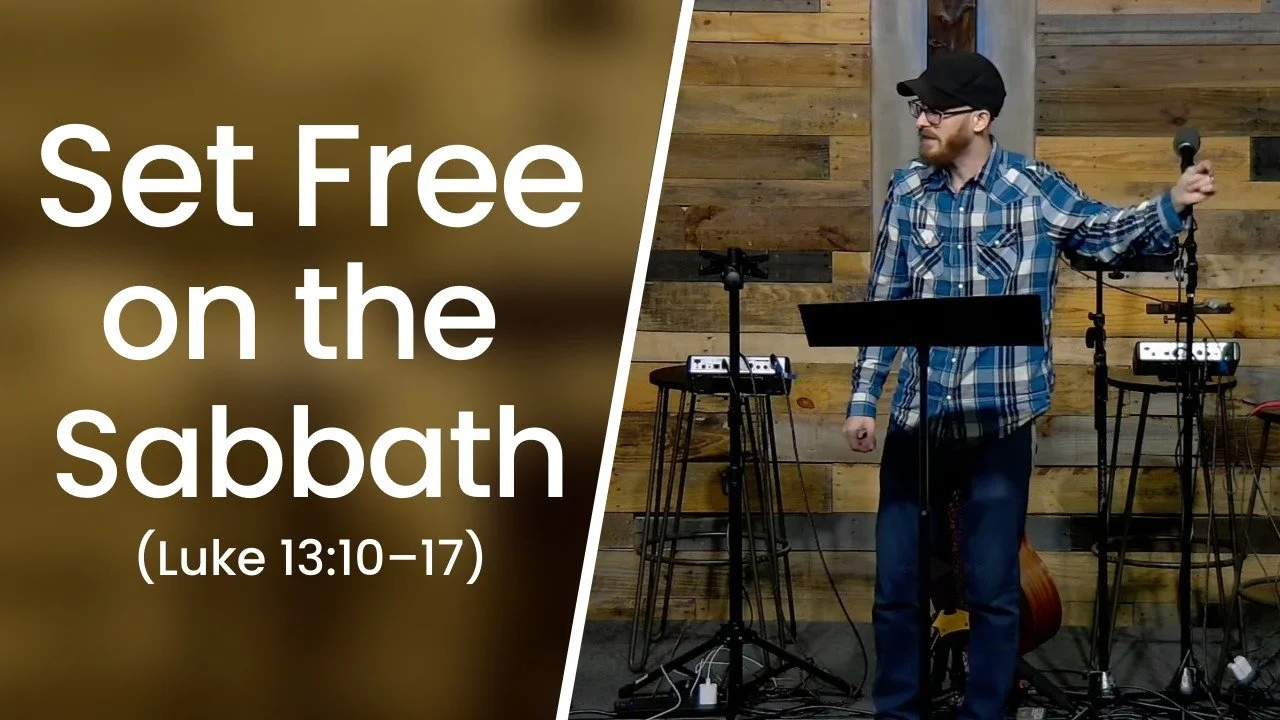

About David Wilber
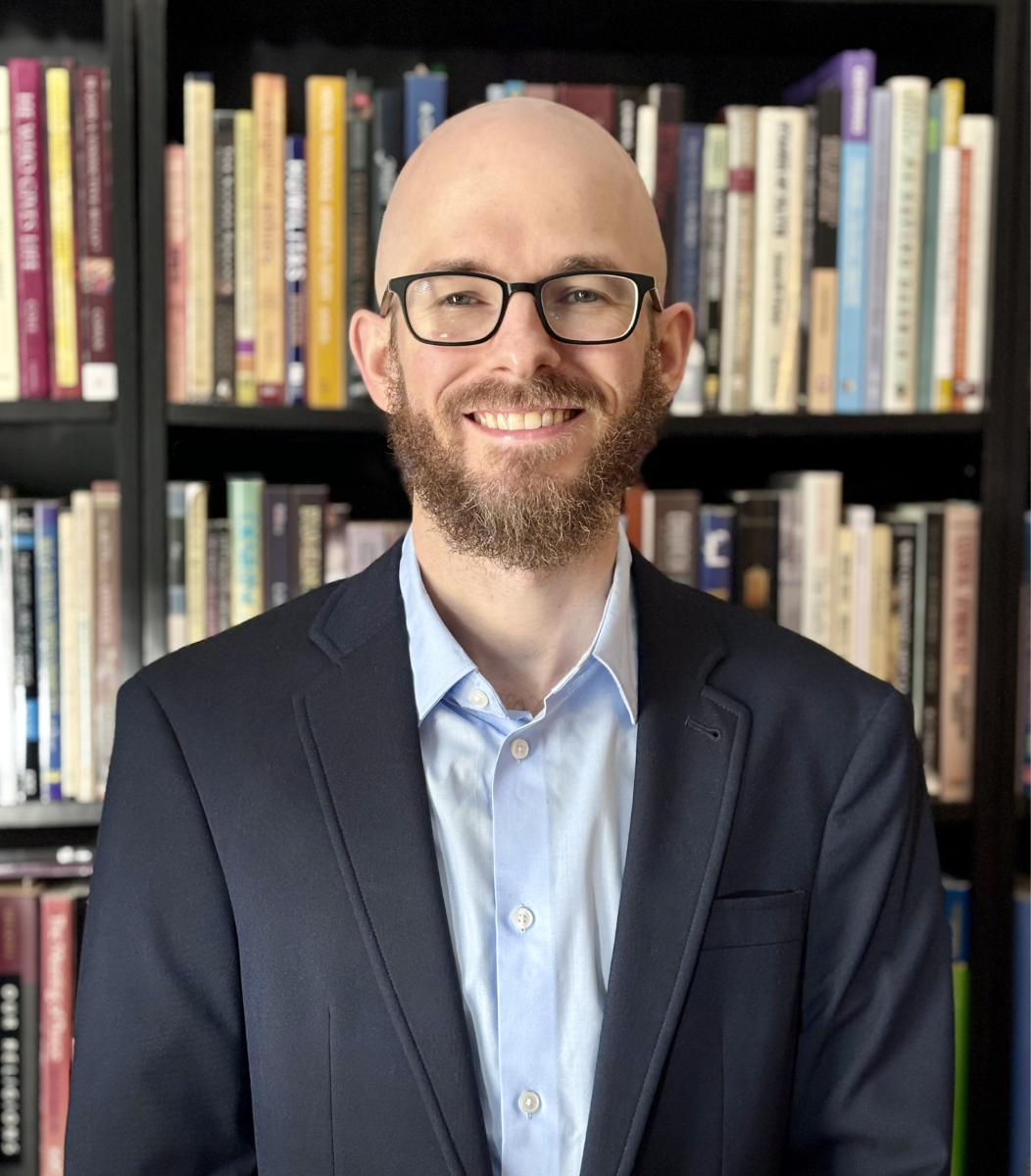
David Wilber is an author, Bible teacher, and CEO of Pronomian Publishing LLC. He has written several books and numerous theological articles, with his work appearing in outlets such as the Christian Post and the Journal of Biblical Theology. David has spoken at churches and conferences across the nation and has served as a researcher and Bible teacher for a number of Messianic and Christian ministries…