

SERMONS & VIDEOS BY DAVID WILBER

The Truth About the Lost Book of Jasher
The Bible mentions several books that have been lost to history. One of these is the Book of Jasher, meaning “one who is upright.” Over the centuries, this book has sparked much curiosity. Some today even argue that it has been rediscovered and ought to be included in the Bible. This video explores what we know about the Book of Jasher and evaluates claims that it has been rediscovered.
What is Pronomian Theology?
Pronomian theology, or pronomianism, is a way of reading Scripture that affirms the ongoing authority of God’s Law given through Moses (Torah). In this video, we explore how pronomianism contrasts with antinomianism and how various Christian communities like Messianic Judaism and the Seventh Day Baptists approach the Torah today. If you’ve ever wondered about the relevance of commandments such as the Sabbath, festivals, and food laws in Christian ethics, this short video will give you a basic introduction to pronomian theology.
5 Reasons Christians Should Study Apologetics
What is "apologetics," and why is it so important that Christians study it? David Wilber gives 5 reasons why apologetics matters in Christian discipleship.
Marital Intimacy on the Sabbath: Does it Violate the Commandment?
Is marital intimacy on the Sabbath a violation of the commandment to keep the seventh day holy? The Rabbis say no, but the author of the book of Jubilees says yes. Which view is more aligned with Scripture?
The Law of Moses, the Gospel, and Antinomianism: A Response to R. L. Solberg
R. L. Solberg, an outspoken critic of Pronomian (pro-Law) theology, made a video where he argued that we cannot follow the Gospel of Jesus and the Law of Moses at the same time. I responded to that video and demonstrated why none of Solberg’s arguments prove his case. Solberg didn’t like my video and made another video objecting to my critiques. This video is my response to his response.

Can we follow the Gospel of Jesus AND the Law of Moses at the same time?
Is the Law of Moses—the Torah—incompatible with the gospel? Are Messianic Jews and other Pronomian (Pro-law) Christians living contrary to the teachings of Jesus and the apostles? Some modern teachers say yes, but what does the New Testament say? Let’s find out.

The Divine Son: Exploring the Messiah's Deity in Hebrews 1
Is the Messiah God? The first chapter of Hebrews presents compelling evidence that he is. In this chapter, the author highlights the Son’s role as the creator and sustainer of the universe, emphasizes the Son’s divine essence, proclaims that the Son is worthy of the worship that belongs only to God, and explicitly identifies the Son as “God” and “Lord/YHWH.” In order to demonstrate each of these points, this video conducts a detailed exegesis of Hebrews 1 and answers objections from unitarians.

Sean Griffin is Wrong About the Book of Jubilees
Recently, I made a 15-minute video where I gave an overview of the Book of Jubilees and explained why Jews and Christians have never considered it Scripture. Sean Griffin did not like this video and made a three-hour response to it. This is my response to his response. (Don't worry—it is much shorter than Sean's.)

The Truth About the Book of Jubilees
Jubilees is a fascinating book that provides a window into the world of Second Temple Judaism. However, instead of appreciating it for what it is, a few teachers on the Internet exaggerate its significance and consider it to be inspired Scripture. This video provides an overview of the book of Jubilees and explains why it is not Scripture.
Testing the Lilith Myth: Did Adam Have Another Wife?
Where did the Lilith myth come from? Is there anything in the Bible that suggests Adam had another wife named Lilith before Eve? We answer these questions in this short teaching.

Does the Sabbath commandment apply to Christians? (A Response to Dr. Frank Turek)
Dr. Frank Turek argues that the Sabbath commandment does not apply to Christians because it is not repeated in the New Testament and is part of the "Old Covenant." This is my response.

Did Jesus reject the Torah's dietary laws? (Mark 7:1-23)
Did Jesus reject the Torah’s dietary laws? Many say that he did, citing Mark 7:1-23 as proof. In this video, I will explain the problems with the traditional interpretation of this passage and offer an alternative view that presents a more consistent and accurate portrayal of Jesus’s teaching.

When Does the Sabbath Begin?
There is good biblical and historical evidence that the Sabbath begins on Friday at sundown and ends on Saturday at sundown.

The Case of the Slandered Bride (Deuteronomy 22:13-21)
Critics of Scripture often cite Deuteronomy 22:13-21 in support of their view that the Bible has immoral and misogynistic teachings. How do we understand this difficult text?

Our God and Savior, Jesus Christ (2 Peter 1:1)
Does Peter call Jesus “God” in 2 Peter 1:1? When we examine this verse from a grammatical standpoint, it is evident that he does.
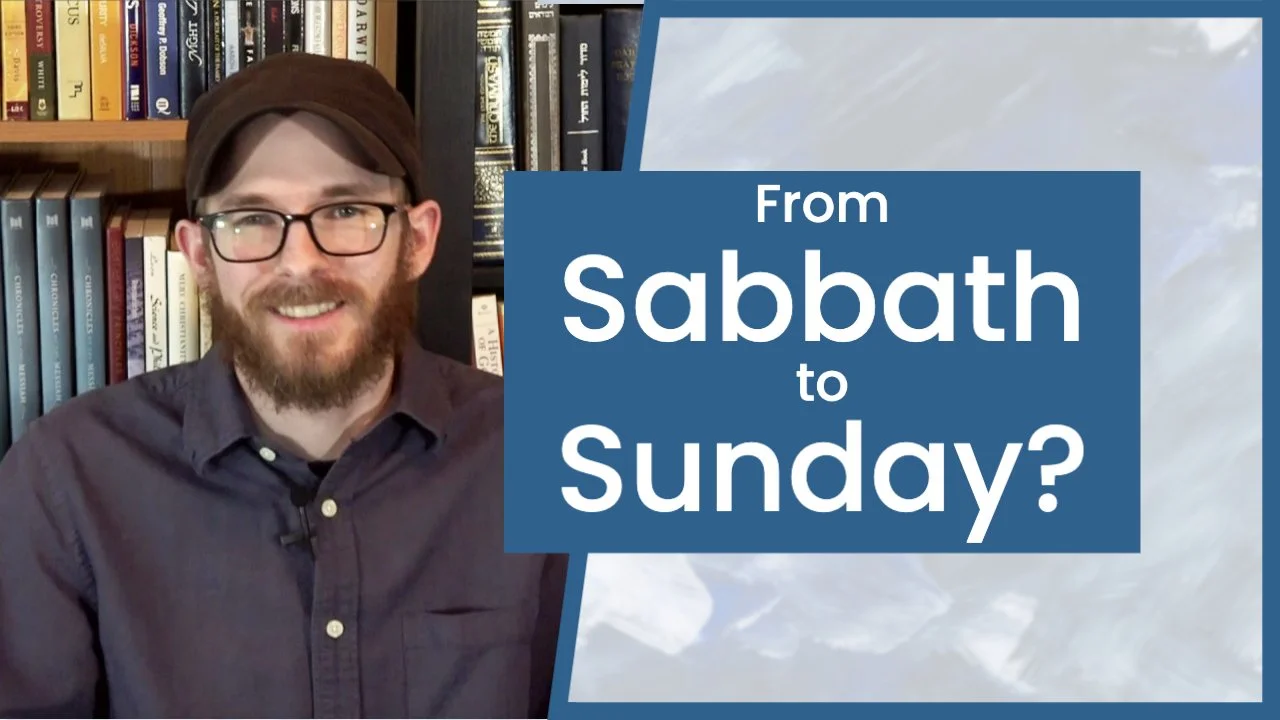
How Sunday Replaced the Sabbath in Christianity
David Wilber explains when and how the Sabbath "changed" from the seventh day (Saturday) to the first day (Sunday), and where we as Christians go from here.

Matters of Opinion (Romans 14)
In Romans 14, Paul admonishes his readers not to pass judgment on one another over days and foods. Based on this chapter of Scripture, many believe Paul teaches that it doesn't matter whether or not believers observe the commanded holy days and dietary laws in the Torah. But is that really what Romans 14 teaches?

The Sabbath: A Day of Healing
The gospels record several instances of Yeshua healing people on the Sabbath. Some Christian teachers have interpreted these Sabbath healings as evidence that Yeshua came to do away with the Sabbath. In reality, Yeshua's Sabbath healings demonstrate the proper way to keep the Sabbath.

Why Some Christians Keep the Sabbath
Christians around the world are keeping the Sabbath the way the Bible says to keep it. Why? How is the Sabbath meaningful to followers of Jesus?
What the Bible Says About Abortion
A recent study has found that 44% of self-identified Christians in America said they believe the Bible is “ambiguous in its teaching about abortion.” What this study actually reveals is that many self-identified Christians either don’t read the Scriptures or don’t know how to handle them rightly.