
Can Christians Support Hanukkah? | A Response to Dale Partridge
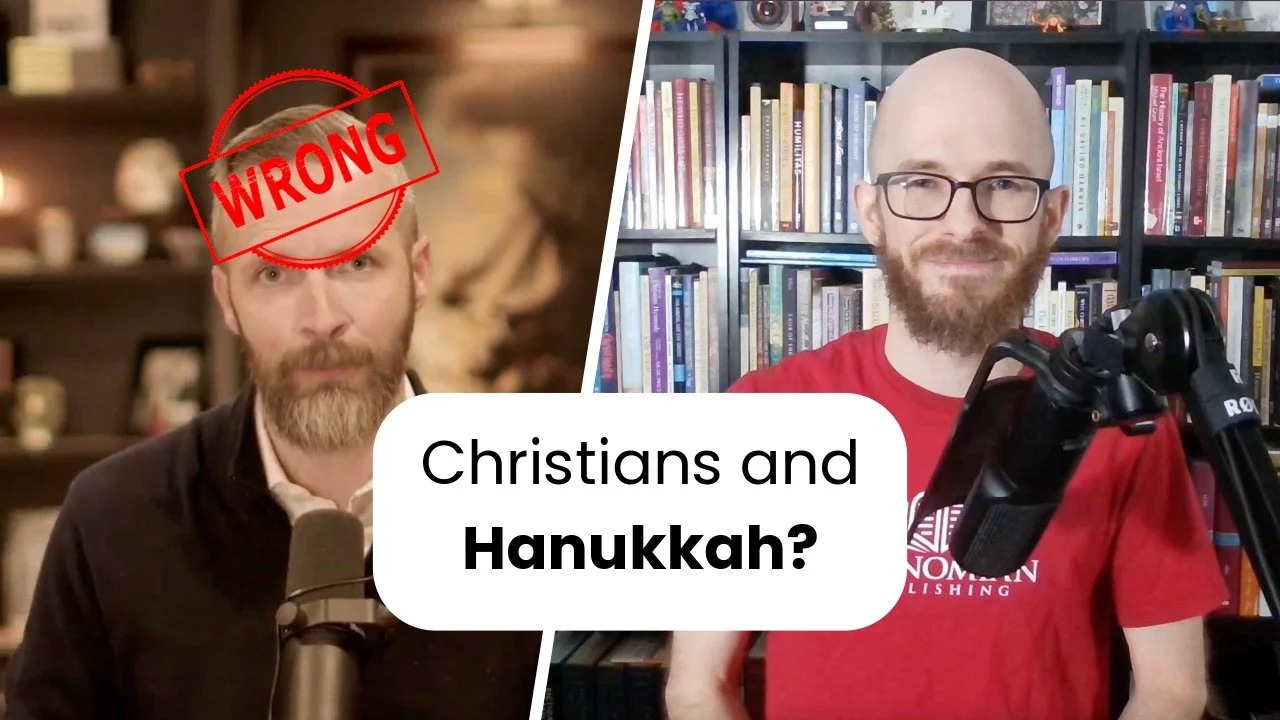
Dale Partridge claims that faith in Christ and support for Hanukkah are incompatible. However, as this video demonstrates, his arguments supporting this claim are theologically incoherent.
Transcript
Dale Partridge: “Can Christians support Hanukkah? No.”
Hey, thanks for the video. However, the idea that Christians cannot support Hanukkah is unbiblical and incoherent. Christianity arose from within Second Temple Judaism. Jesus, his disciples, the Scriptures he taught from, and the worship practices he observed were all thoroughly Jewish. Hanukkah commemorates a time when Jewish faith, worship, and Scripture were nearly erased under forced Hellenization—and yet God delivered his people by empowering them to reclaim the temple and to preserve the Jewish faith and Hebrew Scriptures. The Messiah himself was a religious Jew, and it was from that preserved religious world that the earliest followers of Jesus arose. So, in a very real historical sense, Christianity would not exist without the events that Hanukkah commemorates. For that reason—among many others that I explain in this sermon—Christians are thankful for Hanukkah, and we support it. But let’s hear what else you have to say.
Dale Partridge: “Many claim Christians can support this holiday because Jesus celebrated it in John 10:22-23. But is that true? No…Jesus did not celebrate Hanukkah. John simply says that he was present in the temple during the feast. Scripture is explicit when Jesus does observe feasts that were commanded by the Law because Jesus came to fulfill the Law. Hanukkah was not one of those feasts.”
You are right about one thing. When Jesus said he came to “fulfill” the Law in Matthew 5:17, he meant that he came observe it. Fulfilling the Law also means teaching it, as the parallel statement in verse 19 makes clear: “whoever does them and teaches them will be called great in the kingdom of heaven.”
On a related note, Jesus explicitly commands us not to think that he came to “abolish” the Law or Prophets—that is, the Hebrew Scriptures. The Greek term used in Matthew 5:17 is καταλύω, which means to “cause to be no longer in force” (BDAG 4th ed). It is closely related to the term λύω in verse 19, translated as “annuls,” and carries the same meaning of “repeal, annul, abolish” (BDAG 4th ed). Both these terms appear frequently in 4 Maccabees and Josephus’s Wars of the Jews in the context of the Hanukkah story. For instance, 4 Maccabees 17:9 describes Antiochus as “the tyrant who wished to abolish [καταλῦσαι] the way of life of the Hebrews.” Josephus likewise writes that Antiochus “put pressure upon the Jews to abolish [καταλύσαντας] their ancestral customs, leaving their infants uncircumcised and sacrificing swine upon the altar” (Jewish Wars 1.34).
Antiochus is the main villain in the Hanukkah story. So when Jesus is insists that he did not come to “abolish” the Law or Prophets, he is saying that he did not come to do what Antiochus came to do—namely, to abolish the Hebrew Scriptures and the Jewish faith. On the contrary, Jesus came to fully establish the Law and Prophets by doing and teaching them. He is the anti-Antiochus. For more on this, see my book How Jesus Fulfilled the Law.
But I digress. Your claim that Jesus did not celebrate Hanukkah in John 10 is quite weak. It is true that the text explicitly states that Jesus was in Jerusalem during Hanukkah; it does not explicitly say that he was there celebrating the festival. However, I would encourage you to read John’s Gospel more carefully and consistently. You have already acknowledged that Jesus did observe the festivals commanded by the Law. Well, one such festival is Passover. Notice how John describes Jesus’s presence in Jerusalem during Passover:
The Passover of the Jews was at hand, and Jesus went up to Jerusalem. (John 2:13)
John then recounts how Jesus drove out the people exchanging money in the temple because they failed to show proper reverence for the temple, which Jesus calls his “Father’s House.” As a side note, this is hardly the response we would expect from someone who thought the temple was not important. But again, I digress. Here is another example of John mentioning Passover:
Now when he was in Jerusalem at the Passover Feast, many believed in his name when they saw the signs that he was doing. (John 2:23)
These verses sound a lot like John’s later description of Jesus being in Jerusalem during the Feast of Dedication, or Hanukkah:
At that time the Feast of Dedication took place at Jerusalem. It was winter, and Jesus was walking in the temple, in the colonnade of Solomon. (John 10:22–23)
In neither case does John explicitly say that Jesus went up to Jerusalem to celebrate the festival—yet, as you yourself acknowledge, that is plainly what he was doing with respect to Passover. When we read John’s Gospel consistently, we come to the same conclusion regarding his reference to Hanukkah.
But at the very least, Jesus did not condemn the festival. As Dr. Benjamin Szumskyj writes:
Yeshua, who was known to evidence righteous anger towards the desecration of the Temple (Matt. 21:12–13; Mark 11:15–18), exhibited no such demeanour when sighting Hannukah festivities. As such, the contention made is that if Yeshua did not condemn it and, in all likelihood, like the majority of Israel, observed it, contemporary Christians doing so is not wrong.[1]
In short, Christians support Hanukkah because we agree with Jesus. He did not condemn Hanukkah, so neither do we. And we do not presume to know better than him.
Dale Partridge: “More importantly, Jesus viewed himself as the temple. He said ‘Destroy this temple and in three days I will raise it up.’ Now the Jews believed that he was speaking of the Jerusalem temple, but as John 2:21 says, he was speaking about the temple of his body.”
Yes, Jesus identifies his body as the true temple. But your claim later that this therefore means he replaced the Jerusalem temple—or was opposed to it in principle—does not follow. For instance, John explicitly situates Jesus’s words in John 2:21 within the context of him zealously defending the holiness of the Jerusalem temple, which he calls his “Father’s house.” I’ll have more to say about this in a moment.
Dale Partridge: “However he did prophesy the destruction of the temple in Matthew 24, which then occurred in AD 70 as a judgment on Israel for rejecting their Messiah. So why does this matter? Because Jesus is the true temple. To celebrate the Dedication of a temple that Christ replaced and judged is theologically incoherent.”
This is bad argument. Jeremiah prophesied that the temple would be destroyed in his own time as an act of divine judgment, yet no one thinks that Jeremiah therefore rejected the temple in principle. In the same way, Jesus’s prophecy of the temple’s destruction as part of God’s coming judgment does not imply that he rejected the temple either. As Dr. Michael Barber writes:
Jesus’s prediction of the temple’s end in the Gospel’s overall narrative is not the result of a rejection of cultic worship. Judgment will befall Jerusalem first and foremost because of acts of wickedness committed by its leadership. The rejection of Jesus is part of this, and it is bound up with the failure of the leaders to recognize his messianic identity—the priests fail to grasp this in the temple (Matt 21:15) and the Pharisees do not recognize him as the figure from Psalm 118 who “comes in the name of the Lord” (Matt 23:39). As in other works like Jeremiah and Daniel, the temple will not be spared in the coming cataclysm. Nevertheless, Jesus does not suggest that the sanctuary or its sacrifices are illegitimate. On the contrary, Jesus forcefully affirms their holiness.[2]
Dale Partridge: “To celebrate the Dedication of a temple that Christ replaced and judged is theologically incoherent.”
The apostles disagree with you. They saw no conflict between the Jerusalem temple and their Messiah. For example, Luke records that immediately after Jesus’s ascension, the disciples were “continually in the temple blessing God” (Luke 24:53). This statement follows directly after Luke notes that Jesus had opened their minds to understand the Scriptures and explained how the Hebrew Scriptures testified to his suffering and resurrection (Luke 24:44–49). By this point, the disciples would have had a clear grasp of Christ’s identity, including the meaning of his claim to be the true temple. If the Jerusalem temple were somehow incompatible with Jesus being the Temple, it is difficult to explain why the disciples would continue worshiping there.
Moving into the book of Acts, Luke depicts the apostles attending the temple “every day” (Acts 2:46; 5:42). Why would the disciples gather there every day if the temple were at odds with the gospel they were proclaiming? In Acts 21:17-26, decades after the Messiah’s resurrection, Paul even joins others in completing a Nazirite vow and takes part in public worship at the temple. Later, during his hearing before Felix, Paul testifies that he had fully intended to present offerings at the temple (Acts 24:17).
I suppose you would have us believe that the apostles, including Paul, were just “theologically incoherent.” I think it is the other way around. If your theology is inconsistent with the practices of the apostles, then it is your position that is “theologically incoherent.”
Dale Partridge: “Even more directly, the Jews who celebrate Hanukkah reject Christ. And John says ‘No one who denies the son has the Father.’ So Hanukkah celebrates a temple without Christ; Christianity confesses Christ as the true temple. The two are not compatible.”
There are two problems here. First, there are many Jews who do believe in Jesus, and they celebrate Hanukkah. There are also many non-Jewish Christians—myself included—who celebrate it as well. Like the apostles, we see no conflict between the Jerusalem temple and the Messiah because Scripture presents no conflict between them, and we agree with Scripture.
Second, how many non-Christians do you think will celebrate Christmas this year? How many non-Christians are going to celebrate the Fourth of July or Thanksgiving? Probably a lot more than the non-Christians who celebrate Hanukkah. Are you prepared, then, to condemn Christmas and these other holidays simply because there are many people who reject Christ who celebrate them? I suspect not. But that only highlights how incoherent your logic and arguments are.
Good effort, but in the end, we are not persuaded. Christians are going to continue supporting Hanukkah.
[1] Benjamin Szumskyj, The Christian Case for Celebrating Hannukah, Dec. 16, 2025, Substack.com.
[2] Michael Barber, The Historical Jesus and the Temple: Memory, Methodology, and the Gospel of Matthew (Cambridge University Press, 2023, 110.







About David Wilber
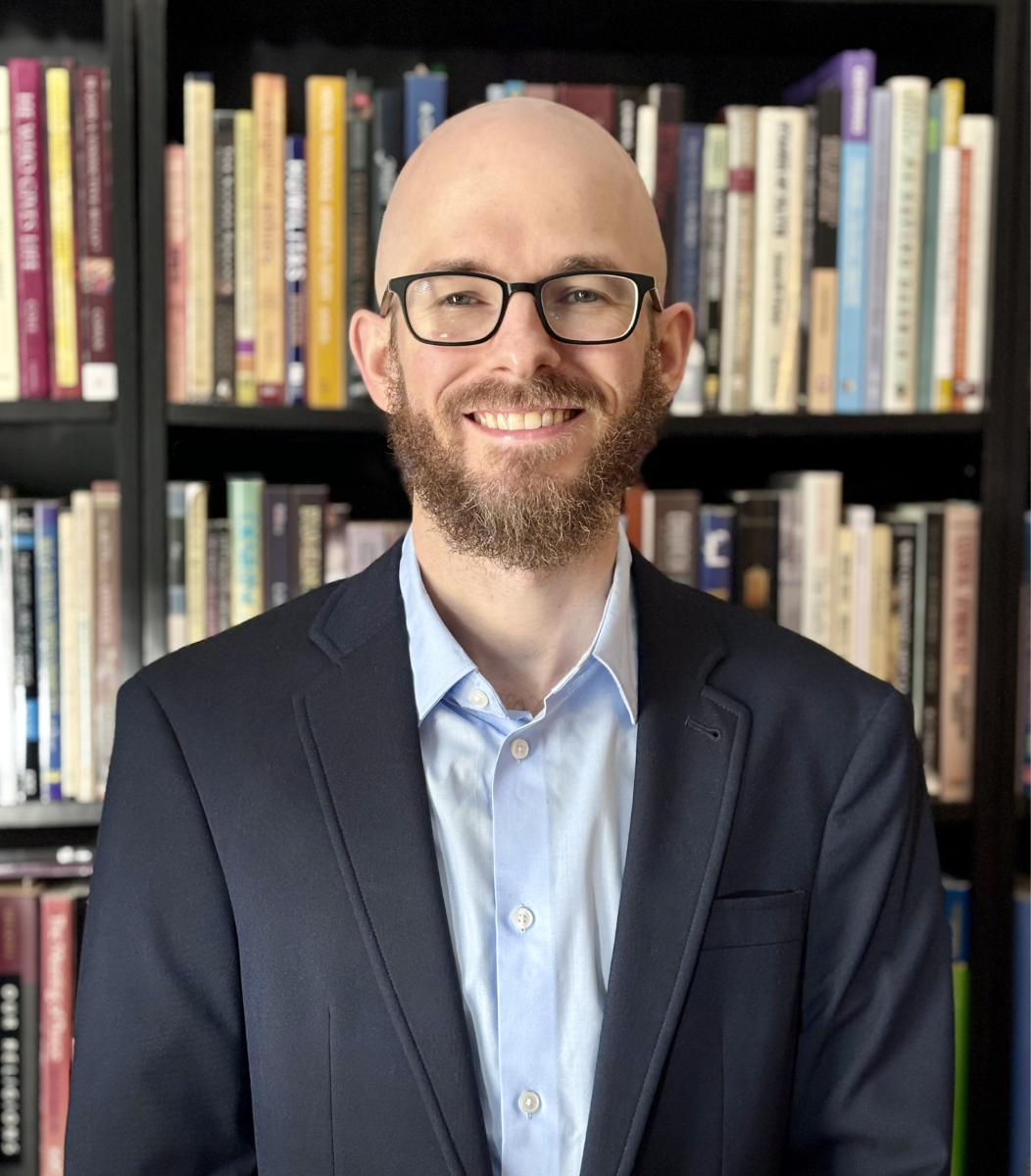
David Wilber is an author, Bible teacher, and CEO of Pronomian Publishing LLC. He has written several books and numerous theological articles, with his work appearing in outlets such as the Christian Post and the Journal of Biblical Theology. David has spoken at churches and conferences across the nation and has served as a researcher and Bible teacher for a number of Messianic and Christian ministries…