
Does God the Father Have a Body? (An Interview with Anthony Rogers)
I had the honor of interviewing Pastor and Christian apologist Anthony Rogers, discussing his recent debate with Sean Griffin on the topic of whether God the Father exists in a “body” in heaven. Sean believes that God the Father eats, goes to the bathroom, and has an eternally-circumcised male organ. (I’m not kidding.)
I have watched countless debates over the years, but this one stood out as uniquely devastating. Anthony completely dismantles Sean’s pagan concept of God. The whole debate was informative and entertaining.
Anyway, I had to have Anthony on my channel to discuss this bizarre topic. I was not aware that anyone today (besides Mormons) actually believed that the God of the universe is limited to a body, but apparently this idea is gaining traction in some corners of the Internet. Anthony explains why this topic is important and argues that the idea of God the Father having a body is not only inconsistent with the Bible but also blasphemous.
Watch Anthony's debate with Sean here.
Origen’s Commentary on Romans offers a fascinating perspective on the Apostolic Decree in Acts 15. Rather than seeing the Jerusalem Council as setting aside the Torah for Gentile believers, Origen argues that the apostles looked to the Torah itself to determine what God required of Gentiles. This video explores his reasoning concerning blood, strangled meat, and circumcision, and what it might contribute to the larger question of Gentile Torah observance.
David Wilber’s presentation at the 2025 TorahResource Academic Conference examines Paul’s attitude toward the Sabbath and biblical festivals, challenging the common assumption that Paul dismissed or condemned the Jewish calendar.
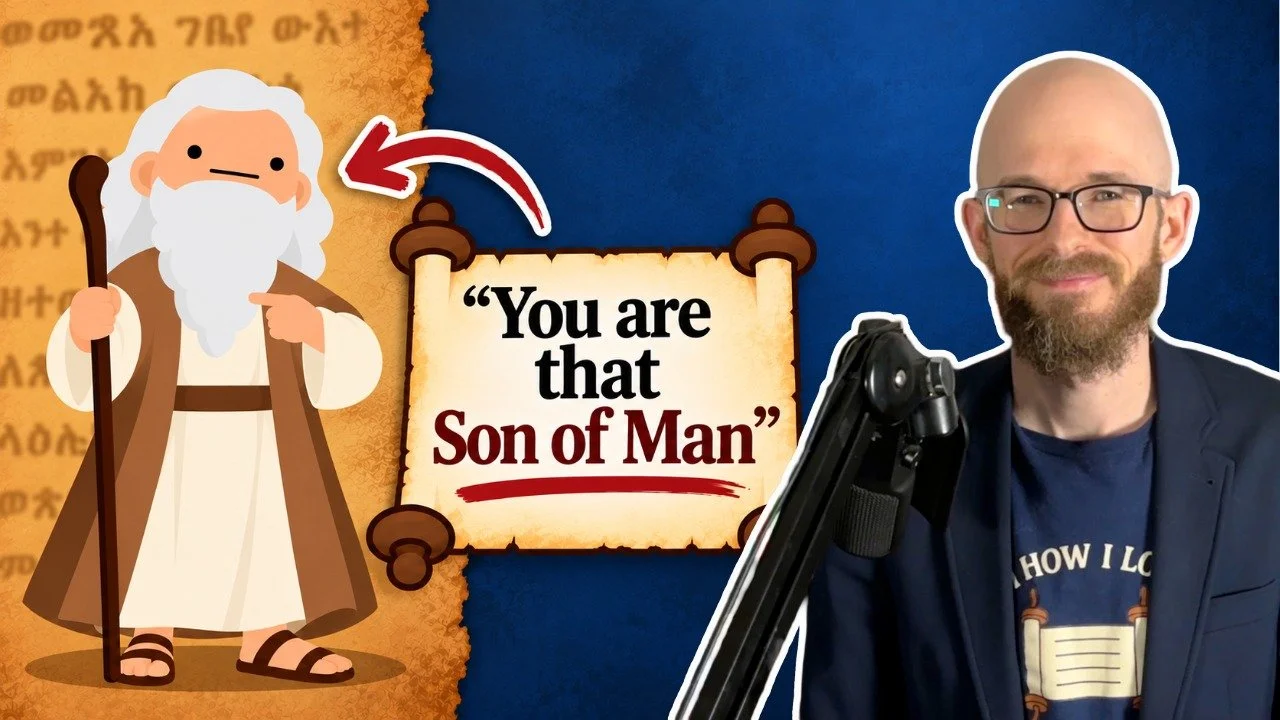
In recent years, the Book of Enoch (also known as 1 Enoch) has become increasingly popular among some Christians, with many arguing that it should be regarded as inspired Scripture. While there are several reasons to reject that conclusion, one of the most significant is that the book contradicts Scripture regarding the identity of the Messiah. Indeed, the Book of Parables (1 Enoch 37–71), particularly 1 Enoch 71:14, identifies Enoch himself as the exalted Son of Man. This video presents the evidence for this reading of the text and addresses the objections commonly raised against it.
Mary’s perpetual virginity was taught very early and remained the mainstream Christian position for well over a thousand years. Yet most Protestants today reject it because they believe Scripture clearly shows that Mary did not remain a virgin after giving birth to Jesus. I think this history offers an instructive parallel to the question of Sabbath observance. How much weight should longstanding Christian tradition carry when it seems to conflict with a straightforward reading of Scripture?

Did I win my debate with R. L. Solberg on Acts 15? Some of Solberg’s followers have conceded that my position was “technically right,” but they argue that I still failed to establish the debate proposition. In this brief recap, I respond to that objection, explain why the Apostolic Decree required Gentile believers to keep commandments from the Law of Moses, and clarify my use of early Christian writers such as Justin Martyr.
Did the apostles require Gentile believers to keep the Law of Moses (Torah) in Acts 15? David Wilber and R. L. Solberg debate the Jerusalem Council, the Apostolic Decree, and the biblical role of Torah for Gentile believers.
Candace Owens claimed on the Shawn Ryan podcast that the Hebrew word goy means "cattle." In this video, I explain why she is wrong by looking at the terms goy and goyim in the Hebrew Scriptures.
Did Paul reject the ongoing relevance of the Sabbath and festivals commanded in the Torah? Many people point to Colossians 2:16–17 as proof that he did. However, a growing number of scholars call that interpretation into question. Scholars argue that the Colossian believers actually observed the biblical calendar and that they were being criticized by ascetic opponents who did not. In this video, I draw on that scholarship to show why I believe that Colossians 2:16–17 does not invalidate the Sabbath and festivals but instead affirms their value.
In James 2:1–9, James instructs believers to "show no partiality," warning them that to do so is sin and a transgression of the Torah. The Messianic community had fallen into the trap of judging people by outward appearance, showing greater honor to the rich while dishonoring the poor. James makes it clear that such partiality has no place among the people of God. In this teaching, we’ll examine why partiality is so damaging to the body of Messiah and what it means to walk in the Law of liberty by loving our neighbor without selfish motives or personal gain.

The Bible mentions several books that have been lost to history. One of these is the Book of Jasher, meaning “one who is upright.” Over the centuries, this book has sparked much curiosity. Some today even argue that it has been rediscovered and ought to be included in the Bible. This video explores what we know about the Book of Jasher and evaluates claims that it has been rediscovered.
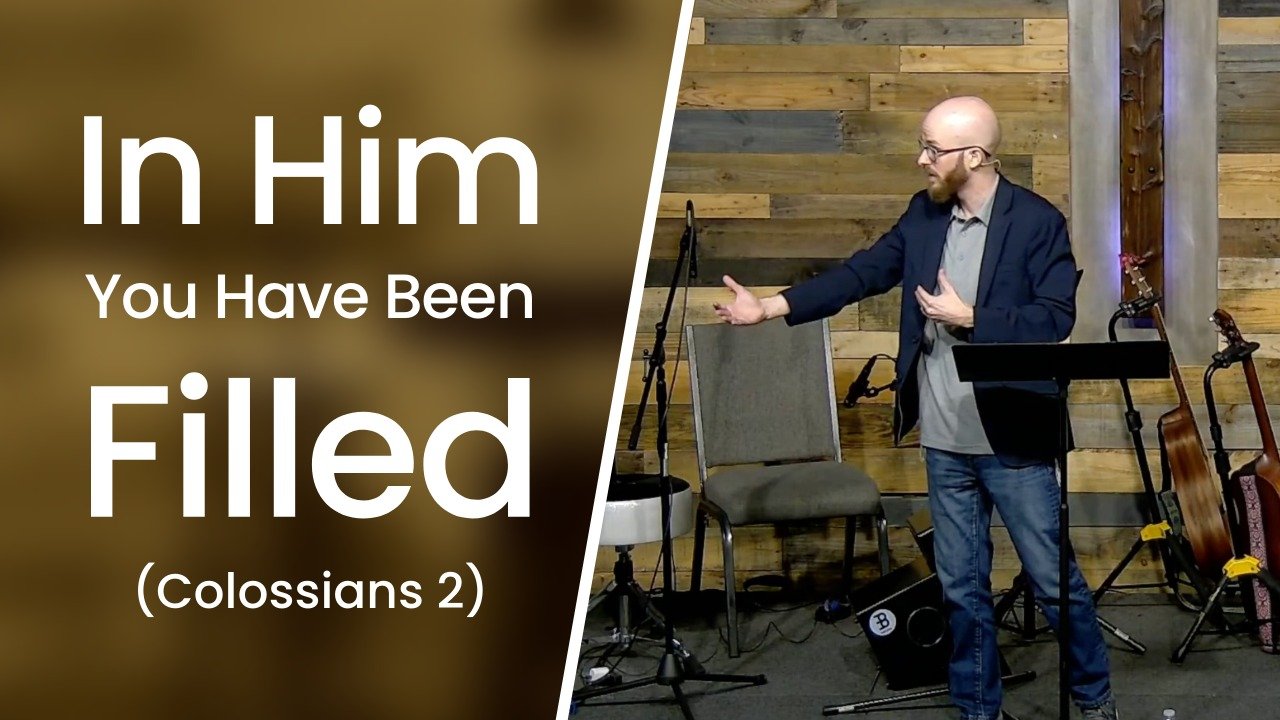
What does true fulfillment actually look like, and where is it found? In this message on Colossians 2, David Wilber unpacks Paul’s warning against deceptive philosophies that do not align with the Messiah. Instead of chasing ideas and practices that may appear wise but ultimately lack any power to restrain the flesh, Paul redirects our focus to the “fullness” believers already have in the Messiah. We also examine Paul’s instruction not to let anyone pass judgment “in matters of food and drink or with regard to a festival, a new moon, or a Sabbath.” Is Paul dismissing these Torah practices, or is there another interpretation?
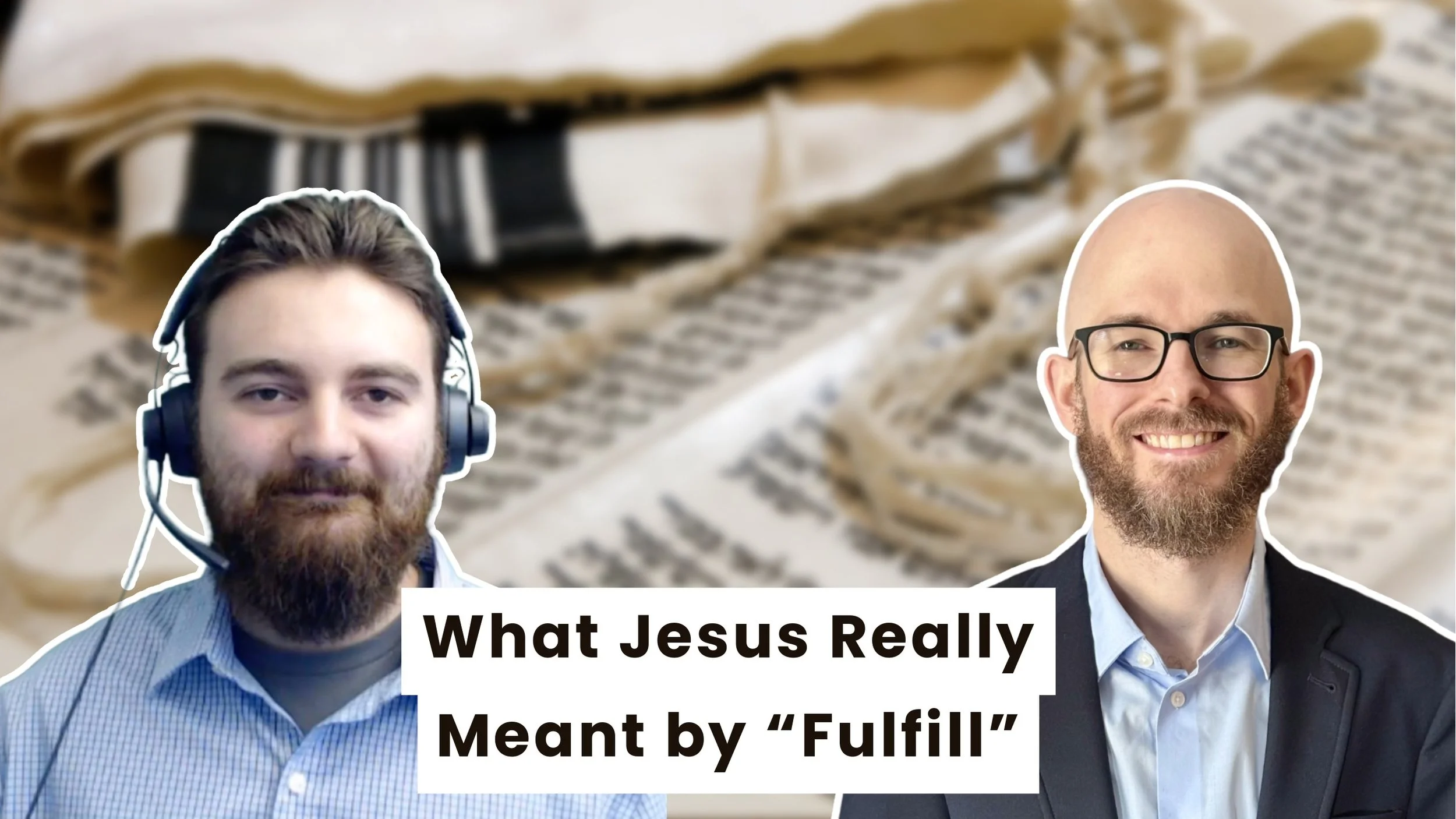
What did Jesus mean when he said he came to “fulfill” the Law and the Prophets in Matthew 5:17? Today, I’m joined by author Eitan ben Levi to explore this question. His new book, I Came to Perform the Law: A Study on the Meaning of Pleroo (“Fulfill“) in Matthew 5:17, examines this topic in depth. In our conversation, Eitan walks through his unique approach to studying how Jesus uses pleroo throughout the Gospels and offers key insights for understanding its specific nuance in Matthew 5:17. I hope you enjoy the discussion!

In a recent video, Tucker Carlson argued that a future physical temple in Jerusalem would amount to a denial of Christ, claiming that the Bible teaches Jesus replaced the temple entirely. He further claims that anyone who would like to see a future temple is apostate and has missed the whole point of Christianity. But does Scripture actually support these claims? In this video, we take a careful look at what Jesus and the apostles believed about the Jerusalem temple to see whether Tucker’s argument holds up biblically. What did Jesus actually teach about the temple? And how did the apostles treat it after the Messiah's resurrection and ascension?
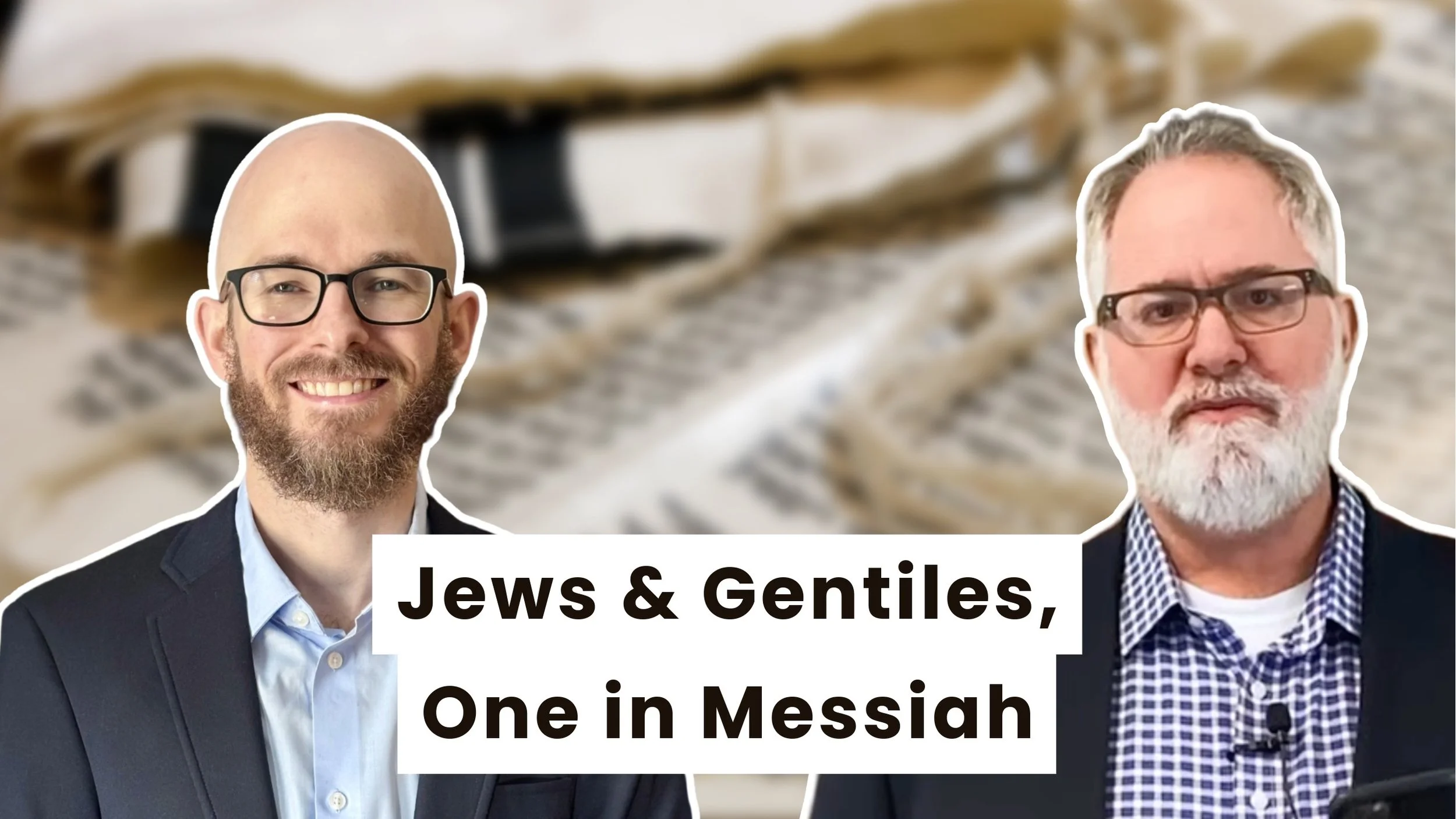
How should non-Jewish believers who are drawn to Torah observance relate to the broader Messianic Jewish movement? In this video, I sit down with Messianic Jewish Rabbi Eric Tokajer to unpack his thought-provoking article, “The Fringe Group Problem.” We discuss what Messianic Judaism is, why many Gentile believers who love Torah end up in movements that are separated from the broader Messianic Jewish community, and how we can walk together instead of separately. If you’re passionate about the Torah and about unity between Jews and Gentiles in Messiah, I hope this discussion will bless and encourage you.
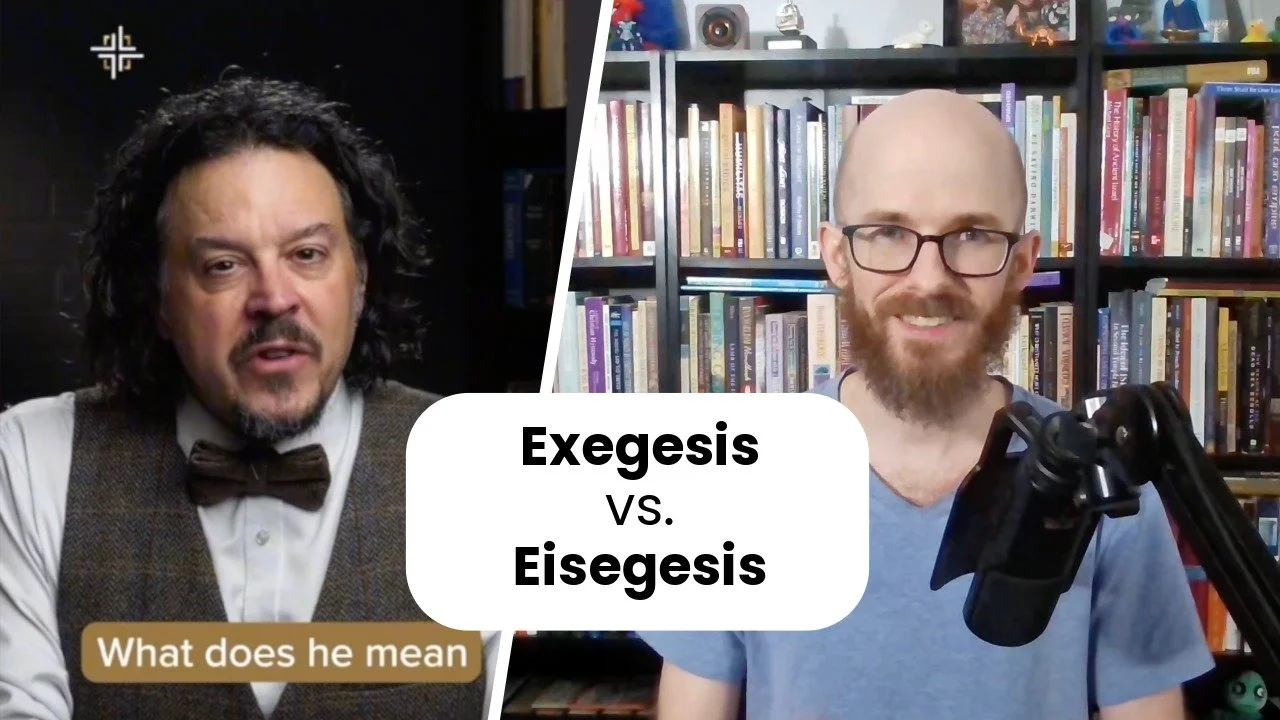
In this video, we look at R. L. Solberg’s approach to Scripture by focusing on his mishandling of Matthew 5:17–20. Rather than considering the immediate context, Solberg ignores it completely and appeals to other, unrelated texts to argue that Jesus could not have meant what he said in this passage. This eisegetical approach raises serious doubts about his reliability as a biblical interpreter.
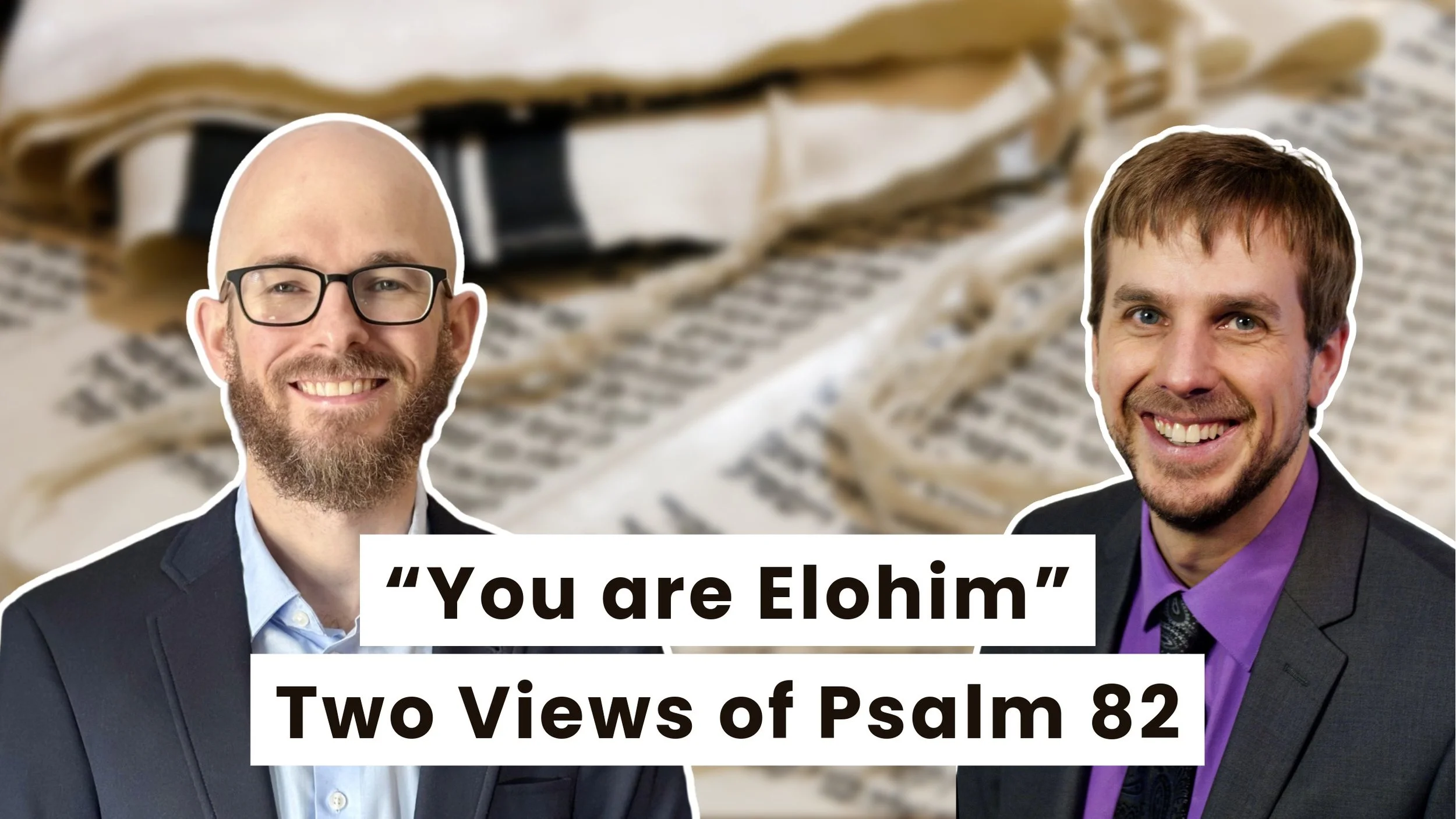
Psalm 82 declares, “You are gods” (elohim). Jesus quotes this passage in John 10 as he confronts the false shepherds of Israel. Yet the meaning of this Psalm is debated. Who, exactly, are the elohim or “gods” addressed in Psalm 82? In his new book, “You Are Elohim: Two Views of Psalm 82,” Rob Vanhoff surveys the major interpretations of this text and explores some of the implications. I’m excited to have him with us to talk about his book.
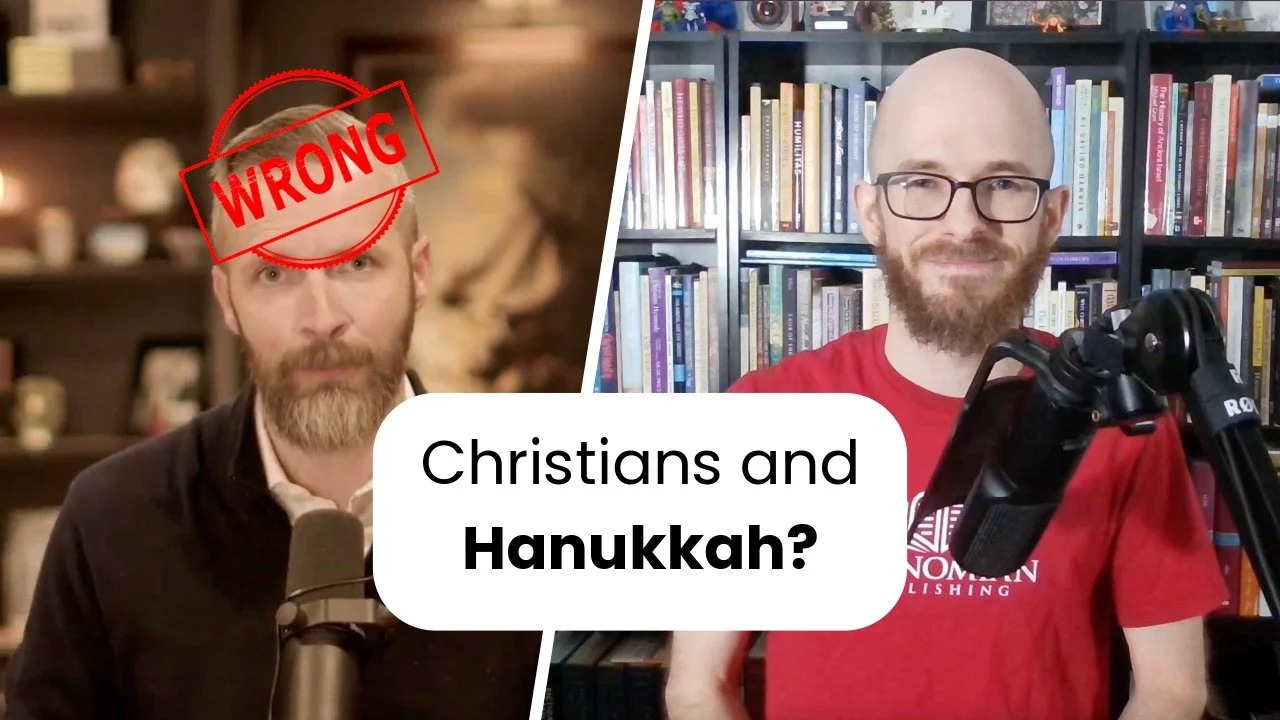
Dale Partridge claims that faith in Christ and support for Hanukkah are incompatible. However, as this video demonstrates, his arguments supporting this claim are theologically incoherent.
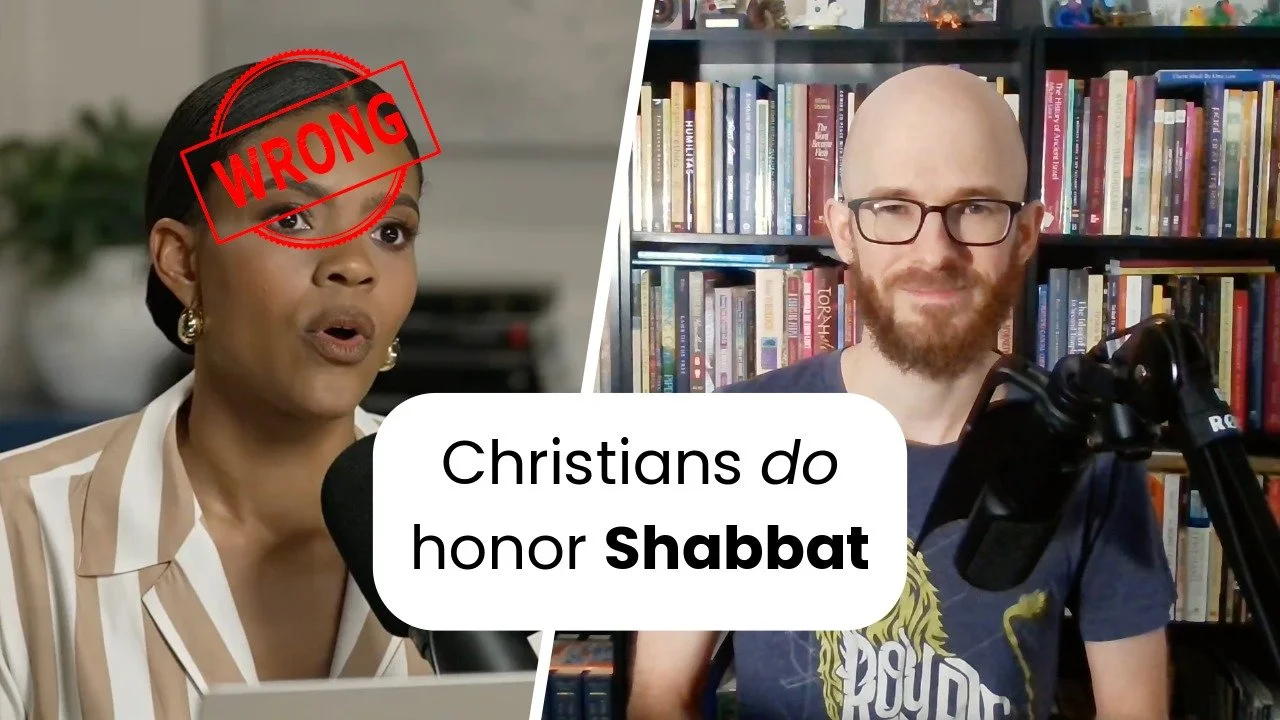
Candace Owens rejects the premise of Charlie Kirk’s new book on honoring the Sabbath, saying, “I’m not going to do that because I’m Christian.” But are Sabbath observance and following Christ really mutually exclusive? According to the Bible, they are not.
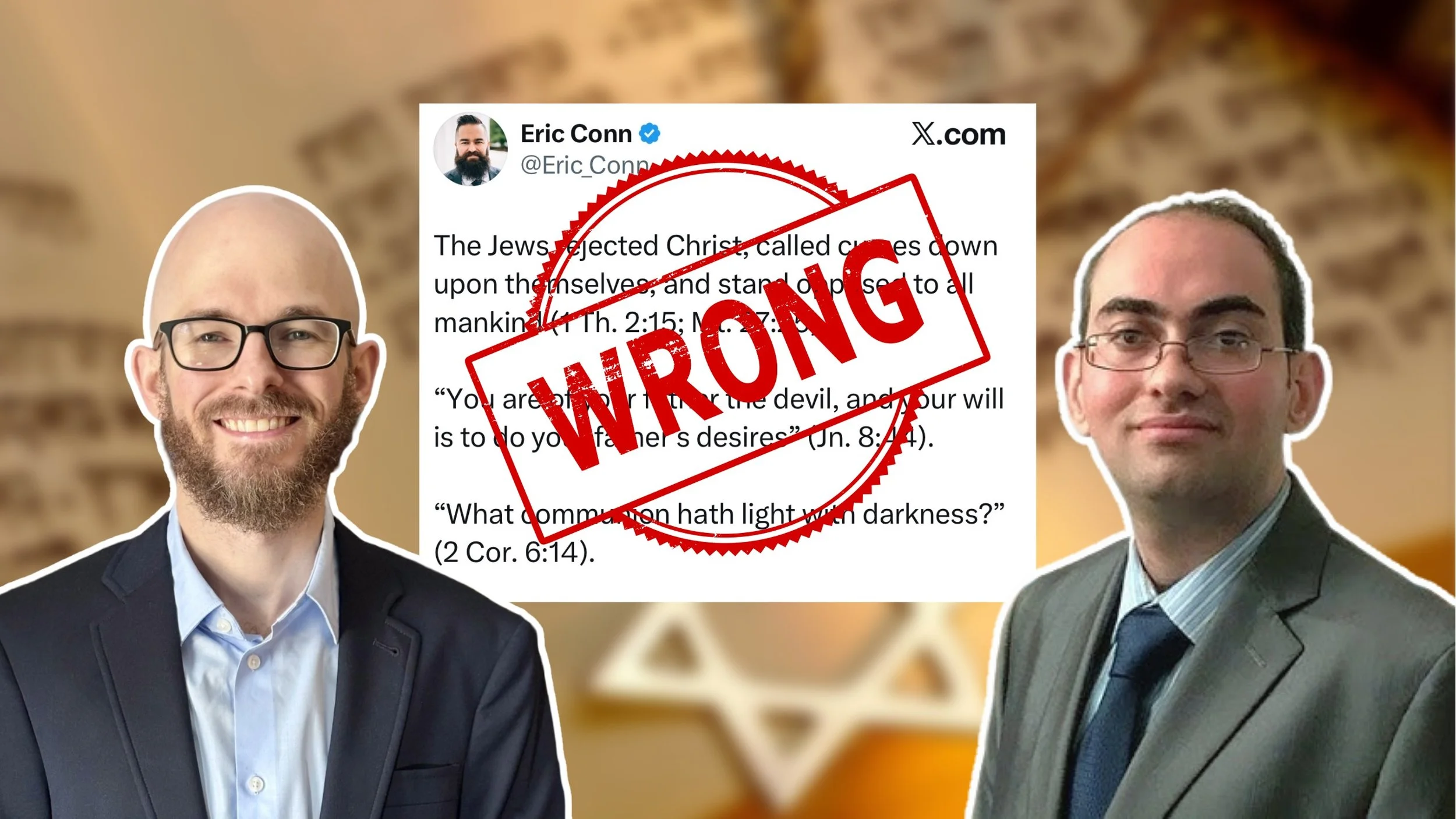
Do the New Testament writings condemn Jews and Judaism? Sadly, there are professing Christians today who claim they do. To address this error and shed light on several often-misinterpreted passages, I’m joined by Dr. Igal German, a Messianic Jewish scholar and apologist. I’m grateful to have Dr. German with us to tackle this important topic.
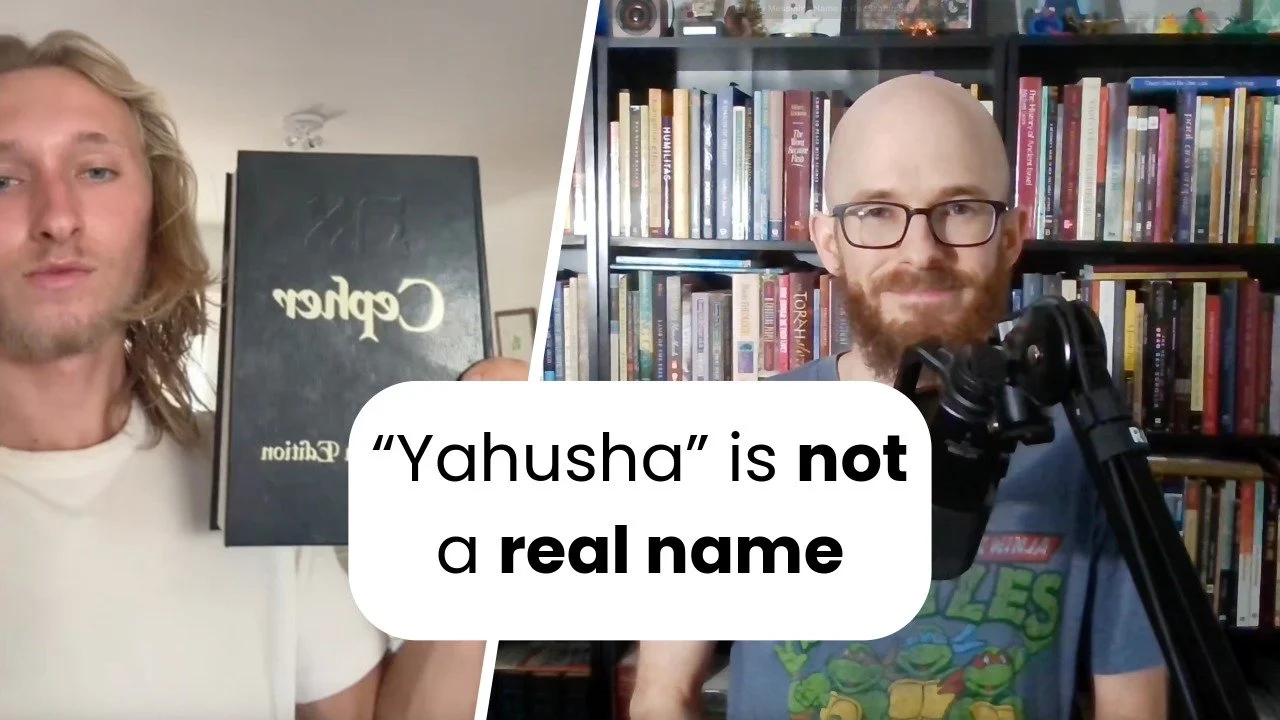
Is the Messiah’s Hebrew name pronounced “Yahusha,” as some modern Sacred Name teachers on the Internet claim? No, it is not. This video looks at the Hebrew and Greek texts of the Bible to show why that pronunciation is demonstrably false.

Nick Fuentes claims that the New Testament has replaced the Hebrew Scriptures ("Old Testament"), that Jesus has replaced the Law of Moses, and that Christians have replaced Israel. This video explains why he is wrong.
Is the Law contrary to God’s promise? According to Paul in Galatians 3:21, the answer is no. However, many Christians interpret Paul’s letter to the Galatians in the exact opposite way. Galatians is often regarded as the definitive rejection of Torah observance for believers. But is that view biblical? That’s the subject of the new book, “The Law and the Promise: A Pronomian Pocket Guide to Galatians 3–4” by Jonathan Brown. I’m excited to have Jonathan with us to discuss his book and why we should take seriously Paul’s own answer to this question.
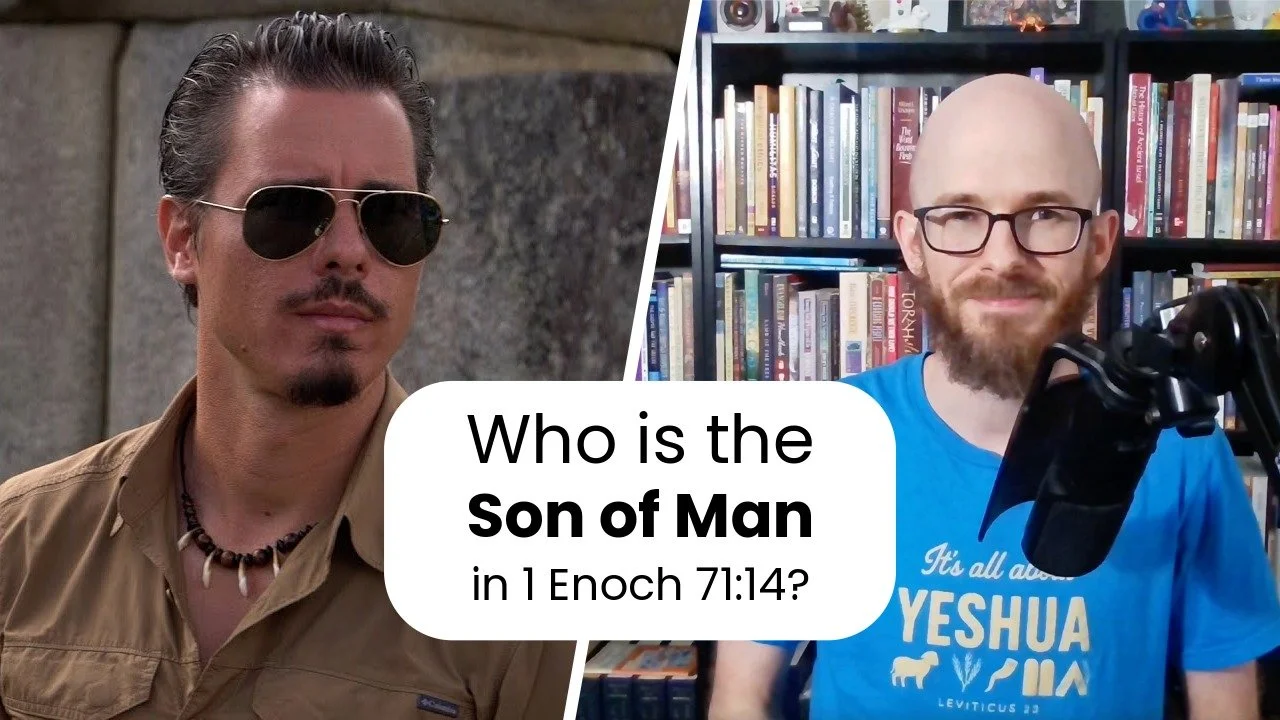
Timothy Alberino claims that the “Son of Man” passages in the Book of Enoch are prophecies about Jesus and takes this as proof that the Book of Enoch is divinely inspired. However, there is a major problem with that idea: the Book of Enoch explicitly identifies Enoch himself—not Jesus—as the Son of Man, which directly contradicts the New Testament.
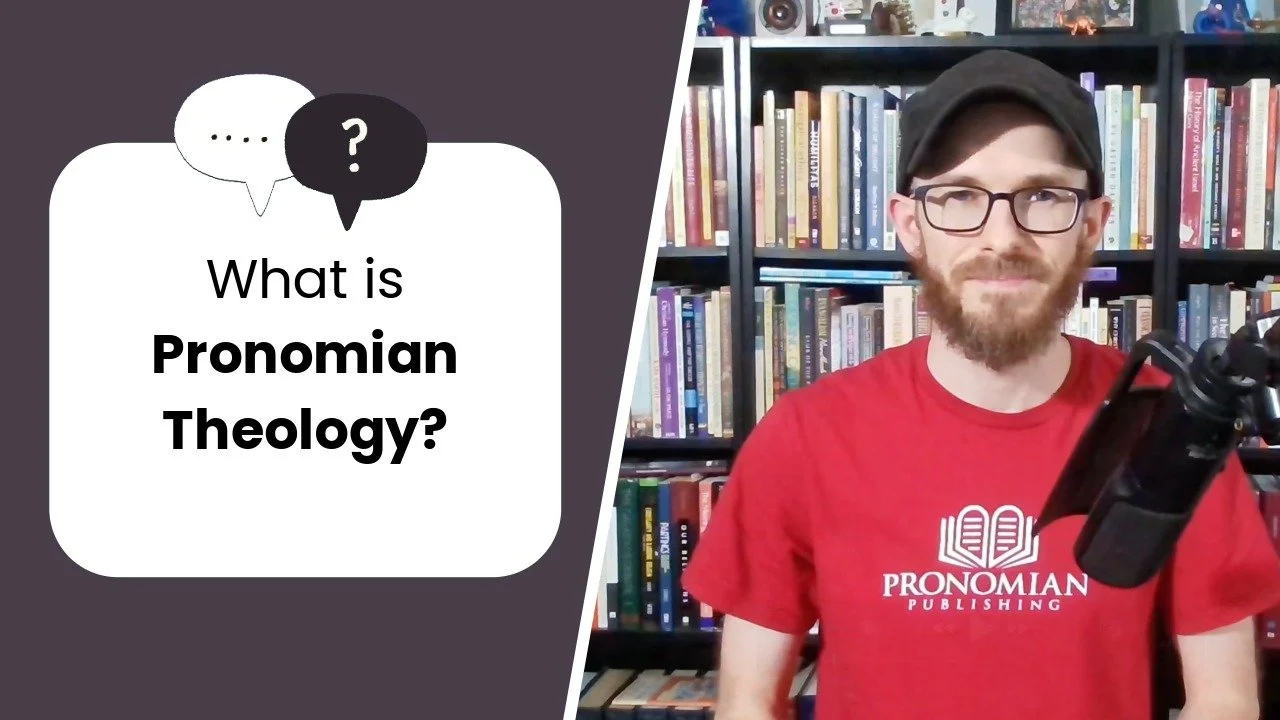
Pronomian theology, or pronomianism, is a way of reading Scripture that affirms the ongoing authority of God’s Law given through Moses (Torah). In this video, we explore how pronomianism contrasts with antinomianism and how various Christian communities like Messianic Judaism and the Seventh Day Baptists approach the Torah today. If you’ve ever wondered about the relevance of commandments such as the Sabbath, festivals, and food laws in Christian ethics, this short video will give you a basic introduction to pronomian theology.

In this teaching, we explore why Yom Teruah (also known as the Day of Trumpets or Rosh Hashanah) matters to Christians, how it points to the Messiah’s Second Coming, and practical ways it can be celebrated today.
What if Jesus’s disputes with other teachers over the Law of Moses weren’t about criticizing legalism or external rituals? What if, as the authoritative interpreter of the Law, Jesus was actually criticizing misinterpretation and transgression? In his new book, Jesus and the Law of Moses, Dr. Paul Sloan offers a fresh perspective on how the Gospels depict Jesus’s teaching on the Law—and this perspective challenges some common assumptions about Jesus’s relationship to the Law. I’m thrilled to welcome Dr. Sloan to the channel to discuss his book.
Is the Torah (Law of Moses) relevant to Gentile followers of the Messiah? Many say no, citing the Jerusalem Council event in Acts 15 as proof. In this message, David Wilber challenges that common interpretation through a careful reading of this passage within its historical and theological context. Far from rejecting the Torah, we’ll see how the apostles wisely and faithfully applied the Torah to Gentile believers joining the Messianic Jewish community.
Jesus told his disciples, “If you love me, you will keep my commandments.” But what exactly did he mean his commandments? Was he referring only to the commandment to love, only to the teachings given during his earthly ministry, or also to the commandments found in the Torah (Law of Moses)? That is the subject of the new book by Dr. Benjamin Szumskyj titled Love and the Law: A Pronomian Pocket Guide to John 14:15. I’m excited to have Dr. Szumskyj with us to today discuss his book on this important verse.
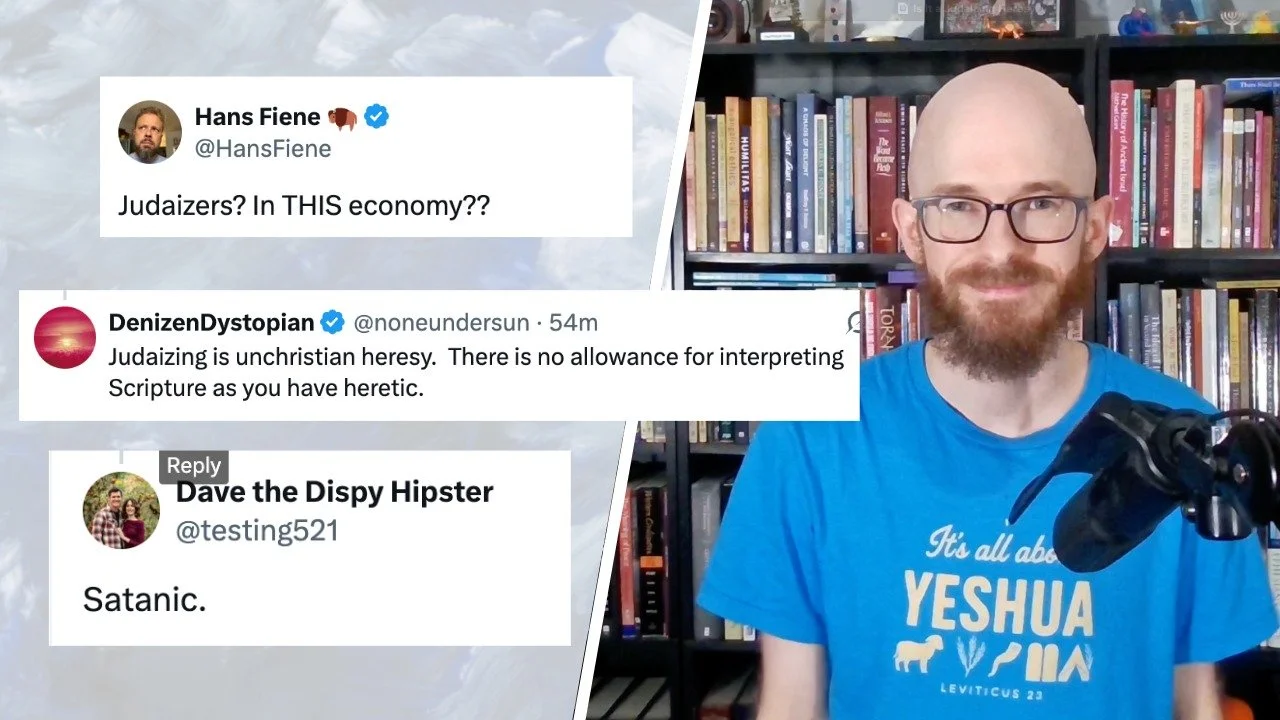
A popular account on X (formerly Twitter) recently labeled me a “Judaizer” for agreeing with the Apostolic Decree in Acts 15:20. Other folks then piled on, calling me “Satanic,” a “heretic,” and all sorts of other names. In this video, I’ll explain why it should not be controversial to believe that the four commandments of the Apostolic Decree are still relevant. As I’ll demonstrate, these four commandments are consistently affirmed throughout the New Testament and early Christian writings.
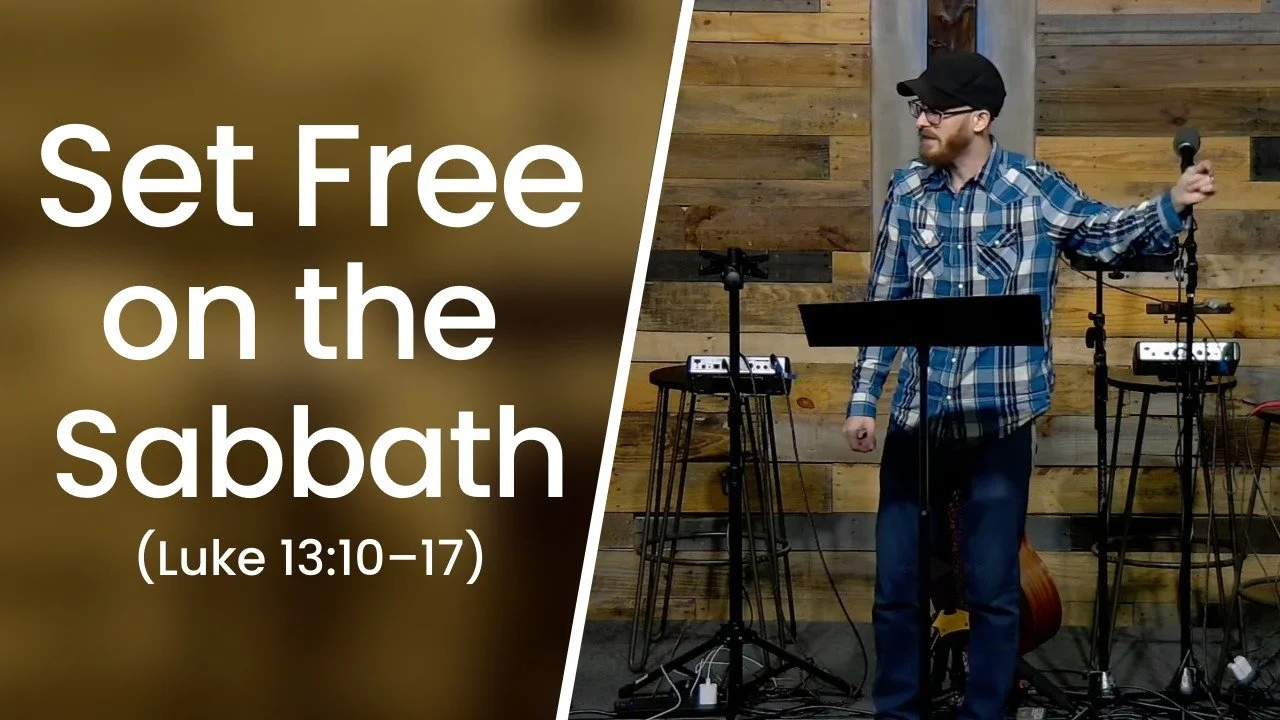
In the Gospels, we see that Yeshua (Jesus) often chose to heal people on the Sabbath. Though some interpret these occasions as a challenge to the Sabbath itself, Yeshua’s words and actions actually reveal what true Sabbath observance is supposed to look like. In this message, David Wilber focuses on a specific example of healing in Luke 13:10–17 and what it teaches us about Yeshua’s perspective on the Sabbath.
About David Wilber

David is first and foremost a passionate follower of Yeshua the Messiah. He is also a writer, speaker, and teacher.
David’s heart is to minister to God’s people by helping them rediscover the validity and blessing of God’s Torah and help prepare them to give an answer to anyone who asks about the hope within them (1 Peter 3:15)…
 David Wilber
David Wilber is an author, Bible teacher, Messianic/Christian apologist, and joint CEO of Pronomian Publishing LLC. He has written several books, including his most recent work, "Remember the Sabbath: What the New Testament Says About Sabbath Observance for Christians." In addition to his books, David has written numerous theological articles for various publications and websites. David lives in Lake Wylie, SC, with his wife and two children. His articles and teachings can be found at DavidWilber.com.