
I am a Gentile follower of Yeshua (Jesus), and I observe the Torah with respect to commandments such as the Sabbath, biblical festivals, and food laws. If you are familiar with my work, you know that I talk about these subjects quite a bit. I observe these commandments because I believe they remain valuable for followers of the Messiah, and I’m convinced that the New Testament does not abolish them. On the contrary, the New Testament portrays the earliest movement of Jewish and Gentile believers as continuing to observe them.
Obviously, there are many debates about exactly what this looks like and what commandments apply to Gentiles. But I do not think the New Testament supports the common assumption that faith in the Messiah necessarily entails abandoning these practices.
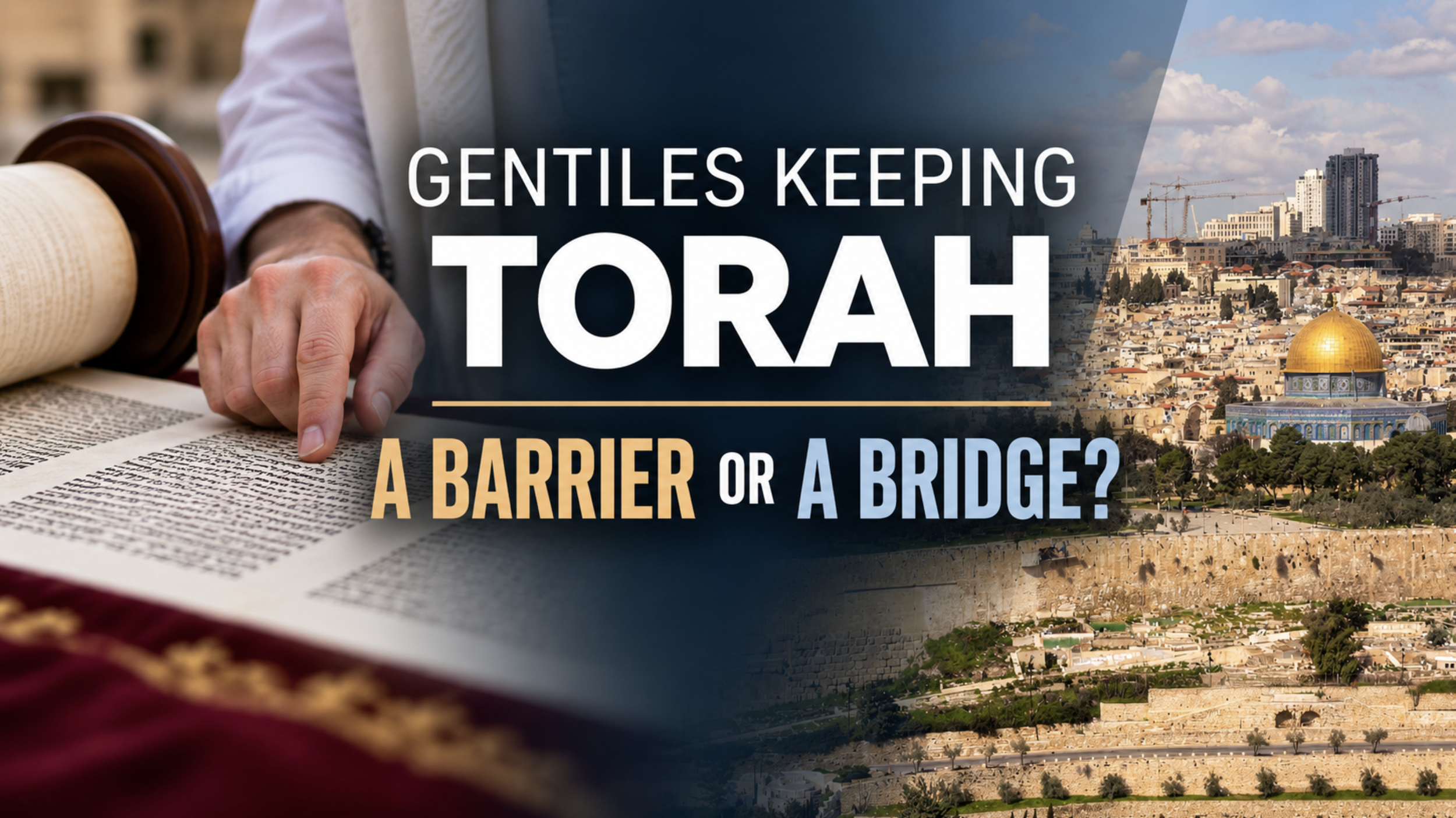
Interestingly, my practice of Torah has also opened some doors with Jewish people who do not believe in Yeshua. Some time ago, I had a conversation with a conservative rabbi who was intrigued when he learned that I, a Gentile Christian, observed the Sabbath, biblical festivals, food laws, and so forth. Naturally, he had questions. These practices are deeply meaningful for Jews and rooted in the Hebrew Scriptures, but why would a Gentile follower of Jesus observe them?
That discussion eventually led to a respectful conversation about whether Yeshua is the Messiah, whether he or Paul opposed Torah, and why following Yeshua does not require a Jew to abandon Torah. Significantly, that conversation about Yeshua grew directly out of his curiosity about my Torah observance. And this has not been an isolated experience for me. I have had several similar encounters with Jewish people in which my Torah observance opened the door to deeper conversations about Yeshua and the New Testament.
Gentile Torah Observance and Supersessionism
I mention this because there is a legitimate concern within Messianic Judaism about Gentile believers practicing Torah. Some worry that Gentiles adopting certain Torah practices can be perceived as yet another form of Christian supersessionism, particularly if it seems to diminish the unique place of the Jewish people. Understandably, then, there is also concern that Gentile Torah observance could offend non-Messianic Jews and create unnecessary barriers that make them less willing to consider Yeshua.
I think Gentiles in the Messianic movement need to take these concerns seriously and not just dismiss them. Supersessionism is not limited to the explicit claim that “the church has replaced Israel.” It can also manifest itself in ways of thinking that render the Jewish people theologically irrelevant. And, unfortunately, versions of this thinking can sometimes be found even among Torah-observant believers. For example, Gentiles may claim to be the “true Israel” in a way that effectively displaces the Jewish people. Our embrace of Torah, then, should affirm rather than diminish the continuing significance of the Jewish people.
Gentile believers who feel convicted to observe Torah should therefore approach these matters with humility and respect. We are not Jews, and we don’t need to pretend that we are (1 Cor. 7:17–20). Insofar as possible, I think our practice should be pursued in fellowship and unity with our Jewish brothers and sisters in Messiah. Our goal should not be to replace Israel, but quite the opposite: Gentiles who embrace the God of Israel and the Torah of Israel should also embrace the people of Israel.
Properly understood, then, Gentile Torah observance can express the very opposite of supersessionism. Rather than regarding the Torah as something Christianity has superseded and left behind, Gentiles who embrace it affirm its continuing relevance and value. Their observance can thus testify that the practices God gave to Israel are not abolished but remain good and meaningful.
Having said all of that, my actual experience with non-Messianic Jews has often been almost the reverse of what some fear. As I mentioned above, when Jewish people discover that I am a Gentile who believes in Jesus and yet takes the Sabbath seriously, abstains from biblically prohibited foods, celebrates Passover and the other biblical festivals, and regards the Torah as relevant divine instruction, it frequently invites genuine curiosity.
Gentiles, Torah, and the Hebrew Prophets
Perhaps that shouldn’t be surprising. After all, the Hebrew prophets envisioned the nations coming to Israel's God and embracing his ways. Isaiah speaks of foreigners who “join themselves to the LORD,” who love his name, become his servants, and “keep the Sabbath” (Isa. 56:6–7). Earlier, Isaiah envisions the nations streaming to the mountain of the LORD and saying, “Come, let us go up to the mountain of the LORD, to the house of the God of Jacob, that he may teach us his ways and that we may walk in his paths.” Why? “For out of Zion shall go forth the Torah, and the word of the LORD from Jerusalem” (Isa. 2:2–3; cf. Mic. 4:1–2).
Zechariah similarly envisions people from the nations taking hold of the tzitzit of a Jew and saying, “Let us go with you, for we have heard that God is with you” (Zech. 8:20–23). He later pictures the nations going up to Jerusalem to worship the King and celebrate the Feast of Sukkot (Zech. 14:16).
In other words, the prophetic picture of Israel’s restoration does not involve the nations coming to Israel’s God and then wanting nothing to do with Israel’s ways. The nations are drawn to Israel’s God, Israel’s Messiah, Israel’s Scriptures, and the Torah that goes forth from Zion. This does not mean that Gentiles who embrace Torah today become Jews or somehow replace them. It is quite the opposite: they come alongside the Jewish people to worship the God of Israel and walk in his ways. Indeed, this prophetic picture depends upon the continued existence and significance of both Israel and the nations. The nations joining Israel in worshiping Israel’s God vindicates Israel’s unique calling to model God’s ways before the nations (Deut. 4:5–8), with the nations ultimately coming alongside Israel to learn the Torah (Isa. 2:2–3; Mic. 4:1–2; Zech. 8:20–23). In this sense, Gentile Torah observance offers a foretaste of the eschatological reality envisioned by the prophets.
Can Gentile Torah Observance Build Bridges?
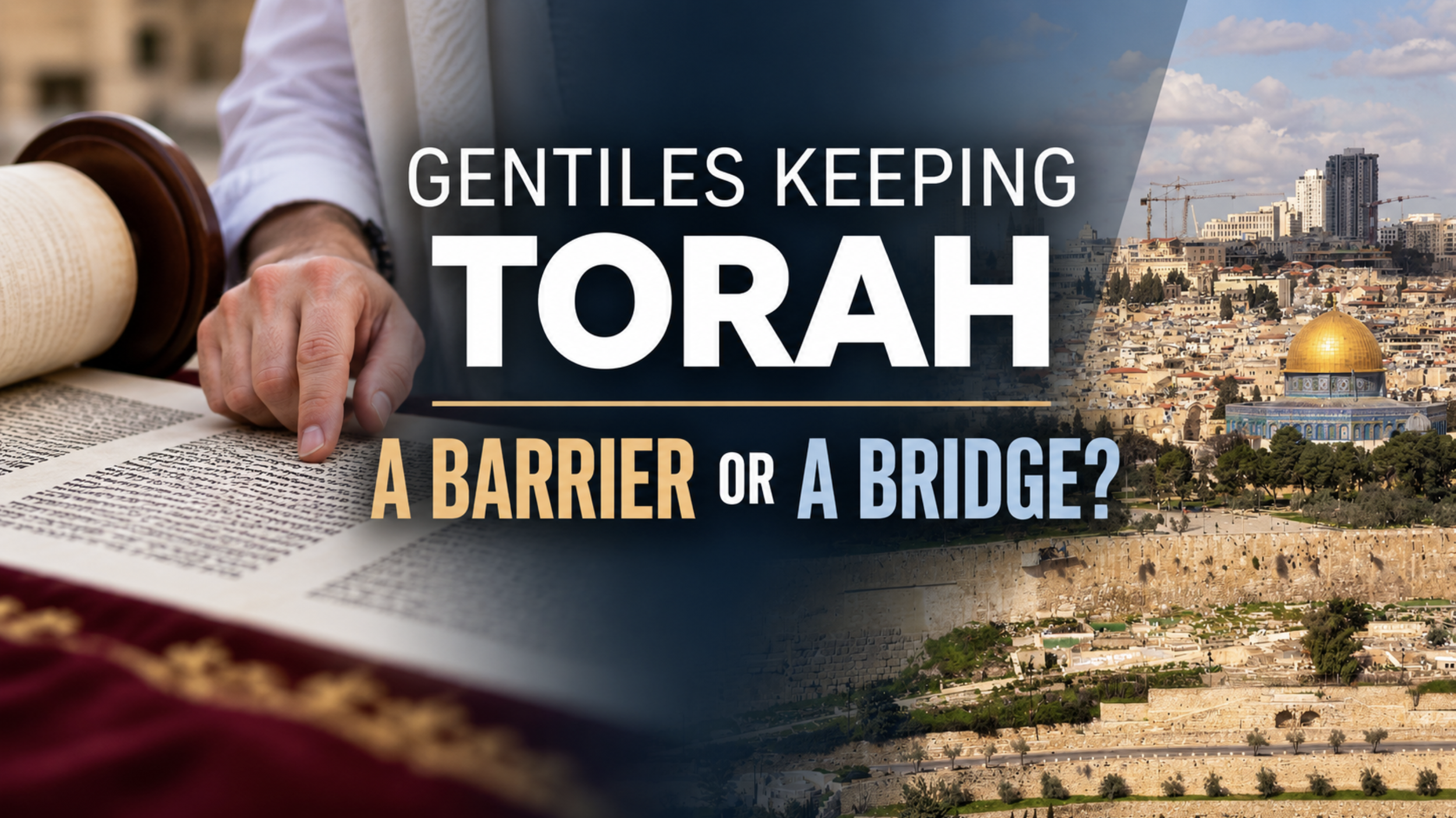
So I would invite my Messianic Jewish friends who have these concerns not to assume that a Gentile valuing and practicing Torah is inherently supersessionist or necessarily a stumbling block to Jewish people. In my experience, it can actually be a bridge. In a sense, it allows us to time travel and to experience in the present a glimpse of the age to come.
Indeed, there is something understandably strange to many Jewish people about a Christianity that claims to worship the God of Abraham, Isaac, and Jacob and follow the Jewish Messiah while simultaneously insisting that the Torah is no longer relevant. Whatever one thinks about the theological arguments for that position, we should at least be able to understand why Jewish people might regard such a faith as incompatible with being Jewish. And this is where the modern Messianic movement presents a remarkable opportunity to build bridges and demonstrate that faith in Yeshua need not require a rejection of Torah. So when they encounter Gentile followers of Jesus who say, in effect, “No, I don’t believe God’s commandments have been abolished. I believe they are good and worth embracing, just as Jesus, the apostles, and the earliest followers of Jesus embraced them,” it can open the door to a much more fruitful conversation.
Now, I don’t expect every Jewish person to respond positively to us crazy Gentile Torah enthusiasts, nor do I think Torah observance should be reduced to some kind of evangelistic strategy. We should obey God because he is God and because his ways are good, regardless of how others may respond. But I do think we should reconsider the assumption that Gentile Torah observance is inherently supersessionist or necessarily builds a wall between Jewish people and Yeshua. Sometimes, by God’s grace, it might actually tear one down.










About David Wilber
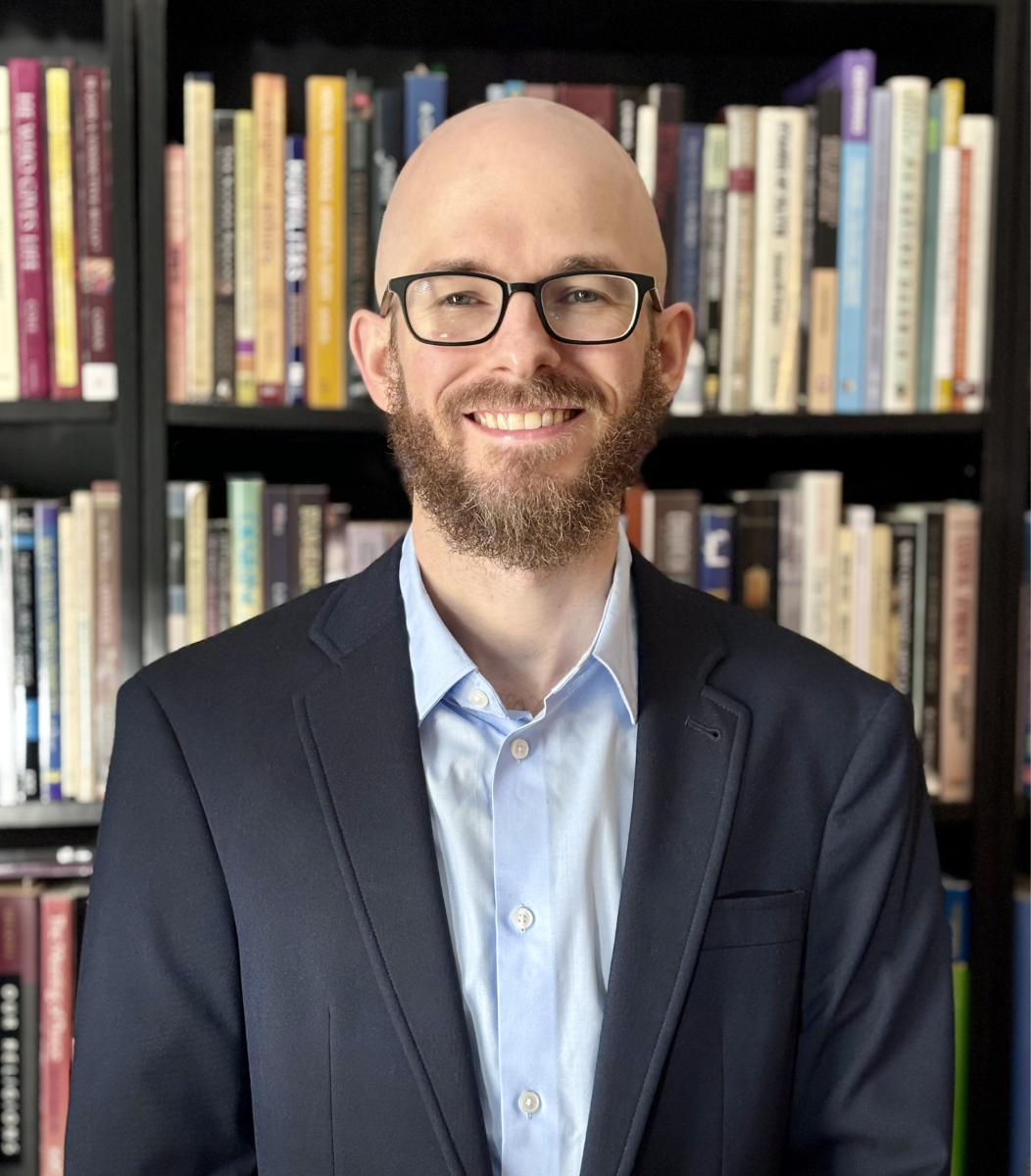
David Wilber is an author, Bible teacher, and CEO of Pronomian Publishing LLC. He has written several books and numerous theological articles, with his work appearing in outlets such as the Christian Post and the Journal of Biblical Theology. David has spoken at churches and conferences across the nation and has served as a researcher and Bible teacher for a number of Messianic and Christian ministries…

From the very beginning, human beings have been quick to blame others rather than take responsibility for their own wrongdoing. In this week’s Torah portion, Bereshit, we see how Adam and Eve’s response to their sin reveals a tendency that continues to plague humanity today. As followers of Yeshua, we are called to break this cycle of blame-shifting through humility, repentance, and personal responsibility.