
There is perhaps no experience more painful than losing someone you love. Even when we know that death is not the end for those who belong to the Messiah, the pain of that loss can still feel overwhelming. This week’s Torah portion, Chayei Sarah (Gen. 23:1–25:18), offers some important insights into the nature of grief and what it means to grieve with hope.
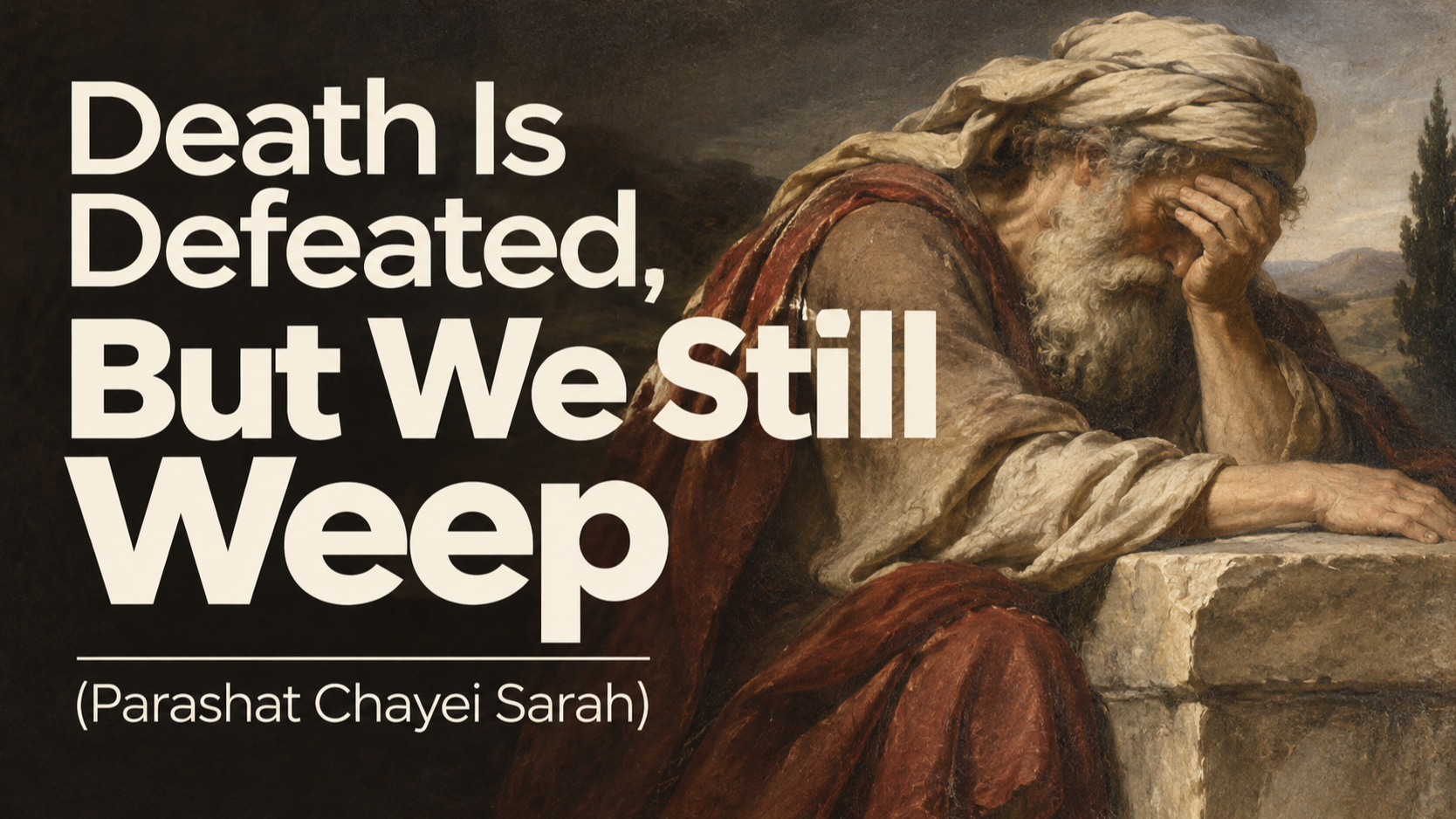
The Torah portion begins with the death of Abraham’s wife, Sarah:
And Sarah died at Kiriath-arba (that is, Hebron) in the land of Canaan, and Abraham went in to mourn for Sarah and to weep for her. (Genesis 23:2)
Notice that Abraham mourned and wept over Sarah’s death. This might not seem particularly surprising since losing your spouse is an incredibly painful experience.
But consider who we’re talking about here. Abraham was a man of tremendous faith. His walk with God began when he was called to leave behind everything familiar and journey to an unknown land (Gen. 12:1–4). Over the years, he faced famine, war, family conflict, and even the extraordinary test of being commanded to offer his own son Isaac as a sacrifice, though God ultimately intervened and spared Isaac’s life (Gen. 22:1–19).
In other words, Abraham had been through a lot. He had experienced God’s faithfulness through some incredibly difficult circumstances and had become a powerful example of faith and obedience to God. You might think that someone with such strong faith would be less affected by the pain of losing a loved one. And yet, Scripture tells us that Abraham wept.
Apparently, having the strongest faith doesn’t make someone immune to grief. Even the great patriarch Abraham was deeply affected by the death of someone he loved.
The Pain of Loss Lingers
Abraham wasn’t the only person who struggled with Sarah’s death. Later in the Torah portion, we discover that Isaac was also grieving the loss of his mother.
In Genesis 24, Abraham sends his servant to find a wife for Isaac. The servant eventually meets Rebekah and brings her back to Canaan, where she and Isaac are married. But notice what the text says at the end of the chapter:
Then Isaac brought her into the tent of Sarah his mother and took Rebekah, and she became his wife, and he loved her. So Isaac was comforted after his mother's death. (Genesis 24:67)
Why does the Torah mention Sarah’s death again? After all, that happened in the previous chapter. Since then, we have read about Abraham purchasing a burial place, sending his servant on a long journey, and arranging a marriage for Isaac. You might think that by this point in the story, everyone would have moved on. And yet, Isaac was apparently still grieving the loss of his mother. It wasn’t until his marriage to Rebekah that he experienced some measure of comfort.
This detail reflects something many of us know from experience: the pain of losing someone we love doesn’t simply disappear with time.
Perhaps you have lost someone close to you. Maybe it’s been years since they passed away, and you have generally adjusted to life without them. But then something reminds you of them—a birthday, an anniversary, an old photograph, or a familiar song. Suddenly, you find yourself feeling the pain of that loss all over again.
Indeed, the reality is that relationships are precious, and people are irreplaceable. When someone we love dies, their absence leaves a lasting impact on our lives. We may eventually find comfort and learn to live with that loss, but that doesn’t mean that we’ll never feel sorrow over it again.
Yeshua Wept
Abraham and Isaac aren’t the only examples of faithful people experiencing profound sorrow. Even Yeshua himself wept over the death of someone he loved.
In John 11, we read about the death of Yeshua’s friend Lazarus. When Yeshua arrives and sees the people mourning, notice how he responds:
When Jesus saw her weeping, and the Jews who had come with her also weeping, he was deeply moved in his spirit and greatly troubled. And he said, “Where have you laid him?” They said to him, “Lord, come and see.” Jesus wept. So the Jews said, “See how he loved him!” (John 11:33–36)
What’s particularly interesting about this passage is that Yeshua already knew Lazarus would soon be raised from the dead. In fact, earlier in the chapter, he explicitly told his disciples that he was going to awaken Lazarus (John 11:11–15). So why did Yeshua weep when he knew that Lazarus would soon walk out of the tomb alive?
Notice that John specifically says Yeshua was deeply moved when he saw Mary and the others weeping. He knew that Lazarus would soon be restored to life, but that didn’t make the sorrow of those around him any less real. Instead of telling them to stop crying because everything would soon be okay, he entered into their grief.
This is consistent with how the prophet Isaiah describes the Messiah as one who would bear our griefs and carry our sorrows (Isa. 53:4). Our Messiah is not indifferent to our suffering. He understands our pain and identifies with us in our sorrow.
And I think there’s an important lesson here. If Yeshua himself wept, even while knowing that Lazarus would soon be raised, then surely having faith in the future resurrection doesn’t mean that we must never experience sadness. We can have hope for the future while still grieving the pain of loss in the present.
Grieving With Hope
Although Scripture acknowledges the reality of grief, it also gives us great reason for hope. As Paul writes concerning those who have died, we should not grieve “as others do who have no hope” (1 Thess. 4:13). Notice that Paul doesn’t tell believers not to grieve. Instead, he reminds us that our grief is accompanied by hope. Because Yeshua has conquered death through his resurrection, we can look forward to the day when those who belong to him will be raised to life. Indeed, a day is coming when God will wipe away every tear, and death, mourning, and pain will be no more (Rev. 21:4).
But in the meantime, it’s okay to grieve. As we have seen, grief is not a sign of weak faith, and the pain of loss can linger long after someone has passed away. We can have confidence in God’s promises for the future while still experiencing sorrow along the way.
Moreover, just as Yeshua entered into the grief of those mourning Lazarus, we are called to do the same for one another. As Paul writes, “Rejoice with those who rejoice, weep with those who weep” (Rom. 12:15). As members of the body of Messiah, we ought to come alongside those who are hurting and offer compassion and comfort.
So if you’re grieving the loss of someone you love, remember that you’re not alone. God is near to the brokenhearted (Ps. 34:18), and we have brothers and sisters in Messiah who can help carry our burdens. Through Yeshua, death does not have the final word. But even as we hold on to the hope of resurrection, it’s okay to grieve.













About David Wilber

David is first and foremost a passionate follower of Yeshua the Messiah. He is also a writer, speaker, and teacher.
David’s heart is to minister to God’s people by helping them rediscover the validity and blessing of God’s Torah and help prepare them to give an answer to anyone who asks about the hope within them (1 Peter 3:15)…

From the very beginning, human beings have been quick to blame others rather than take responsibility for their own wrongdoing. In this week’s Torah portion, Bereshit, we see how Adam and Eve’s response to their sin reveals a tendency that continues to plague humanity today. As followers of Yeshua, we are called to break this cycle of blame-shifting through humility, repentance, and personal responsibility.