
Have you ever felt jealous of someone else’s success? Maybe a coworker gets the promotion you were hoping for. Maybe someone else receives recognition for something you think you deserve. Instead of being happy for them, you find yourself feeling resentful.
This is nothing new. In fact, we see this very attitude in this week’s Torah portion, Vayetze (Genesis 28:10–32:3).

In Genesis 30–31, we read about Jacob’s growing prosperity while working for his uncle Laban. Despite Laban’s repeated attempts to take advantage of Jacob, God continued to bless him. Jacob’s flocks increased, and he became exceedingly prosperous.
You would think Laban would be happy about this. After all, Jacob had worked faithfully for him for many years, and Laban himself had benefited tremendously from Jacob’s presence. But instead of celebrating Jacob’s success, Laban’s attitude toward him changed. He apparently became jealous and resentful:
Now Jacob heard that the sons of Laban were saying, “Jacob has taken all that was our father’s, and from what was our father’s he has gained all this wealth.” And Jacob saw that Laban did not regard him with favor as before. (Genesis 31:1–2)
So Jacob’s prosperity didn’t change his relationship with Laban for the better. It made Laban bitter.
When Someone Else’s Success Feels Like Our Failure
Why do we sometimes struggle to celebrate other people’s success? Often, it’s because we view their success as somehow taking something away from us. When someone else is recognized for their accomplishments, we wonder why nobody is recognizing ours.
And sometimes this jealousy goes beyond our thoughts and feelings. Like Laban, we might even attempt to undermine someone else’s success in order to elevate ourselves.
What’s especially troubling is that this attitude can show up even in ministry. You would think that people serving God would naturally rejoice when God uses someone else to accomplish something good. After all, isn’t the whole point of ministry to advance God's kingdom?
Unfortunately, that’s not always the case. Sometimes people become jealous when God uses someone else in an area where they want to serve. They resent the influence another ministry has gained or the opportunities someone else has received. Instead of celebrating what God is doing, they become frustrated that God isn’t doing it through them.
But if you’re upset because God is using someone else instead of you, who are you really trying to glorify? God or yourself? When ministry becomes all about you, it is no longer real ministry.
Rejoice with Those Who Rejoice
The Bible instructs us to respond a certain way to the success of others. Paul writes, “Rejoice with those who rejoice” (Rom. 12:15). Instead of feeling insecure or envious of another person’s success, we are to rejoice with them.
Additionally, Paul explains that believers are members of one body, the body of Messiah. And because we’re part of the same body, another person’s blessing should be a reason for all of us to rejoice (1 Cor. 12:26).
Another person’s success isn’t necessarily your failure. Their recognition doesn’t take away from your value. And the fact that God is using someone else doesn’t make what he is doing through them any less worthy of celebration. We are all supposed to be working toward the same goal.
Indeed, being bitter about someone else’s success won’t make you more successful. It will just make you miserable. Jealousy has a way of robbing us of our joy because we’re so focused on what others have that we lose sight of what God has already given us.
Laban allowed Jacob’s prosperity to poison his attitude toward him. Instead of appreciating the blessings he had received through Jacob, he became consumed with resentment. We don’t have to make the same mistake.
When someone else succeeds, we have a choice: we can become bitter because we weren’t the ones being blessed, or we can rejoice with those who rejoice.
Have you ever felt jealous of someone else’s success? Maybe a coworker gets the promotion you were hoping for. Maybe someone else receives recognition for something you think you deserve. Instead of being happy for them, you find yourself feeling resentful. This is nothing new. In fact, we see this very attitude in this week’s Torah portion, Vayetze (Genesis 28:10–32:3).
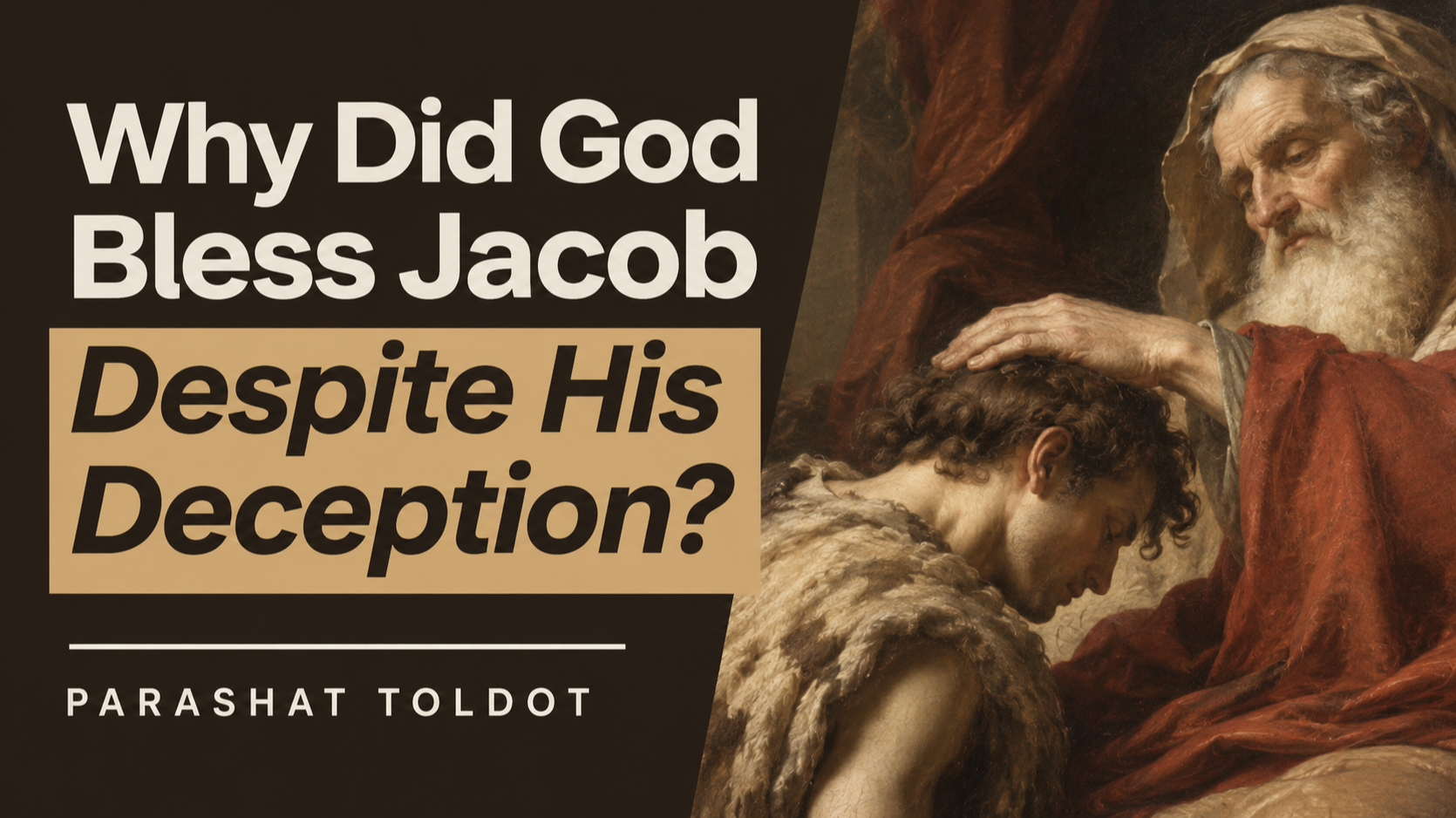
Jacob is an important figure in Scripture. He is the father of the twelve tribes of Israel, and through his descendants, God’s promises to Abraham would ultimately lead to the coming of the Messiah. But Jacob wasn’t exactly a model of honesty and integrity, at least not in the early part of his life. In fact, in this week’s Torah portion, Toldot (Gen. 25:19–28:9), we find him manipulating his brother and deceiving his own father to obtain the family blessing. How could God honor Jacob with such an important blessing when he obtained it through deception? And what can Jacob’s story teach us about God’s grace and our own journey of faith?
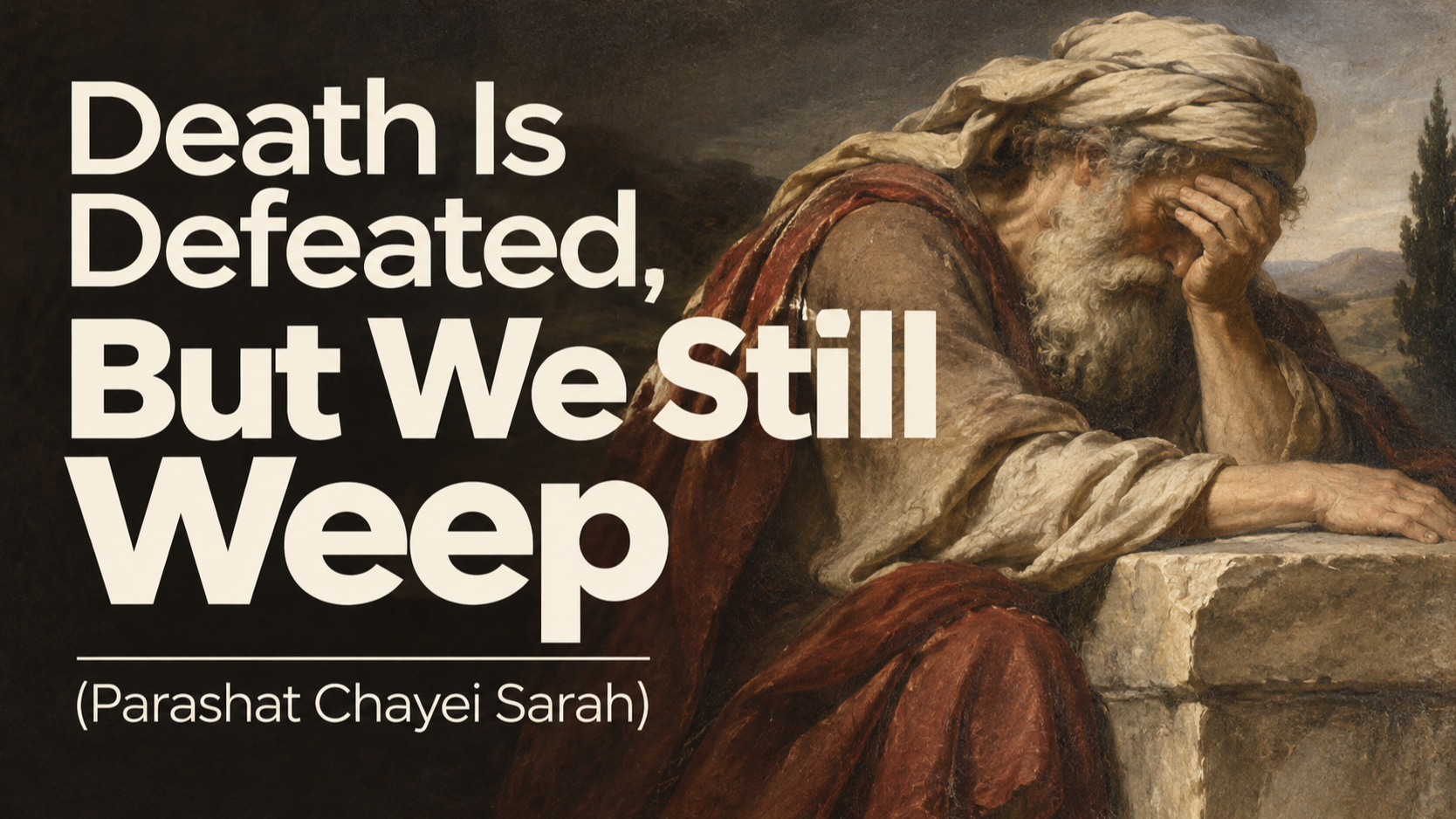
There is perhaps no experience more painful than losing someone you love. Even when we know that death is not the end for those who belong to the Messiah, the pain of losing a loved one can still feel overwhelming. This week’s Torah portion, Chayei Sarah (Gen. 23:1–25:18), speaks to the nature of grief and how we can find comfort in the midst of it.
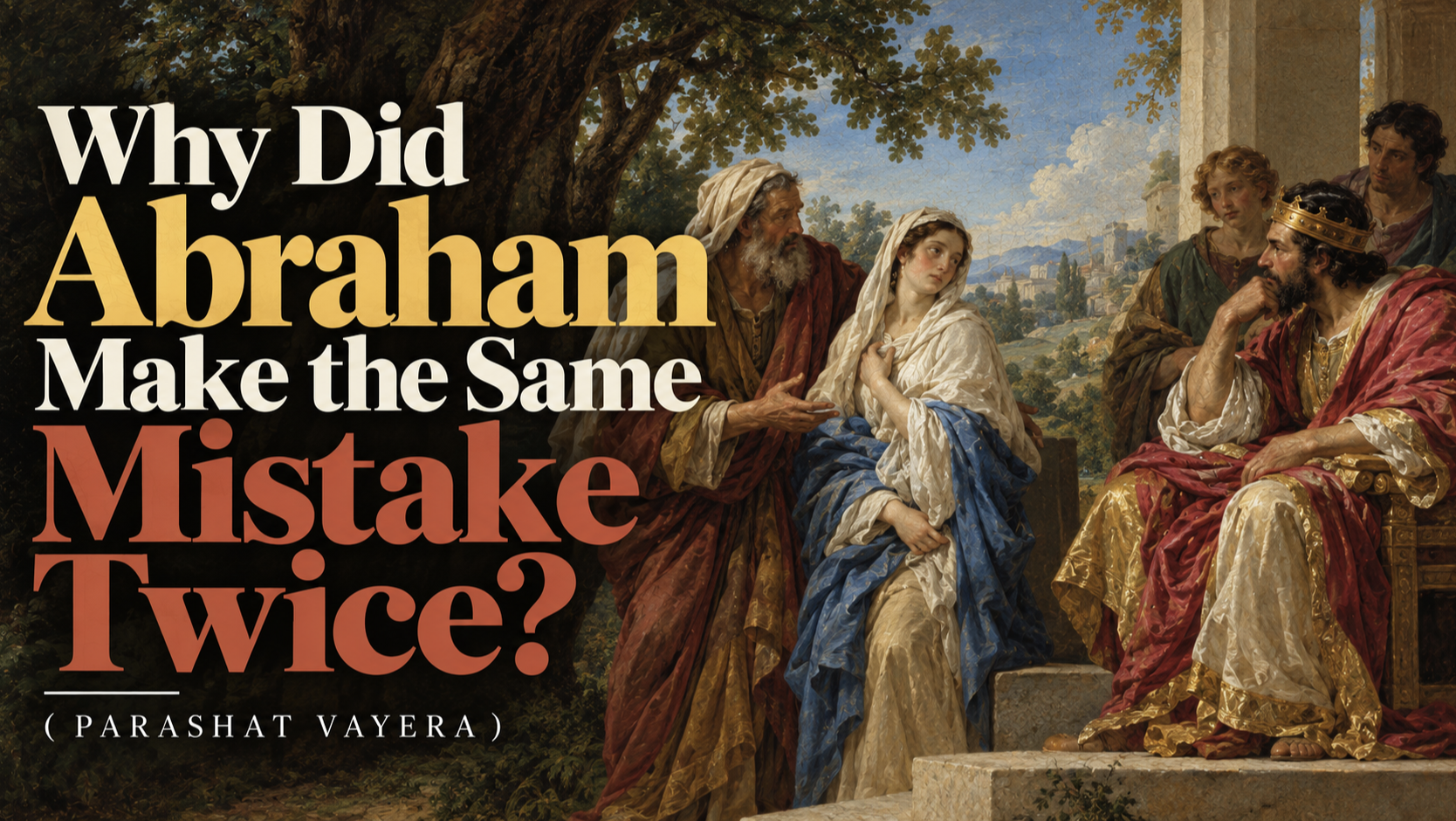
Abraham is celebrated throughout Scripture as a great man of faith, but he wasn't immune to making the same mistakes more than once. In this week's Torah portion, Vayera, we find Abraham repeating a deceptive scheme that had already made things awkward for him years earlier. Why did he make the same mistake twice? And what can his example teach us about our own tendency to fall back into old patterns of sinful behavior?
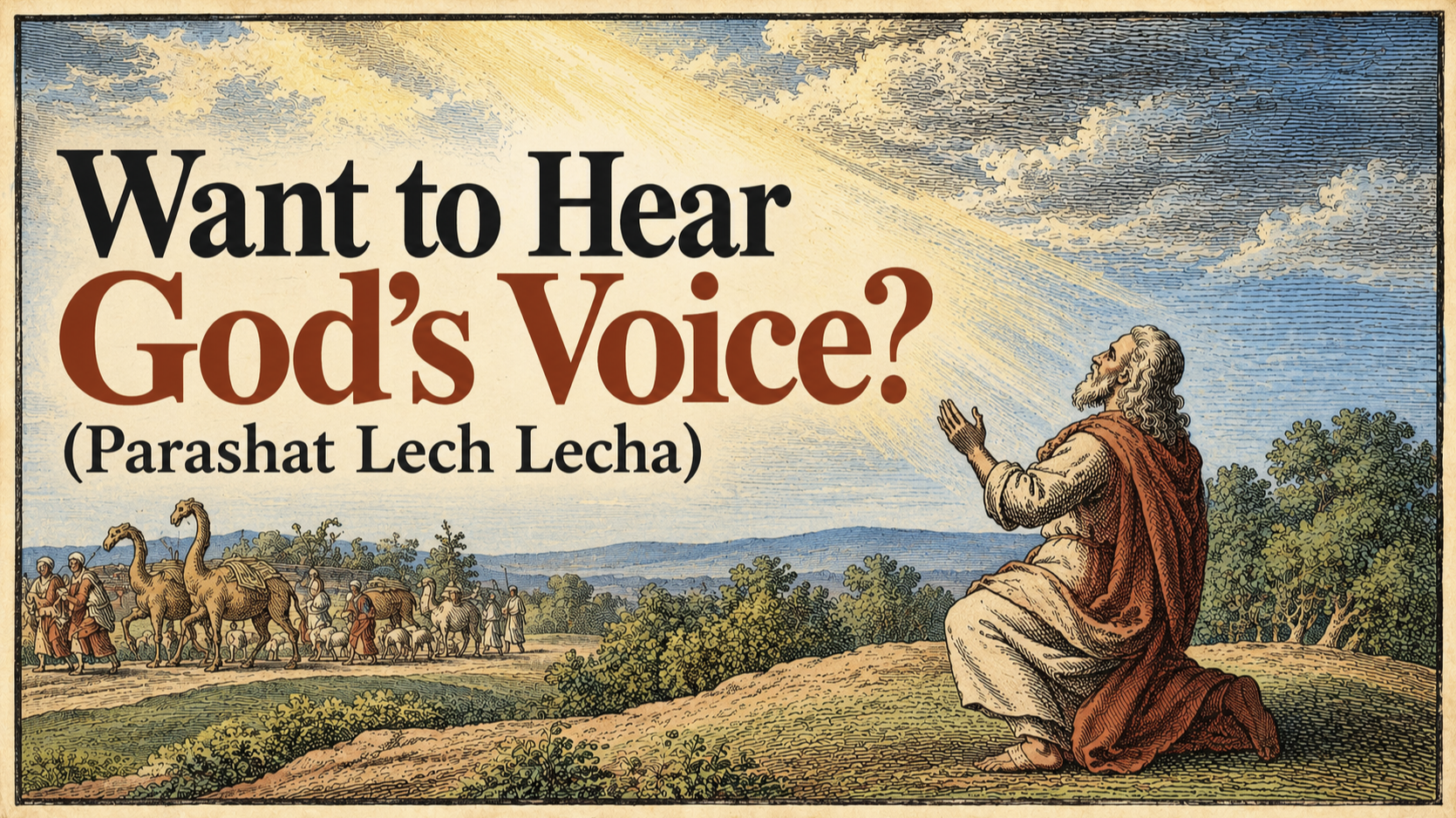
Have you ever wished God would speak to you the way he spoke to Abraham? Imagine how much easier life would be if God simply told you what to do and where to go. But while Abraham experienced some incredible encounters with God, those encounters were much less frequent than we might imagine. The good news is that we have something Abraham didn’t have: the written Word of God.

In this week’s Torah portion, Noach (Gen. 6:9–11:32), God gives Noah permission to eat animals after the flood (Gen. 9:3). Many Christians interpret this passage to mean that Noah could eat any animal, including those later identified as unclean in Leviticus 11. But is that really what the passage teaches? When we consider the broader context of Genesis and the meaning of the underlying Hebrew terminology, there are good reasons to question this popular interpretation.
In 2 Peter 3:15–17, Peter warns his readers against those who twist Paul’s letters, and he associates their misinterpretations with “the error of lawless people.” In this article, I examine both the immediate and broader context of this passage as well as the specific language Peter uses to characterize those who twist Paul’s letters. I argue that 2 Peter 3:15–17 constitutes a warning against antinomians who misinterpret Paul’s letters to justify and encourage transgression of the Law of Moses.
Origen’s Commentary on Romans offers a fascinating perspective on the Apostolic Decree in Acts 15. Rather than seeing the Council as setting aside the Torah for Gentile believers, Origen argues that the apostles looked to the Torah itself to determine what God required of Gentiles. This article explores his reasoning concerning blood, strangled meat, and circumcision, and what it might contribute to the larger question of Gentile Torah observance.

Can Gentile Torah observance be a bridge rather than a barrier between Jewish people and Yeshua? In this article, I consider concerns about supersessionism and Gentile Torah observance while arguing that, properly understood and practiced, it can affirm the continuing significance of Israel and offer a foretaste of the prophetic vision of the nations embracing Israel’s God and his ways.
Mary’s perpetual virginity was taught very early and remained the mainstream Christian position for well over a thousand years. Yet most Protestants today reject it because they believe Scripture clearly shows that Mary did not remain a virgin after giving birth to Jesus. I think this history offers an instructive parallel to the question of Sabbath observance. How much weight should longstanding Christian tradition carry when it seems to conflict with a straightforward reading of Scripture?
Did the apostle Paul reject the Torah (the Law of Moses) as an authoritative standard of conduct for followers of the Messiah? While many interpreters believe that he did, several passages in Romans point in a different direction. This article offers a pronomian reading of some of Paul’s statements about the Torah in Romans. In contrast to the antinomian view, a pronomian view holds that the Torah continues to function as divine instruction for believers.

I am a follower of Yeshua (Jesus) the Messiah, and I believe the Torah (the Law of Moses) remains relevant for God’s people today and should still be obeyed. So does that make me part of the Hebrew Roots Movement? There are two reasons why it does not.
The Bible mentions several books that have been lost to history. One of these is the Book of Jasher, meaning “one who is upright.” Over the centuries, this book has sparked much curiosity. Some today even argue that it has been rediscovered and ought to be included in the Bible. This article explores what we know about the Book of Jasher and evaluates claims that it has been rediscovered.
Did Paul reject the ongoing relevance of the Sabbath and festivals prescribed in the Torah? Many cite Colossians 2:16–17 as proof that he did. However, a growing body of scholarship calls that interpretation into question. Scholars point out that the illegitimate judgment directed toward Colossian believers came from ascetics who did not observe the biblical calendar. Drawing on this scholarship, I argue that Colossians 2:16–17 does not invalidate the Sabbath and festivals but instead affirms their value.

Have you ever asked God, “What is your will for my life?” If you have, you might be encouraged to know that Scripture already offers a direct (though often overlooked) answer to that question.

The Epistle to the Hebrews offers biblical evidence that the Holy Spirit is both fully divine and a distinct person. Within the epistle, the author identifies the Spirit as “eternal,” presents the Spirit as speaking God’s words as recorded in Old Testament quotations, and yet also distinguishes the Spirit as a separate agent from the Father and the Son. This article examines several references to the Spirit in Hebrews and shows how the author’s depiction is consistent with the Trinitarian understanding of the Holy Spirit as fully God and personally distinct from both the Father and the Son.

This study demonstrates that Luke presents the earliest followers of Jesus as steadfast Sabbath observers, challenging the common assumption that they abandoned or disregarded this practice. By closely examining the references to the Sabbath in Luke’s Gospel and Acts, it is observed that Luke consistently depicts Sabbath worship as a standard practice among Jewish and Gentile believers. This portrayal suggests that the earliest followers of Jesus did not believe the Sabbath had been abrogated but saw it as integral to their faith and community life. These findings invite modern Christians to reconsider the relevance of Sabbath observance in their own spiritual lives. By highlighting the continuity between Judaism and the emerging Christian movement, this study contributes to scholarship on early Christian identity and practice, portraying the earliest followers of Jesus as a movement within Judaism.

Is marital intimacy on the Sabbath a violation of the commandment to keep the seventh day holy? That depends on who you ask.

The expression “law of Christ” appears only two times in the New Testament. In Galatians 6:2, Paul urges his readers to fulfill “the law of Christ” (τὸν νόμον τοῦ Χριστοῦ). Similarly, in 1 Corinthians 9:21, Paul states that he is “under/in the law of Christ” (ἔννομος Χριστοῦ). Traditionally, interpreters have frequently understood this expression to refer to a new “law” or ethic that supersedes the law of Moses. However, as Todd Wilson notes, there is a “growing scholarly consensus” that “law of Christ” directly refers to the law of Moses in some sense. This article makes a case for interpreting the phrase “law of Christ” in Galatians 6:2 and 1 Corinthians 9:21 as a reference to the law of Moses as it is taught and exemplified by Christ.

Is the Messiah God? The first chapter of Hebrews presents compelling evidence that he is. In this chapter, the author highlights the Son’s role as the creator and sustainer of the universe, emphasizes the Son’s divine essence, proclaims that the Son is worthy of the worship that belongs only to God, and explicitly identifies the Son as “God” and “Lord/YHWH.” In order to demonstrate each of these points, this article conducts a detailed exegesis of Hebrews 1 and answers objections from unitarians.
Jubilees is a fascinating book that provides a window into the world of Second Temple Judaism. However, instead of appreciating it for what it is, a few teachers on the Internet exaggerate its significance and consider it to be inspired Scripture. This article provides an overview of the Book of Jubilees and explains why it is not Scripture.

Does the Bible teach that Yeshua the Messiah is divine? Philippians 2:5-11 is a central text that speaks to this question. In this passage, Paul teaches that the Messiah existed as a divine figure prior to his human conception, bears the name YHWH, and is rightfully given the reverence and allegiance that belongs to YHWH alone.
In Ephesians 2:15, Paul wrote that Christ broke down the wall of division between Jew and Gentile “by abolishing the law of commandments expressed in ordinances.” But what does Paul mean by this phrase? Is Paul saying that Christ abolished the Law of Moses, or something else?

In recent days, progressive Christians have claimed that Leviticus 18:22 does not mean what it plainly says. I want to address their objections in this article.

Did Jesus reject the Torah’s dietary laws? Many say that he did, citing Mark 7:1-23 as proof. In this article, I will explain the problems with the traditional interpretation of this passage and offer an alternative view that presents a more consistent and accurate portrayal of Jesus’s teaching.

Solberg complains about Pronomian theology causing "division" in the body. However, mischaracterizations like this are what actually undermine the unity that should be shared among thoughtful Christians on all sides of this debate.

Does Peter call Jesus “God” in 2 Peter 1:1? When we examine this verse from a grammatical standpoint, it is evident that he does.

Is the Torah (Law of Moses) relevant to Christians today? Many modern Christians say no. Jesus says yes.

I’ve been reading some scientific studies on the psychosocial impact of polygamy (in particular, the form of polygamy known as polygyny, that is, a husband having two or more wives). Modern-day advocates for polygamy argue that this practice benefits families and society, but the scientific data tells a different story. The harmful effects of polygamy on the well-being of men, women, and children are striking.
About David Wilber

David is first and foremost a passionate follower of Yeshua the Messiah. He is also a writer, speaker, and teacher.
David’s heart is to minister to God’s people by helping them rediscover the validity and blessing of God’s Torah and help prepare them to give an answer to anyone who asks about the hope within them (1 Peter 3:15)…

From the very beginning, human beings have been quick to blame others rather than take responsibility for their own wrongdoing. In this week’s Torah portion, Bereshit, we see how Adam and Eve’s response to their sin reveals a tendency that continues to plague humanity today. As followers of Yeshua, we are called to break this cycle of blame-shifting through humility, repentance, and personal responsibility.