
Have you ever been hurt so deeply by someone that you couldn’t imagine ever having a good relationship with them again? Perhaps you have even come to accept that certain broken relationships in your life are beyond repair. In this week’s Torah portion, Vayishlach (Gen. 32:3–36:43), we find a remarkable story of reconciliation that reminds us why we should never lose hope for people.
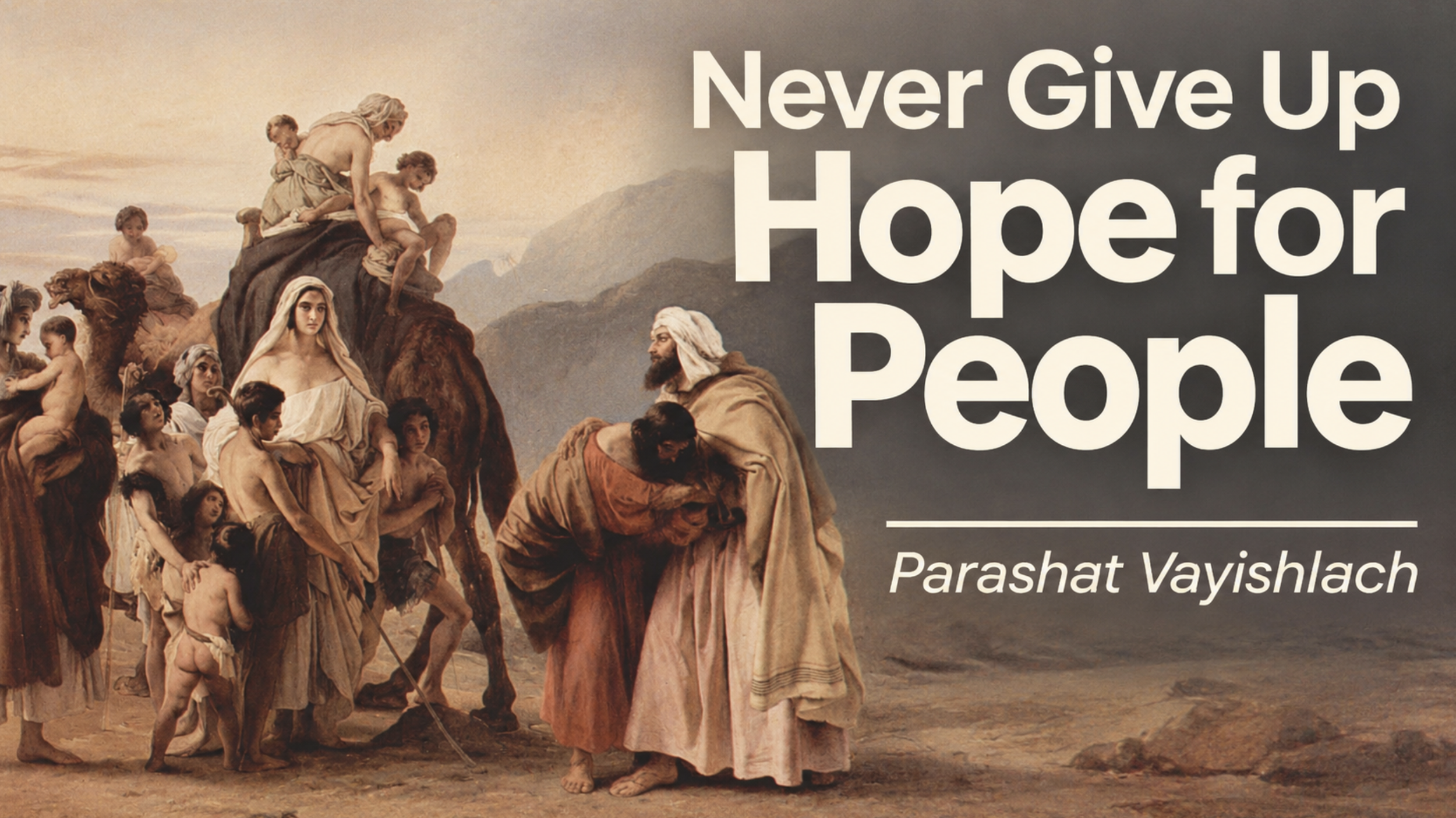
Jacob and Esau Reconcile
One of the most touching moments in Scripture is when Jacob reunites with his brother Esau after twenty years of separation:
And Jacob lifted up his eyes and looked, and behold, Esau was coming, and four hundred men with him. So he divided the children among Leah and Rachel and the two female servants. And he put the servants with their children in front, then Leah with her children, and Rachel and Joseph last of all. He himself went on before them, bowing himself to the ground seven times, until he came near to his brother. But Esau ran to meet him and embraced him and fell on his neck and kissed him, and they wept. (Genesis 33:1–4)
Considering the history between these two brothers, this is an incredible scene. Their relationship had been characterized by manipulation, deception, and betrayal. Jacob had taken advantage of Esau to obtain his birthright and later deceived their father to obtain the blessing intended for Esau. In fact, the reason Jacob had fled his homeland in the first place was that Esau was planning to kill him (Gen. 27:41–45).
Understandably, Jacob was terrified when he learned that Esau was coming to meet him with four hundred men (Gen. 32:6–7). As far as Jacob knew, his brother might still want to kill him. But instead of attacking Jacob, Esau ran to embrace him. After everything that had happened between them, these two brothers were able to put their painful past behind them and reconcile.
This story illustrates something that we sometimes forget: people can change. The person who hurt you years ago might not be the same person today. Feelings change, and even deep emotional wounds can heal over time.
Jacob Had Grown Up
What is particularly interesting about this story is the contrast between Jacob’s behavior here and his earlier interactions with Esau.
Indeed, earlier in the Genesis narrative, Jacob was concerned with what he could get from Esau. However, now Jacob is concerned with what he can give to Esau. Before the two brothers even meet, Jacob sends an extravagant gift of livestock ahead of him (Gen. 32:13–21). And when they finally meet, Jacob humbles himself before Esau, bowing to the ground seven times.
Interestingly, when Esau initially declines Jacob’s gift, Jacob insists that he accept it:
Please accept my blessing that is brought to you, because God has dealt graciously with me, and because I have enough. (Genesis 33:11)
Notice that Jacob refers to his gift as a “blessing.” Considering that Jacob had previously stolen Esau’s blessing, perhaps we can understand Jacob’s gift as an attempt to make restitution for the wrong he had committed against his brother those many years ago.
By this point in the story, Jacob had grown up. His extraordinary encounter with God the night before his reunion with Esau had transformed him (Gen. 32:22–32). The man who once deceived his own father to obtain a blessing now acknowledges how gracious God has been to him and insists on sharing what he has with his brother.
Never Lose Hope for People
Sometimes, when someone hurts or betrays us, we allow that person’s past behavior to permanently define how we think about them. We assume that if they were cruel and selfish in the past, that is who they will always be.
But consider how much you have changed over the course of your own life. Are you the same person you were ten years ago—or even five years ago? Are there things you said and did in the past that you feel ashamed of today? Hopefully, you have grown in character over the years and have repented of the ways you have mistreated others.
If we recognize that we are capable of changing, why should we assume that other people are not? In his book Works of Love, the Christian philosopher Søren Kierkegaard reflects on the inseparable relationship between love and hope and urges us never to consider another person to be beyond the possibility of redemption:
Therefore never unlovingly give up on any human being or give up hope for that person, since it is possible that even the most prodigal son could still be saved, that even the most embittered enemy—alas, he who was your friend—it is still possible that he could again become your friend. It is possible that the one who sank the deepest—alas, because he stood so high—it is still possible that he could again be raised up. It is still possible that the love that became cold could again begin to burn. Therefore never give up on any human being; do not despair, not even at the last moment—no, hope all things.[1]
Part of what it means to love someone is to refuse to give up hope for them. As Kierkegaard puts it, “Hope all things: give up on no human being, since to give up on him is to give up your love for him.”[2] Now, we cannot control whether other people change, but we can express our love for them by praying fervently and remaining hopeful that God will heal what is broken within them and lead them toward repentance. Love holds on to this possibility to the end.
In the meantime, perhaps we should spend some time considering the ways in which we need to change. Are there people we have wronged whom we need to approach in humility? Are there things we have done for which we need to make restitution and seek forgiveness?
As followers of Yeshua, we ought to be people of love and hope. Let us never give up hope that God can transform others. And may we, like Jacob, wrestle with God and allow our encounters with him to transform us.
[1] Søren Kierkegaard, Works of Love, ed. and trans. Howard V. Hong and Edna H. Hong, Kierkegaard’s Writings, vol. 16 (Princeton, NJ: Princeton University Press, 1995), 254.
[2] Kierkegaard, Works of Love, 255.

















About David Wilber
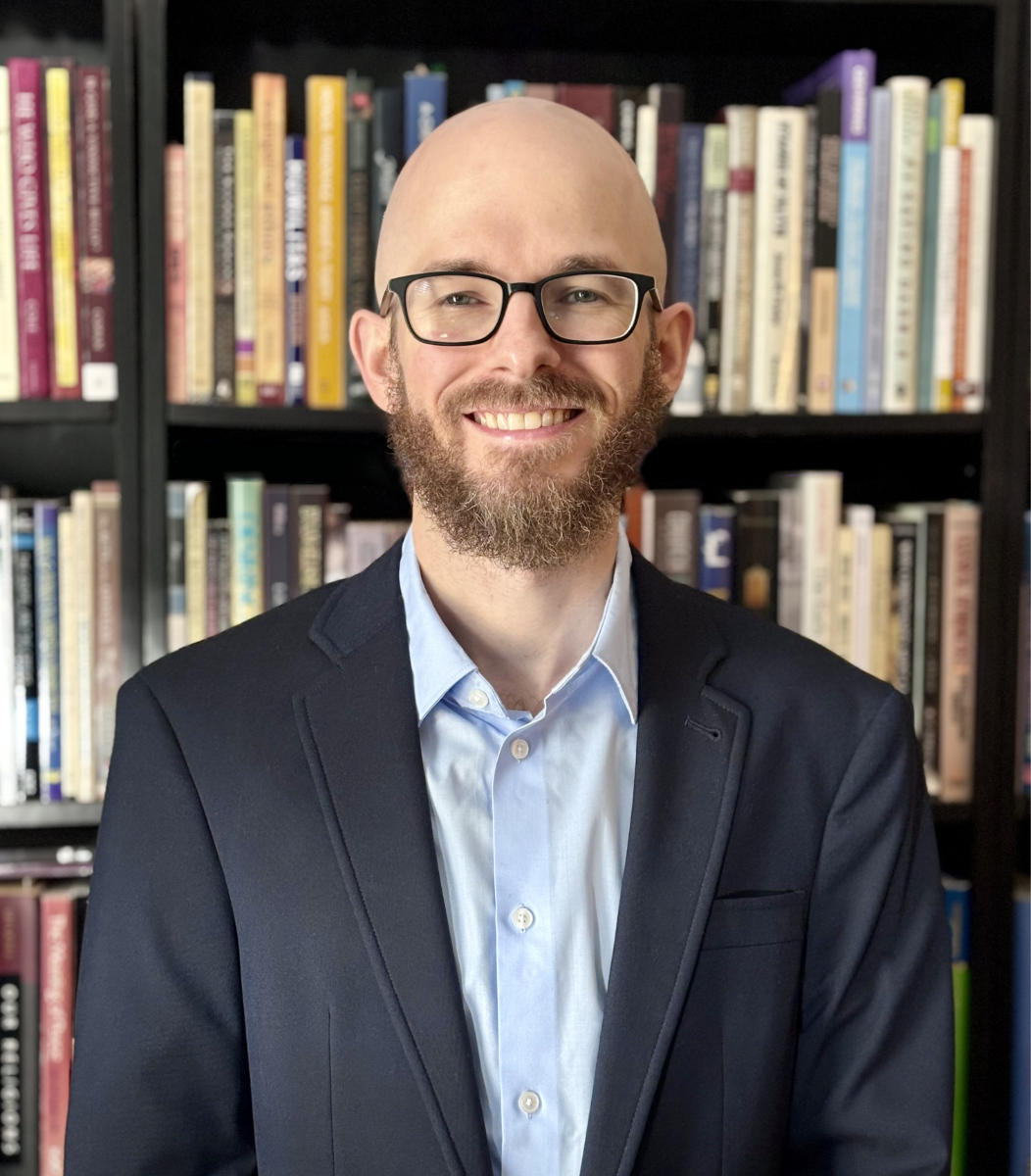
David is first and foremost a passionate follower of Yeshua the Messiah. He is also a writer, speaker, and teacher.
David’s heart is to minister to God’s people by helping them rediscover the validity and blessing of God’s Torah and help prepare them to give an answer to anyone who asks about the hope within them (1 Peter 3:15)…

From the very beginning, human beings have been quick to blame others rather than take responsibility for their own wrongdoing. In this week’s Torah portion, Bereshit, we see how Adam and Eve’s response to their sin reveals a tendency that continues to plague humanity today. As followers of Yeshua, we are called to break this cycle of blame-shifting through humility, repentance, and personal responsibility.